

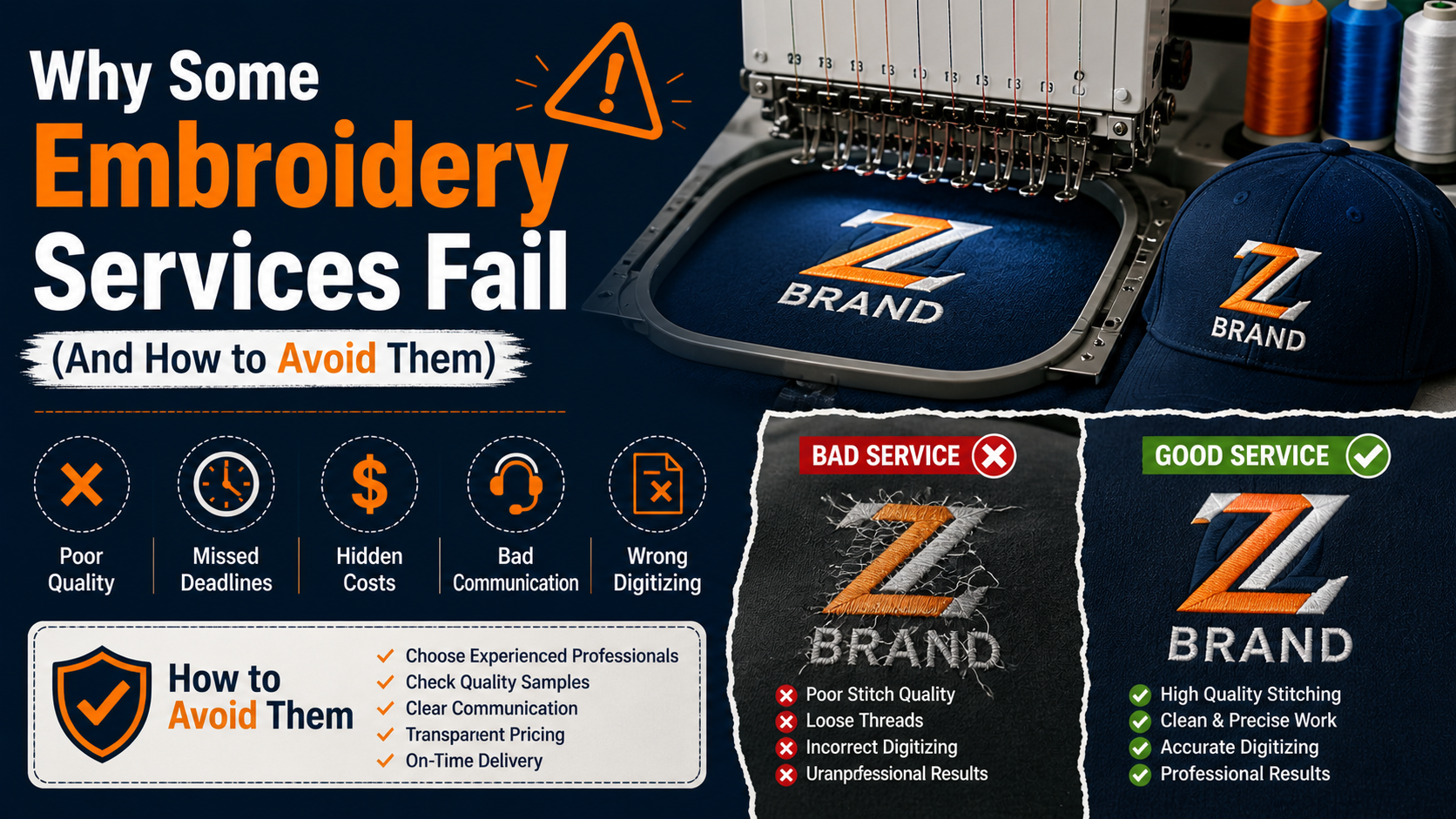
Why Some Embroidery Services Fail And How to Avoid Them
Bad embroidery services can turn a strong logo into a painful mistake. A shirt may look uneven, a cap may pucker, or small letters may disappear in the thread. That is why many brands first look for reliable custom embroidery services before placing an apparel order.
You may notice that most embroidery problems do not happen by chance. They often start with poor artwork, weak embroidery digitizing services, wrong fabric choice, rushed setup, or missing quality checks. Here’s why it matters. Your logo is not just thread on fabric. It is your brand in front of real people.
What Makes Embroidery Services Fail?
Some embroidery services fail because they treat every design the same. A logo for a flat polo shirt cannot always work the same way on a curved cap, thick jacket, soft hoodie, or small patch.
Good embroidery needs planning. The design, fabric, thread, stitch density, backing, machine settings, and placement must work together. If one part is ignored, the final result can look messy and unprofessional.
Why Poor Digitizing Causes Most Embroidery Problems
The biggest reason embroidery fails is poor digitizing. A normal logo file cannot go straight into an embroidery machine. It must first be converted into a stitch file that tells the machine how to sew each part.
If the stitch file is not made correctly, the machine may create broken thread, thick patches, uneven borders, rough letters, and pulled fabric. This is where many orders go wrong before stitching even begins.
What Are embroidery digitizing services?
embroidery digitizing services convert your artwork into a machine readable embroidery file. This file controls stitch direction, stitch type, underlay, density, trims, borders, and thread flow.
A clean digitized file helps the logo stitch smoothly. A poor file can damage the whole look, even if the garment and machine are good.
Why digitizing services for embroidery Need Skill
digitizing services for embroidery need real skill because embroidery is not the same as printing. Thread has thickness, fabric moves, and small details can close up during stitching.
A skilled digitizer knows how to adjust tiny text, curved shapes, outlines, and filled areas. This helps the design look clean on real fabric, not only on a screen.
Bad Artwork Can Ruin a Custom Embroidery Service
A poor logo file can create trouble from the start. Blurry images, low quality screenshots, tiny letters, thin lines, and too many small details can make embroidery harder.
A good custom embroidery service should review your artwork before production. If the design is not suitable, they should guide you with clear and honest advice.
Simple Logos Stitch Better
Simple logos usually look cleaner in embroidery. Strong shapes, clear text, and balanced spacing make the final stitch more readable.
This does not mean your brand must look boring. It means the design should be prepared in a way that works well with thread.
Tiny Text Often Fails
Tiny text is one of the most common embroidery problems. If letters are too small, thread can fill the spaces and make the words hard to read.
Before placing an order, check if every word needs to be stitched. Sometimes removing small text makes the logo look more premium and more confident.
Wrong Fabric Choice Can Break the Final Result
Not every fabric handles embroidery the same way. A thick jacket, cotton polo, fleece hoodie, cap, towel, and tote bag all react differently under the needle.
If the fabric is too thin, stretchy, or soft, it may pucker when the stitch density is too heavy. This can make even a beautiful logo look weak.
Match the Design to the Garment
A design made for a polo may need changes before it works on a cap or hoodie. The shape of the surface matters.
Caps are curved, jackets are thicker, and hoodies can stretch. Each item needs the right stitch plan, backing, and placement.
Cheap Fabric Can Make Good Embroidery Look Bad
Some buyers try to save money by choosing the cheapest apparel. That can backfire if the fabric does not hold stitches well.
A slightly better garment can protect the embroidery result. It can also make your brand feel more trusted and valuable.
Poor Thread Choice Can Make Embroidery Look Cheap
Thread color and quality affect the final look. If the thread is weak, dull, or mismatched, the logo may not look professional.
A good embroidery provider should help you choose thread colors that match your brand as closely as possible. They should also explain when exact color matching may need a close thread shade.
Thread Contrast Matters
A logo should be easy to see on the garment. Dark thread on dark fabric or light thread on light fabric may hide the design.
Strong contrast helps the logo stand out. Softer contrast can work too, but only when you want a subtle and quiet look.
Thread Quality Affects Durability
Good thread keeps its shine and strength for longer. Poor thread may break often or lose its clean finish after use.
This matters for uniforms, caps, jackets, and workwear because people wear and wash them again and again.
Why Some digitizing service for embroidery Results Look Messy
A weak digitizing service for embroidery often uses poor stitch paths, wrong density, or bad underlay. These issues can make the design pull, wrinkle, or lose shape.
The digitizing file should match the fabric and design size. A file that works on one item may not work perfectly on another.
Overly Dense Designs Cause Trouble
Too much stitch density can make the fabric stiff, heavy, and uncomfortable. It can also cause needle breaks and thread issues.
Good digitizing keeps the design firm but not too thick. This balance helps the logo look clean and feel comfortable.
Weak Underlay Can Shift the Design
Underlay stitches act like a foundation. They help hold the fabric and support the top stitches.
Without good underlay, the final embroidery may shift, sink, or look uneven. This is especially common on soft or textured fabric.
digitizing services embroidery Mistakes to Watch For
Many digitizing services embroidery mistakes are easy to miss until the design is stitched. The file may look fine on screen but fail on the machine.
This is why experience matters. A digitizer should think about fabric movement, machine speed, thread direction, and final use.
Bad Pull Compensation
Pull compensation helps control how fabric moves during stitching. Without it, letters and shapes can become thinner or uneven.
A skilled digitizer adjusts the design so it holds its shape after stitching. This makes the final logo look closer to the original artwork.
Too Many Thread Trims
Too many trims can slow production and create messy backs. They may also leave small thread ends on the design.
A clean stitch file reduces unnecessary trims. This creates smoother production and a neater finish.
Poor Machine Setup Can Damage Embroidery Quality
Even a good file can fail if the embroidery machine is not set up correctly. Tension, needle type, hooping, speed, and stabilizer all matter.
If the operator rushes this step, the final result may show thread breaks, skipped stitches, puckering, or uneven outlines.
Why embroidery machine service Matters
embroidery machine service helps keep machines working smoothly. Regular maintenance can reduce tension problems, broken needles, thread breaks, and poor stitch results.
A clean and well maintained machine gives better output. It also helps protect garments from damage during production.
Hooping Must Be Done Correctly
Hooping holds the garment in place while the machine stitches. If the fabric is too loose or too tight, the design can shift or pucker.
Proper hooping keeps the surface stable. This helps the logo stay sharp and balanced.
Why Some Online Embroidery Orders Go Wrong
An online embroidery service can be very helpful, but problems happen when the order process is unclear. Some buyers upload a logo and expect perfect results without checking details.
Online orders need careful communication. You should confirm design size, placement, thread colors, apparel type, proof approval, and turnaround time.
Ask for a Proof Before Production
A proof gives you a chance to review the design before the full order starts. It can show placement, size, and general appearance.
Always check spelling, logo shape, color notes, and position. A few minutes of review can prevent a stressful mistake.
Do Not Skip Communication
Clear communication saves money and time. If you are unsure about fabric, logo size, or placement, ask before production.
A good provider should answer in simple words. They should help you feel calm and confident, not confused.
How custom embroidery digitizing services Prevent Failure
custom embroidery digitizing services help prevent failure by preparing your design for the exact item you want to embroider. This is useful for caps, polos, jackets, patches, bags, hoodies, and uniforms.
A custom file can improve stitch direction, density, underlay, and design balance. It helps the embroidery machine create a cleaner result.
Why custom embroidery digitizing services in usa Are Useful
Many businesses search for custom embroidery digitizing services in usa because they want clear communication, quick support, and files prepared for common apparel needs.
This is useful for local brands, schools, agencies, restaurants, sports teams, and ecommerce businesses that need reliable embroidery files.
What Makes a custom embroidery digitizing service Reliable?
A reliable custom embroidery digitizing service understands how artwork becomes thread. It should not simply convert an image and move on.
It should check small text, outlines, fills, stitch direction, and fabric use. This extra care can save your order from looking cheap or rushed.
How to Avoid Failed Embroidery Services
Avoiding bad embroidery starts with asking better questions. You do not need to be an expert, but you should know what matters before you order.
The right process protects your logo, your budget, and your brand image. Let’s look at the steps that make a real difference.
Step 1, Send a Clean Logo File
Send the best artwork file you have. Vector files are usually best, but a clear high quality image can also help.
Avoid screenshots and blurry images. Clean artwork gives the digitizer a better starting point.
Step 2, Ask About Digitizing Quality
Ask how the design will be digitized. Ask if the file will be made for your garment type, size, and placement.
This is important because one file does not always work for every surface. A cap, polo, and jacket may need different settings.
Step 3, Choose the Right Apparel
Pick apparel that fits your purpose. Polos work well for business teams. Caps work well for events and outdoor branding. Jackets work well for premium staff apparel.
Do not choose fabric only by price. Choose fabric that can hold embroidery well and feel comfortable to wear.
Step 4, Review the Proof Carefully
Review the proof before production. Check spelling, logo size, placement, color, and design shape.
If something feels wrong, ask for a revision. It is easier to fix a proof than a finished order.
Step 5, Start With a Sample When Possible
A sample can show how the design looks on real fabric. This is helpful for large orders or important brand campaigns.
A sample may cost a little more upfront, but it can prevent bigger losses later.
How to Find the best embroidery digitizing service
The best embroidery digitizing service should focus on clean stitching, not only fast file delivery. It should understand fabric behavior, stitch density, machine formats, and final production needs.
Look for clear support, revision options, machine ready files, and real embroidery knowledge. These details matter when your brand reputation is on the line.
What the best embroidery digitizing services Should Provide
The best embroidery digitizing services should provide accurate stitch files in formats your machine or production team needs. These may include DST, PES, EXP, JEF, VP3, or other embroidery formats.
They should also help with design improvements when needed. A good digitizer protects the final look, not just the file.
When You Need a digitize embroidery service
You need a digitize embroidery service when you want to stitch a logo, patch, name, badge, or artwork onto fabric. Normal image files are not enough for machine embroidery.
Digitizing turns your design into stitch instructions. This helps the machine create the design with better shape, flow, and strength.
How Zdigitizing Encourages Better Embroidery Results
Zdigitizing encourages brands to avoid rushed embroidery decisions and focus on the process behind the final stitch. A strong embroidered logo starts with clean artwork, careful digitizing, smart fabric choice, and proper quality checks.
By helping businesses understand how digitizing affects real embroidery, Zdigitizing supports better apparel branding. This makes the final result feel more polished, more reliable, and more exciting for customers, teams, and growing brands.
Common Warning Signs of Weak Embroidery Services
Some warning signs appear before you place the order. If a provider does not ask about fabric, size, placement, or artwork quality, that can be a problem.
Another warning sign is unclear pricing or no proof process. If the provider rushes you without checking the design, your final apparel may suffer.
No Artwork Review
A provider should review your design before stitching. They should tell you if the logo has too much detail, tiny text, or weak contrast.
If no one checks the artwork, mistakes may reach the machine. That can lead to ugly results and wasted garments.
No Clear Revision Policy
Revisions matter because embroidery sometimes needs small changes. A good provider should explain what can be revised and when.
This gives you peace of mind. It also shows that the provider cares about the final result.
No Quality Check Before Shipping
Quality checks should happen before the order leaves production. The team should check stitch quality, placement, thread trimming, and garment condition.
Without this step, customers may receive items with visible mistakes. That can feel disappointing and costly.
Why Good Embroidery Is Worth the Extra Care
Good embroidery helps your brand look organized, trusted, and memorable. It can make staff uniforms, event apparel, caps, jackets, and branded gifts feel more valuable.
Bad embroidery does the opposite. It can make a strong brand look careless. That is why careful planning is always worth it.
Your Logo Deserves Respect
Your logo carries your name, promise, and identity. It should not be treated like a quick decoration.
When embroidery is done properly, your logo can look proud and professional on every item.
Better Process Means Better Results
A better process reduces stress. It helps avoid poor stitching, wrong placement, color issues, and fabric damage.
From artwork to proofing, every step matters. Small checks can create a big difference in the final look.
Final Thoughts
Failed embroidery services usually happen because of poor digitizing, weak artwork, wrong fabric, bad machine setup, or skipped quality checks. If you want cleaner stitch files, better logo preparation, and more dependable embroidery results, Zdigitizing can help you move in the right direction with confidence.
The best way to avoid failure is simple. Start with clean artwork, use professional digitizing, choose the right apparel, review the proof, and work with people who care about your brand. When each step is handled with care, embroidery can look beautiful, strong, and truly professional.
FAQs About Failed Embroidery Services
Why do some embroidery services fail?
Some embroidery services fail because of poor digitizing, weak artwork, wrong fabric, bad thread choice, or poor machine setup. These problems can make the final logo look messy.
What is the most common embroidery mistake?
The most common mistake is using a poor digitized file. If the stitch file is bad, the machine cannot create a clean and balanced design.
Can small text be embroidered clearly?
Small text can be embroidered, but it must be large enough and digitized carefully. If the letters are too tiny, they may become hard to read.
Why does fabric pucker during embroidery?
Fabric puckers when stitch density, backing, hooping, or tension is not handled correctly. Soft or stretchy fabric needs extra care.
How can I avoid bad embroidery results?
Use clean artwork, choose proper digitizing, select the right garment, review a proof, and ask for a sample when possible. These steps help protect your brand and budget.
Related Posts

Traditional Thirumana Mahal Ideas for South Indian Weddings
Celebrating Culture and Elegance in Every Detail A wedding hosted in a beautifully designed Kalyana Mandapam in Chennai reflects the essence of South Indian tradition, where every ritual, decoration, and arrangement carries deep cultural significance. Thirumana Mahals are not just venues; they are sacred spaces where families come together to celebrate love, he

Assignment Help Services for Complex Academic Subjects
In today’s competitive academic environment, students are constantly expected to perform at a high level across multiple subjects. Whether it is engineering, law, medicine, or advanced mathematics, the complexity of coursework has increased significantly. As a result, many students find themselves struggling to keep up with deadlines, expectations, and concep
Investing in Carpet Cleaning Services for Lasting Floor Quality
Introduction Carpet cleaning services need to be treated as an investment because they provide more benefits than maintaining carpet appearance. The maintenance of clean carpets helps create a healthier home environment while safeguarding your flooring investment for the future. Homeowners tend to overlook the fact that everyday dust and dirt and spills will si
Comprehensive HVAC Services for Optimal Home Climate
Maintaining a comfortable indoor environment is essential for any home or business. Whether it’s hot summer days or chilly winter nights, a properly working HVAC system keeps your space safe and enjoyable. Hiring Affordable HVAC Contractors Coconut Grove ensures your heating and cooling systems are installed, maintained, and repaired professionally without ov
Leave a Reply