

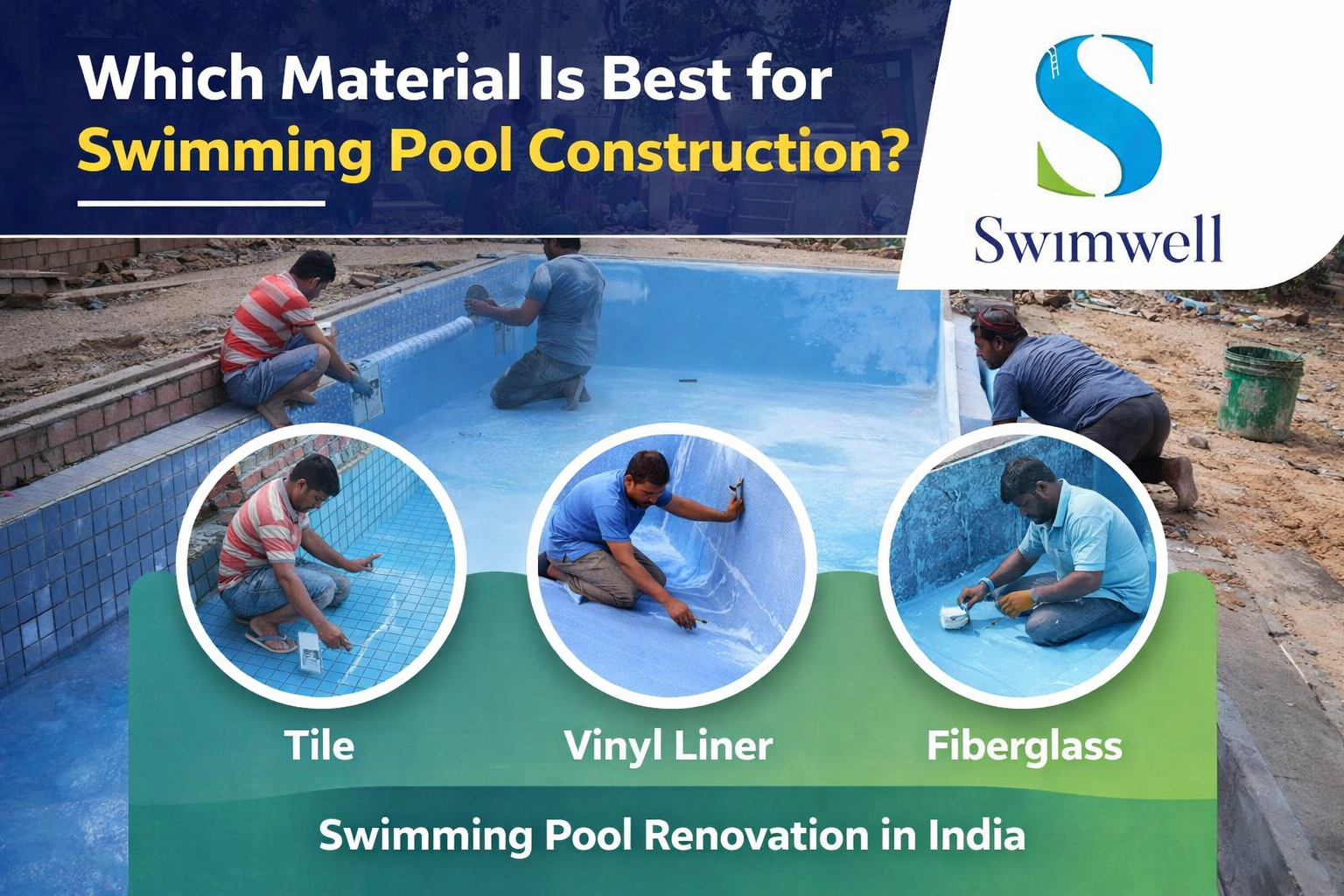
Which Material Is Best for Swimming Pool Construction?
Introduction
Building a swimming pool is a long-term investment that requires careful planning, design, and material selection. The durability, appearance, and maintenance of a pool largely depend on the materials used during construction. This is why Swimming pool construction is not just about design—it’s about choosing the right materials for long-lasting performance.
A professional swimming pool company like Swimwell Pools understands the importance of selecting suitable materials based on location, usage, and environmental conditions. In this blog, we will explore the different materials used in pool construction, their advantages, and how to choose the best one for your needs.
Why Material Selection Matters in Pool Construction
The material used in a swimming pool determines its strength, durability, and maintenance requirements.
Key factors influenced by material:
- Structural integrity
- Longevity of the pool
- Maintenance needs
- Aesthetic appeal
- Resistance to environmental conditions
Choosing the right material ensures a safe and efficient pool.
Common Materials Used in Swimming Pool Construction
1. Concrete (Gunite or Shotcrete)
Concrete is one of the most widely used materials in pool construction.
Features:
- Highly durable and strong
- Flexible design options
- Suitable for custom shapes and sizes
Advantages:
- Long lifespan
- Can withstand harsh conditions
- Ideal for large and complex pools
Considerations:
- Requires proper waterproofing
- Needs regular maintenance
Concrete pools are often preferred for their strength and customization options.
2. Fiberglass Pools
Fiberglass pools are pre-manufactured shells installed in the ground.
Features:
- Smooth surface
- Quick installation
- Factory-built structure
Advantages:
- Low maintenance
- Resistant to algae growth
- Durable and flexible
Considerations:
- Limited design options
- Transportation and installation constraints
Fiberglass is ideal for those seeking quick installation and easy maintenance.
3. Vinyl Liner Pools
Vinyl pools use a flexible liner over a frame structure.
Features:
- Soft and smooth surface
- Customizable shapes
Advantages:
- Comfortable for swimmers
- Relatively easy to install
- Smooth finish
Considerations:
- Liner may require replacement over time
- Less durable compared to concrete
Vinyl liner pools are suitable for residential applications with moderate usage.
4. Tile (Mosaic or Ceramic)
Tiles are often used as a finishing material rather than the primary structure.
Features:
- Available in various designs and colors
- Enhances visual appeal
Advantages:
- Attractive appearance
- Durable surface finish
- Easy to clean
Considerations:
- Requires proper installation
- Needs maintenance to prevent grout issues
Tiles add elegance and style to swimming pools.
5. Stainless Steel Pools
Stainless steel is a modern material used in premium pool construction.
Features:
- High strength
- Corrosion resistance
Advantages:
- Long-lasting
- Minimal maintenance
- Suitable for indoor and rooftop pools
Considerations:
- Requires expert installation
- Limited design flexibility compared to concrete
6. Natural Stone Finishes
Natural stone is used for aesthetic and structural purposes.
Features:
- Unique textures and patterns
- Natural appearance
Advantages:
- Enhances luxury appeal
- Durable surface
Considerations:
- Requires sealing and maintenance
Factors to Consider When Choosing Pool Materials
1. Climate Conditions
Environmental factors play a major role in material selection.
- High temperatures require heat-resistant materials
- Rain and humidity demand proper waterproofing
2. Usage Type
Different pools have different requirements.
- Residential pools
- Commercial pools
- Luxury or resort pools
3. Maintenance Requirements
Some materials require more maintenance than others.
- Concrete needs regular care
- Fiberglass requires minimal upkeep
4. Design Preferences
Material choice affects the pool’s appearance.
- Custom shapes require flexible materials
- Modern designs may use steel or tiles
5. Durability and Longevity
Long-lasting materials ensure better value over time.
Best Material for Swimming Pool Construction
There is no single “best” material—it depends on your needs.
General recommendations:
- Concrete: Best for durability and customization
- Fiberglass: Best for low maintenance
- Vinyl: Best for comfort and affordability
- Steel: Best for modern and premium designs
A professional swimming pool company can help you choose the most suitable option.
Role of a Professional Swimming Pool Company
A trusted company like Swimwell Pools ensures proper material selection and construction.
Their role:
- Assessing site conditions
- Recommending suitable materials
- Ensuring quality construction
- Providing long-term support
Professional expertise ensures a successful pool project.
Common Mistakes to Avoid
Avoid:
- Choosing materials without expert advice
- Ignoring environmental conditions
- Focusing only on appearance
- Skipping proper waterproofing
Avoiding these mistakes ensures better results.
How Material Choice Affects Pool Maintenance
Material selection directly impacts maintenance needs.
Examples:
- Smooth surfaces reduce algae growth
- Durable materials reduce repair frequency
Choosing the right material simplifies maintenance.
Future Trends in Pool Construction Materials
Emerging trends:
- Eco-friendly materials
- Advanced waterproofing systems
- Smart pool surfaces
These innovations improve durability and efficiency.
Conclusion
Selecting the right material is one of the most important decisions in building a swimming pool. Each material—whether concrete, fiberglass, vinyl, or steel—offers unique benefits and considerations. The best choice depends on your specific needs, design preferences, and environmental conditions. Partnering with a reliable swimming pool company like Swimwell Pools ensures expert guidance and high-quality results. Investing in the right materials for Swimming pool construction guarantees durability, safety, and long-term performance for your pool.
Frequently Asked Questions (FAQs)
1. Which material is best for Swimming pool construction?
The best material for Swimming pool construction depends on your needs. Concrete is ideal for durability and customization, while fiberglass is preferred for low maintenance.
2. Are concrete pools durable?
Yes, concrete pools are highly durable and long-lasting.
3. Do fiberglass pools require less maintenance?
Yes, they are easy to maintain and resistant to algae.
4. What is the advantage of vinyl liner pools?
They offer a smooth surface and flexible design options.
5. Are tiles necessary in pool construction?
Tiles enhance appearance and provide a durable finish.
Read Our Previous Blog————-> Are maintenance services available for residential pools in India?
Related Posts

Safety Trained Supervisors for Construction and the Military
The Safety Trained Supervisor (STS) certification is a nationally recognized for first-line supervisors and managers responsible for worksite safety and health. In industries such as construction and among U.S. military contractors, STS certification is important as organizations endeavor to improve workplace safety, decrease accidents, and comply wit

Apartment for Investment in Greece: Top Reasons to Buy Right Now
If you’ve been exploring global real estate opportunities, Greece Invests brings you one of the most promising options in today’s market—buying an apartment for investment in Greece. With its stunning landscapes, growing tourism industry, and investor-friendly policies, Greece has quickly become a hotspot for international buyers. Whether you are looking

Syna World: The Pulse of Modern Streetwear Culture
The Emergence of a New Streetwear Identity In the ever-evolving landscape of fashion, where trends rise and fall with the speed of a social media scroll, Syna World has carved out a distinctive identity that resonates with a new generation. It is not merely a clothing brand—it is a statement, a reflection of culture, and a symbol of self-expression. Born from

Hourly Chauffeur Service: The Ultimate Guide for Luxury & Convenience
In today’s fast-paced world, convenience, flexibility, and comfort are no longer luxuries—they are expectations. Whether you are a busy executive, a frequent traveler, or someone planning a special occasion, transportation plays a crucial role in shaping your experience. This is where Hourly Chauffeur Service steps in as a game-changer. Unlike traditional p
Leave a Reply