

Heron Welder: Advanced Resistance Welding & Metal Joining Solutions for Smart Manufacturing
In modern manufacturing, precision, repeatability, and production efficiency define competitive advantage. As industries move toward automation and lightweight metal structures, demand for reliable metal joining technologies continues to grow. In this landscape, Heron Welder stands as a globally recognized name in resistance welding, clinching, riveting, and automated welding systems delivering engineered solutions for automotive, HVAC, appliance, electrical, and hardware manufacturing sectors.
This article explores Heron Welder’s technology, core systems, industrial applications, and why it has become a trusted partner for OEMs, automation integrators, and production engineers worldwide.
What is Heron Welder?
Heron Welder is a high-tech industrial brand specializing in resistance welding equipment and metal connection automation systems. Founded in the early 1990s, Heron has evolved into a global manufacturer offering advanced welding technologies including:
- Spot welding systems
- Projection welding machines
- Seam welding equipment
- MFDC (Medium Frequency Direct Current) welders
- Capacitor discharge welding systems
- Clinching machines
- Self-pierce riveting (FSPR) systems
- Robotic welding guns and controllers
- Fully automated production line solutions
With over 30 years of R&D experience and large-scale manufacturing capabilities, Heron focuses on delivering stable, energy-efficient, and high-precision joining systems for industrial production environments.
Core Technology Behind Heron Welding Systems
Heron Welder solutions are built on advanced resistance welding principles, where heat is generated through electrical resistance at the metal interface under controlled pressure.
1. Medium Frequency DC (MFDC) Welding
MFDC systems convert three-phase power into medium-frequency output, enabling:
- Faster welding cycles (milliseconds level)
- Lower energy consumption
- Improved weld consistency
- Reduced transformer size for compact machine design
This makes MFDC ideal for high-volume production lines such as automotive and appliance manufacturing.
2. Capacitor Discharge (CD) Welding
CD welding stores electrical energy and releases it instantly during welding, producing:
- Extremely high peak current
- Minimal heat distortion
- Strong welds on thin or dissimilar metals
3. Projection & Seam Welding
Projection welding concentrates current on predefined metal projections, ensuring:
- High-strength joints
- Repeatable weld quality
- Lower energy waste
Seam welding enables continuous welds, commonly used in tanks, tubes, and sealed components.
Heron’s Complete Metal Joining Ecosystem
Unlike traditional machine suppliers, Heron Welder provides a complete metal connection ecosystem, including:
Resistance Welding Machines
Designed for spot, projection, seam, and butt welding applications across multiple industries.
Clinching Systems
Mechanical joining without heat or filler material—ideal for coated sheets and mixed metals.
Self-Pierce Riveting (FSPR)
A fast, automated fastening method widely used in automotive lightweight structures.
Robotic Welding Guns
Integrated with automation cells for consistent, high-speed welding in smart factories.
Automated Production Lines
Heron designs full turnkey systems such as:
- Automotive body welding lines
- Compressor shell welding systems
- Appliance frame assembly lines
- Electrical component production systems
Industrial Applications of Heron Welder Systems
Heron’s technology is widely adopted across industries that demand high-volume, high-precision metal joining.
Automotive Manufacturing
Used for:
- Body-in-white assembly
- Battery trays and brackets
- High-strength steel joining
HVAC & Compressor Industry
Ideal for:
- Air conditioner compressor shells
- Refrigeration components
- Pressure vessel welding
Electrical & Electronics
Supports:
- Circuit breaker components
- Busbars and connectors
- Electrical enclosure welding
Home Appliance Industry
Used in:
- Washing machines
- Ovens and microwaves
- Refrigerator frames
Hardware & Industrial Equipment
Supports structural welding for:
- Metal enclosures
- Toolboxes
- Industrial frames
Why Engineers Choose Heron Welder
For production engineers and OEMs, equipment selection is not just about welding it is about process stability, cycle time, and lifecycle cost.
Key Advantages
- High repeatability in mass production
- Reduced energy consumption through MFDC technology
- Strong adaptability to aluminum, steel, and high-strength alloys
- Automation-ready systems for Industry 4.0 integration
- Global engineering support and customization capability
Heron focuses heavily on process control and monitoring systems, helping manufacturers achieve consistent weld quality across large-scale production environments.
Heron Welder vs Conventional Welding Systems
Heron systems are designed for modern manufacturing challenges that traditional welders struggle with.
| Feature | Heron Welder | Conventional Systems |
|---|---|---|
| Automation readiness | High | Limited |
| Energy efficiency | Optimized MFDC/CD systems | Higher consumption |
| Material compatibility | Steel, aluminum, alloys | Mostly standard steels |
| Production speed | High-speed cycles | Moderate |
| Process monitoring | Advanced digital control | Basic or manual |
This makes Heron especially suitable for smart factories and automated production lines.
Best Practices for Industrial Welding Optimization
To maximize performance from Heron Welder systems, engineers typically follow these best practices:
- Optimize electrode force based on material thickness
- Use MFDC settings for aluminum and high-strength steel
- Implement real-time weld monitoring systems
- Maintain electrode condition for stable current flow
- Integrate robotic automation for high-volume production
These practices help improve weld quality, reduce defects, and extend machine life.
FAQs About Heron Welder
1. What industries use Heron Welder machines?
Heron systems are widely used in automotive, HVAC, electrical, appliance manufacturing, and industrial hardware production.
2. Can Heron weld aluminum and high-strength steel?
Yes. Heron MFDC and capacitor discharge systems are designed to handle difficult-to-weld materials like aluminum alloys and high-strength steel.
3. Does Heron provide automation solutions?
Yes. Heron specializes in automated welding lines, robotic guns, and turnkey production systems for smart factories.
4. What is the difference between MFDC and traditional welding?
MFDC welding uses medium-frequency current for faster cycles, better efficiency, and more stable weld quality compared to traditional AC systems.
5. Can Heron customize welding machines?
Yes. Heron provides custom-engineered solutions based on client production requirements and industrial applications.
Conclusion
In the evolving world of smart manufacturing, Heron Welder represents a powerful combination of precision engineering, automation readiness, and industrial reliability. From resistance welding machines to fully integrated production lines, Heron continues to support manufacturers in achieving higher productivity, better weld quality, and lower operational costs.
Whether you are an OEM, production engineer, or automation integrator, Heron delivers scalable welding solutions designed for the future of manufacturing.
Ready to Upgrade Your Welding Process?
Contact Heron Welder today to discuss your production needs and explore customized welding and automation solutions tailored for your industry.
Related Posts
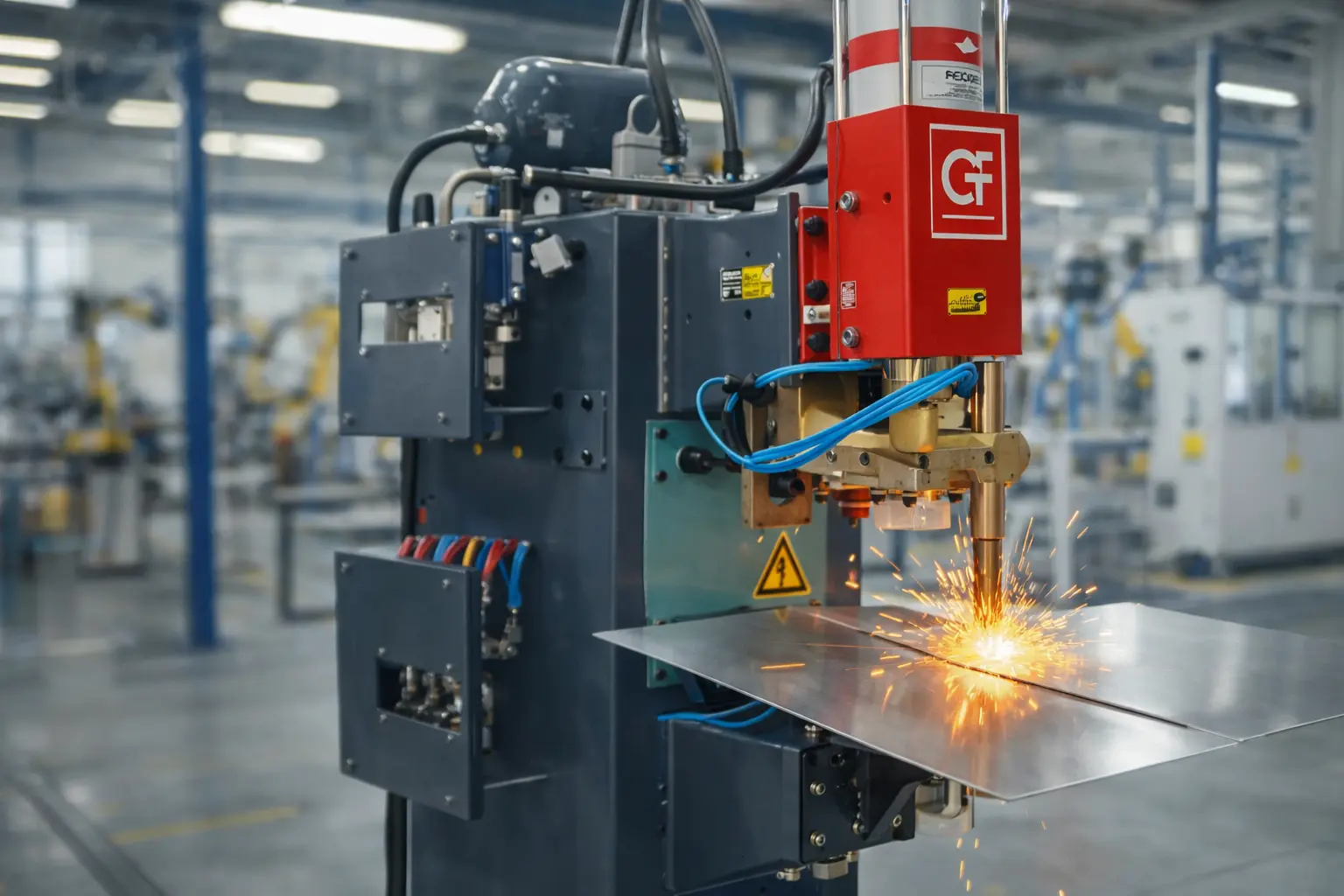
Mastering Resistance Spot Welding: Essential Insights for Modern Manufacturing
Resistance spot welding (RSW) has long been a cornerstone in high-volume metal joining, offering speed, precision, and repeatable quality. For manufacturing engineers, OEMs, and automation integrators, understanding the principles, applications, and best practices of resistance spot welding is essential for optimizing production lines and reducing costs. At Her
Leave a Reply