

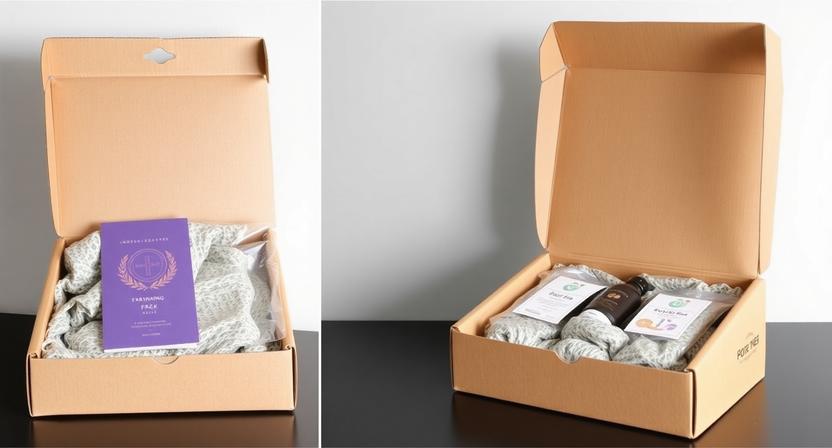
The Complete Guide to Custom Packaging ROI
Every business owner has asked the question: Is custom packaging worth the investment? Unlike traditional marketing expenses, where ROI can be tracked through clicks and conversions, packaging returns are multifaceted—spanning marketing, operations, customer experience, and brand equity. Measuring packaging ROI requires looking beyond the per-unit cost to understand the full investment value that custom packaging delivers across the organization. For businesses like The Custom Suits, custom packaging is not an expense but a strategic investment driving measurable business growth.
This comprehensive guide explores the tangible and intangible returns of custom packaging, providing frameworks for calculating ROI and understanding how packaging contributes to long-term business success.
Chapter 1: The True Cost of Generic Packaging
Before calculating the ROI of custom packaging, it is essential to understand the hidden costs of generic alternatives. Many businesses default to standard shipping boxes, viewing them as the “cheaper” option. However, this perspective ignores several significant expenses.
Dimensional Weight Penalties
Carriers like UPS, FedEx, and USPS use dimensional weight (DIM weight) pricing, which charges based on the cubic volume a package occupies rather than its actual weight. Standard boxes often force businesses into oversized containers because available sizes do not match product dimensions. A product that weighs two pounds but requires a 12x12x12 box may incur shipping charges based on 10+ pounds of dimensional weight. These overcharges accumulate rapidly across hundreds or thousands of shipments.
Damage-Related Costs
Generic boxes that do not fit products precisely allow movement during transit. Movement leads to damage. Each damaged product carries costs: the product itself, outbound shipping, return shipping, replacement product, replacement shipping, customer service time, and often, lost future business. For high-value items like custom suits, a single damaged order can erase the profit from dozens of successful shipments.
Packing Labor Inefficiency
Standard boxes require workers to select appropriate sizes from an assortment, add void fill to secure products, and often apply multiple pieces of tape. These extra seconds per order multiply across daily volume, representing significant labor costs that are rarely tracked against packaging decisions.
Brand Dilution
The most difficult cost to quantify is brand dilution. Generic packaging communicates that a brand does not care about presentation. In an era where unboxing experiences are shared on social media, generic packaging represents a missed marketing opportunity that competitors with custom packaging readily capture.
Chapter 2: Calculating Packaging ROI: A Framework
To accurately assess packaging ROI, businesses must consider both cost savings and revenue generation. A comprehensive framework includes the following components.
Cost Savings Categories
Shipping Cost Reduction: Calculate the reduction in dimensional weight charges achieved through right-sized custom boxes. Compare average shipping costs per order before and after custom packaging implementation.
Damage Rate Reduction: Track the percentage of orders requiring replacement due to damage. Multiply the reduction in damage rate by the fully loaded cost per damaged order (product cost, shipping, labor, customer service time).
Labor Efficiency Gains: Measure packing time per order before and after custom packaging. Calculate labor cost savings based on hourly wages and order volume.
Material Cost Reduction: Compare void fill material costs (bubble wrap, air pillows, paper) before and after custom packaging. Many custom boxes eliminate void fill.
Revenue Generation Categories
Increased Conversion Rates: For businesses that sell products online, custom packaging imagery in marketing materials can increase conversion rates. Track sales lift following packaging redesign.
Social Media Value: Estimate the value of user-generated content from unboxing videos and posts. Calculate earned media value based on views, engagement, and the estimated cost of comparable paid advertising.
Repeat Purchase Rate: Track whether customers who receive custom packaging have higher repeat purchase rates than those who receive generic packaging.
Referral Traffic: Monitor referral traffic from social media platforms following unboxing content.
Chapter 3: Case Study – The Custom Suits ROI Analysis
The Custom Suits provides a compelling example of measurable packaging ROI. Before custom packaging, the brand used generic shipping boxes with bubble wrap void fill. After implementing their custom box system—featuring precise dimensions, double-wall construction, custom inserts, and full-color branding—they conducted a comprehensive ROI analysis.
Cost Savings Achieved
Shipping Cost Reduction: By right-sizing boxes to fit suits precisely, dimensional weight charges decreased by an average of $3.50 per domestic shipment. With an annual volume of approximately 8,000 shipments, this represented $28,000 in annual savings.
Damage Rate Reduction: Damage-related returns dropped from 8% to under 2%. Each damaged order previously cost the company approximately $120 (product cost, shipping, labor). The 6% reduction represented 480 saved orders annually, yielding $57,600 in avoided costs.
Labor Efficiency Gains: Packing time decreased from 5 minutes to 2 minutes per order. At an average labor rate of $20 per hour, this saved 3 minutes per order—approximately $8,000 annually based on order volume.
Material Cost Reduction: Void fill materials were eliminated entirely, saving approximately $1.50 per order, or $12,000 annually.
Total Annual Cost Savings: $28,000 + $57,600 + $8,000 + $12,000 = $105,600
Revenue Generation Achieved
Social Media Value: Unboxing videos featuring the custom packaging accumulated over 2 million views across platforms. Using a conservative earned media value of $0.05 per view (industry standard for social video), this represented $100,000 in equivalent advertising value.
Repeat Purchase Rate: Customers who received custom packaging had a 35% higher repeat purchase rate than those who received generic packaging during the transition period. Attributing a portion of repeat revenue to packaging impact yielded approximately $75,000 in incremental annual revenue.
Total Annual Revenue Impact: $175,000
Total Annual ROI
Combining cost savings ($105,600) and revenue impact ($175,000) yields a total annual value of $280,600. The custom packaging program—including die tooling, design, and annual box orders—costs approximately $45,000 annually. The resulting ROI was 523%.
Chapter 4: Intangible Returns That Drive Business Growth
Beyond measurable financial returns, custom packaging delivers intangible investment value that fuels long-term business growth.
Brand Equity
Consistent, premium packaging builds brand equity over time. Customers come to recognize and trust the brand, reducing the marketing spend required to drive repeat purchases. Brand equity is difficult to quantify but appears in metrics like customer lifetime value and brand search volume.
Customer Loyalty
Packaging contributes significantly to customer loyalty. A customer who receives a beautifully packaged order feels valued and is more likely to choose that brand over competitors. Loyalty reduces customer acquisition costs, one of the largest expenses for growing e-commerce businesses.
Competitive Differentiation
In crowded marketplaces, packaging differentiates brands. When customers compare similar products, the brand with superior packaging often wins—even at higher price points. This differentiation allows businesses to compete on value rather than price alone.
Operational Scalability
Custom packaging designed for efficiency scales with business growth. Standardized box sizes, streamlined packing processes, and optimized storage enable businesses to handle higher volumes without proportional increases in labor or space costs.
Chapter 5: Maximizing Packaging ROI Through Strategic Design
To maximize packaging ROI, businesses should approach custom packaging strategically rather than treating it as a simple procurement exercise.
Start with Data
Before designing custom boxes, gather data on product dimensions, weight, fragility, and shipping patterns. This data informs box dimensions, board grade selection, and structural requirements. For The Custom Suits, measuring suits in various folded configurations was essential to creating the perfect fit.
Design for Dual Journeys
Consider both outbound and potential return journeys. Return-friendly packaging reduces costs associated with reverse logistics and improves customer experience. Features like resealable closures and pre-printed return labels add minimal cost but significant value.
Integrate Branding Intentionally
Custom printing should serve strategic goals. Exterior branding maximizes visibility during transit. Interior branding enhances the unboxing experience. Both should be designed with social sharing in mind—considering camera angles, lighting, and visual appeal.
Test Before Full Production
Order samples and test them under real-world conditions. Ship test packages through carrier networks, open them, and assess their condition. Testing identifies issues before they become costly problems.
Plan for Scalability
Design packaging that can scale with your business. Consider how box designs will accommodate future product variations, higher order volumes, and potential market expansions. Modular designs that accept inserts or dividers offer flexibility for evolving product lines.
Chapter 6: The Long-Term View
Packaging ROI is most accurately assessed over a multi-year horizon. The first year of custom packaging often includes one-time costs such as die tooling and design fees. In subsequent years, these costs disappear, and per-unit costs typically decrease with higher volume orders.
For The Custom Suits, the first-year ROI was 523%. In subsequent years, with die tooling amortized and per-unit costs reduced through bulk ordering, the ROI exceeded 700%. This demonstrates that custom packaging becomes increasingly valuable over time.
Conclusion: Packaging as a Growth Engine
The question is not whether custom packaging delivers ROI, but how to maximize it. As demonstrated by The Custom Suits, custom packaging generates returns across multiple categories—shipping cost reduction, damage prevention, labor efficiency, social media value, repeat purchases, and brand equity.
For businesses ready to invest in custom packaging, the framework provided in this guide offers a roadmap for measuring and maximizing returns. The most successful brands view packaging not as an expense to be minimized, but as a strategic investment that drives business growth. In the competitive landscape of e-commerce, custom packaging is one of the few investments that touches every aspect of the business—marketing, operations, customer experience, and sustainability—delivering returns that compound with every shipment.
When customers receive a package from a brand that has invested in their experience, they notice. They share. They return. And that, ultimately, is the true measure of packaging ROI.
Related Posts

Key Benefits of Using Custom Candle Boxes for Retail and Gifting
Discover the benefits of using custom candle boxes for retail and gifting. Enhance customers experience and build a memorable image of your brand.
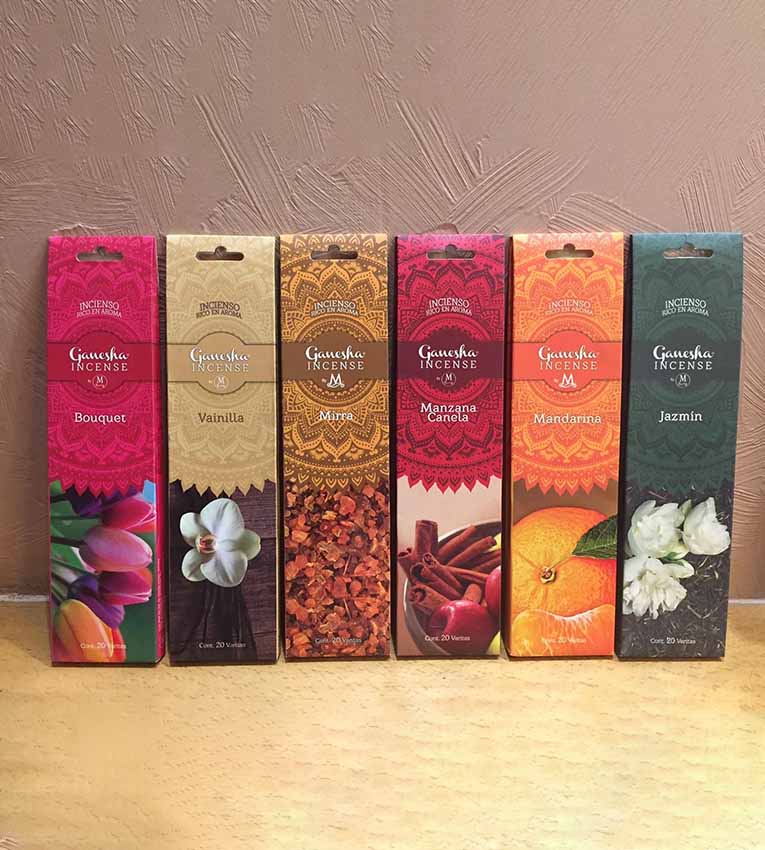
Incense Stick Packaging for Elegant, Durable & Eco-Conscious Brands
Packaging is not a mere protective packet in the world of incense; it is also an experience. The packaging creates anticipations of quality, smell, and authenticity to a customer when they first see your product. The packaging of incense sticks has to be more than just attractive aesthetics; it should also be able to offer functional durability to the fragile s
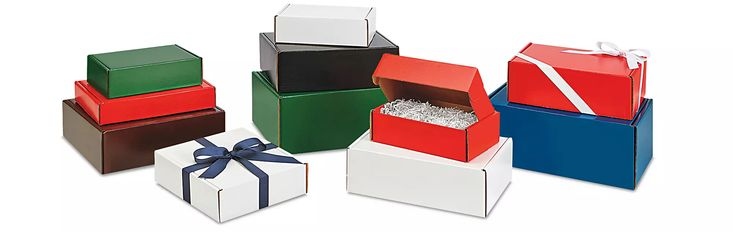
Stand Out with Colored Mailer Boxes: Packaging That Speaks Volumes
In today’s competitive marketplace, packaging is no longer just a protective layer—it’s a powerful branding tool. Businesses that understand the value of presentation are the ones that leave lasting impressions. One of the most effective ways to elevate your packaging game is by using colored mailer boxes. At The Boxology.US, we believe that packaging sho

Luxury Cosmetic Packaging Tools to Contemporary Beauty Brands
In the beauty business in the US, the packaging is not about containing, but about the initial impression. The way a product looks, feels, and presents itself is what a customer will evaluate even before trying out the product. That is why custom cosmetic boxes have become the essential component of brand success. Since skincare startups or well-developed beaut
Leave a Reply