

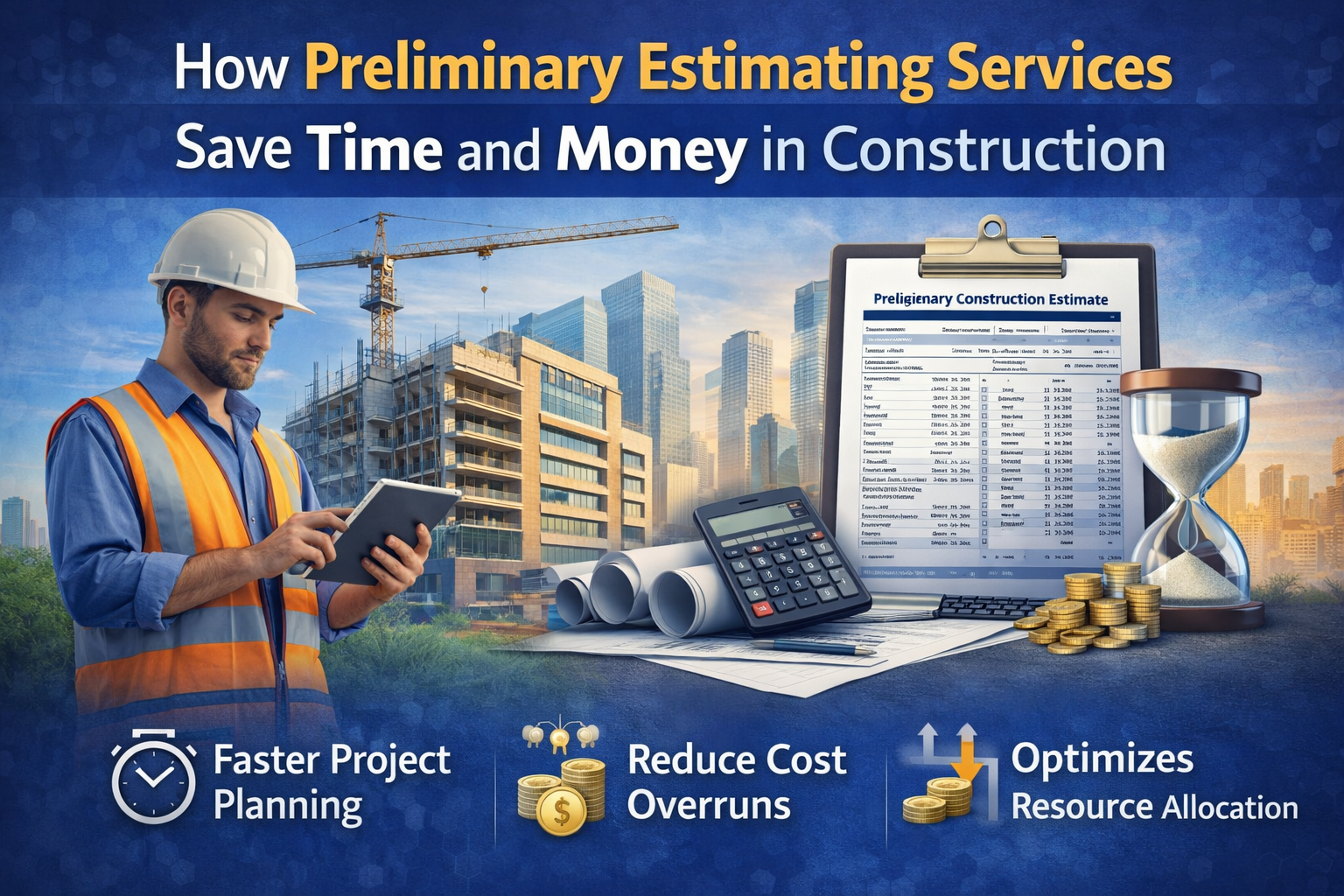
How Preliminary Estimating Services Save Time and Money in Construction
The construction industry is highly competitive, where accurate planning and budgeting determine whether a project succeeds or fails. One of the most important steps in the early phase of any construction project is preliminary estimating. Before a contractor submits a bid or begins detailed planning, preliminary estimating services provide an approximate cost analysis that helps stakeholders understand the financial scope of the project.
These services allow contractors, developers, and project managers to make informed decisions early in the planning phase. By identifying potential costs, materials, labor requirements, and possible risks, preliminary estimates help save both time and money. In modern construction projects, relying on professional preliminary estimating services has become a strategic move to improve project efficiency and profitability.This article explains how preliminary estimating services work and how they help construction professionals reduce risks, save valuable time, and control project costs.
What Are Preliminary Estimating Services?
Preliminary estimating services involve creating an initial cost estimate for a construction project based on limited design information. These estimates are usually prepared during the early planning or conceptual stage of a project.Instead of focusing on exact quantities and final specifications, preliminary estimates provide a rough cost range using available drawings, sketches, project descriptions, and historical cost data. This helps contractors and project owners determine whether the project is financially feasible before investing more time and resources.
Preliminary estimates typically include.
- Approximate material costs
- Labor requirements
- Equipment expenses
- Construction timelines
- Project overhead costs
These early projections guide decision-making and provide a roadmap for more detailed estimates later in the project lifecycle.
The Importance of Early Cost Planning in Construction
Cost planning is one of the most critical factors in construction project management. Without a clear understanding of potential costs, projects can easily exceed budgets and timelines.
Preliminary estimating services help project stakeholders.
- Evaluate project feasibility
- Compare different design options
- Plan budgets more effectively
- Reduce financial risks
By analyzing cost expectations early in the process, contractors and developers can avoid expensive mistakes and unnecessary delays.
How Preliminary Estimating Services Save Time
Faster Project Planning
One of the biggest advantages of preliminary estimating services is faster project planning. Construction projects involve multiple stages, including design, bidding, procurement, and execution. Without an early estimate, planning these stages becomes difficult.Preliminary estimates provide a quick overview of project costs and scope, allowing contractors to move forward with confidence. This reduces the time spent on uncertainty and helps teams make faster decisions.
Quick Decision-Making for Stakeholders
Developers and investors often need quick financial projections before approving a construction project. Preliminary estimates provide this information early, helping stakeholders decide whether to proceed, modify, or cancel the project.Without preliminary estimating services, decision-making can take much longer, delaying project approvals and timelines.
Efficient Bid Preparation
Contractors frequently work on multiple bids at the same time. Preparing detailed estimates for every project can be time-consuming and costly. Preliminary estimating services allow contractors to quickly assess whether a project is worth pursuing before committing to a full estimate.This saves time by focusing resources only on projects that have strong potential for success.
Reduced Design Revisions
Design changes are common in construction projects, especially during the early stages. However, frequent revisions can slow down project progress and increase costs.Preliminary estimates help identify expensive design elements early. If a design exceeds the budget, architects and engineers can make adjustments before the detailed design phase begins. This reduces the need for major revisions later in the project.
How Preliminary Estimating Services Save Money
Accurate Budget Forecasting
One of the main benefits of preliminary estimating services is improved budget forecasting. By analyzing construction costs early, contractors can develop realistic budgets and avoid unexpected expenses.Early cost projections help project owners allocate funds properly and plan financial resources effectively.
Reduced Risk of Cost Overruns
Cost overruns are one of the biggest challenges in construction projects. Unexpected expenses related to materials, labor, or design changes can significantly increase project costs.Preliminary estimates highlight potential cost risks early in the planning stage. Contractors can then develop strategies to minimize these risks and keep the project within budget.
Better Material Planning
Material costs represent a large portion of construction expenses. Preliminary estimating services provide early insights into material requirements, allowing contractors to plan procurement strategies.
By understanding approximate material quantities and costs, contractors can.
- Compare supplier pricing
- Plan bulk purchases
- Avoid material shortages
This proactive approach helps reduce overall construction costs.
Improved Resource Allocation
Construction projects require careful management of labor, equipment, and materials. Without early cost estimates, resource allocation can become inefficient.Preliminary estimating services provide a clear overview of the resources required for the project. This helps contractors allocate labor and equipment more efficiently, reducing waste and unnecessary expenses.
Avoiding Unprofitable Projects
For contractors, bidding on the wrong project can lead to financial losses. Preliminary estimates help contractors evaluate project feasibility before investing time and money in detailed bidding processes.If the initial estimate shows that a project is not financially viable, contractors can choose to focus on more profitable opportunities.
The Role of Technology in Preliminary Estimating
Modern construction estimating relies heavily on advanced software and digital tools. These technologies improve the speed and accuracy of preliminary estimates.
Some commonly used tools include.
- Construction estimating software
- Digital takeoff tools
- Cost databases
- Project management platforms
These technologies allow estimators to analyze project data quickly and generate reliable cost projections.Professional estimating companies often use advanced software to ensure accurate preliminary estimates. For example, firms like Universe Estimating provide data-driven cost analysis that helps contractors make informed decisions during the early planning stage.
Who Benefits from Preliminary Estimating Services?
Preliminary estimating services are valuable for many professionals in the construction industry.
Contractors
Contractors use preliminary estimates to evaluate bidding opportunities, prepare budgets, and plan project strategies.
Developers
Developers rely on early cost projections to determine whether a project is financially feasible before committing to construction.
Architects and Designers
Architects can use preliminary estimates to design buildings that align with budget expectations, reducing the risk of costly redesigns.
Project Managers
Project managers use early estimates to plan schedules, allocate resources, and control project costs.
When Should Preliminary Estimating Be Used?
Preliminary estimating services are most useful during the early stages of a construction project. These include.
- Conceptual design phase
- Project feasibility analysis
- Budget planning
- Early contractor involvement
Using preliminary estimates at these stages helps create a strong foundation for the entire project.
Preliminary Estimating vs Detailed Estimating
While both types of estimates are important, they serve different purposes.
Preliminary Estimates
- Prepared during early project stages
- Based on limited information
- Provide rough cost ranges
Detailed Estimates
- Prepared after final designs are complete
- Include exact quantities and specifications
- Used for final budgeting and bidding
Preliminary estimates guide early decision-making, while detailed estimates finalize project costs.
The Long-Term Impact on Construction Projects
Construction projects that start with accurate preliminary estimates often perform better in terms of budget control and scheduling. Early cost analysis reduces uncertainties and allows teams to prepare for potential challenges.
Projects that skip this step often face.
- Budget overruns
- Delays in planning
- Frequent design revisions
- Inefficient resource management
By investing in professional preliminary estimating services, construction companies can improve project efficiency and increase profitability.
Conclusion
Preliminary estimating services play a crucial role in the success of construction projects. By providing early cost insights, these services help contractors, developers, and project managers make informed decisions before construction begins.From faster project planning to improved budget forecasting, preliminary estimates save both time and money. They reduce risks, improve resource management, and help construction professionals avoid costly mistakes.In today’s competitive construction industry, accurate early estimates are no longer optional, they are essential. Contractors who rely on professional preliminary estimating services gain a significant advantage by delivering projects more efficiently, staying within budget, and maximizing profitability.Ultimately, preliminary estimating is not just about predicting costs. It is about creating a strong financial and strategic foundation that ensures successful construction projects from start to finish.
Related Posts

The new minimalist office space in Montreal
Eget gravida cum sociis natoque penatibus. Scelerisque mauris pellentesque pulvinar pellentesque habitant morbi. Erat imperdiet sed euismod nisi porta lorem mollis aliquam. Diam vulputate ut pharetra sit. In dictum non consectetur a erat nam. Pulvinar proin gravida hendrerit lectus a. Duis ultricies lacus sed turpis tincidunt. Et molestie ac feugiat sed lectus.
AC Maintenance Abu Dhabi & Air Quality Testing Dubai: The Complete Guide to Efficient Cooling and Healthy Living
In the UAE, where temperatures soar for most of the year, air conditioning is not just about comfort—it’s a necessity for daily life. Whether you’re searching for reliable AC maintenance Abu Dhabi services or professional air quality testing Dubai, maintaining both your cooling system and indoor air quality is essential for health, efficiency, and cost sa

How Online Exam Support Is Helping Students Balance Studies, Work, and Mental Health
The modern student experience has changed dramatically over the past decade. Education is no longer limited to classrooms and fixed schedules, and students today are expected to manage academic responsibilities alongside part-time jobs, family obligations, and personal well-being. This growing pressure has led many learners to explore online exam support as a w

Everything You Need to Know About Abortion Care: A Kind, Clear Guide
Sometimes life hands us moments we never expected. If you’re reading this, you’re probably in one of those moments right now. Maybe you’re holding a pregnancy test that turned positive when you weren’t planning on it. Maybe you’ve been sitting with this news for a few days, trying to figure out what to do next. Wherever you are in
Leave a Reply