

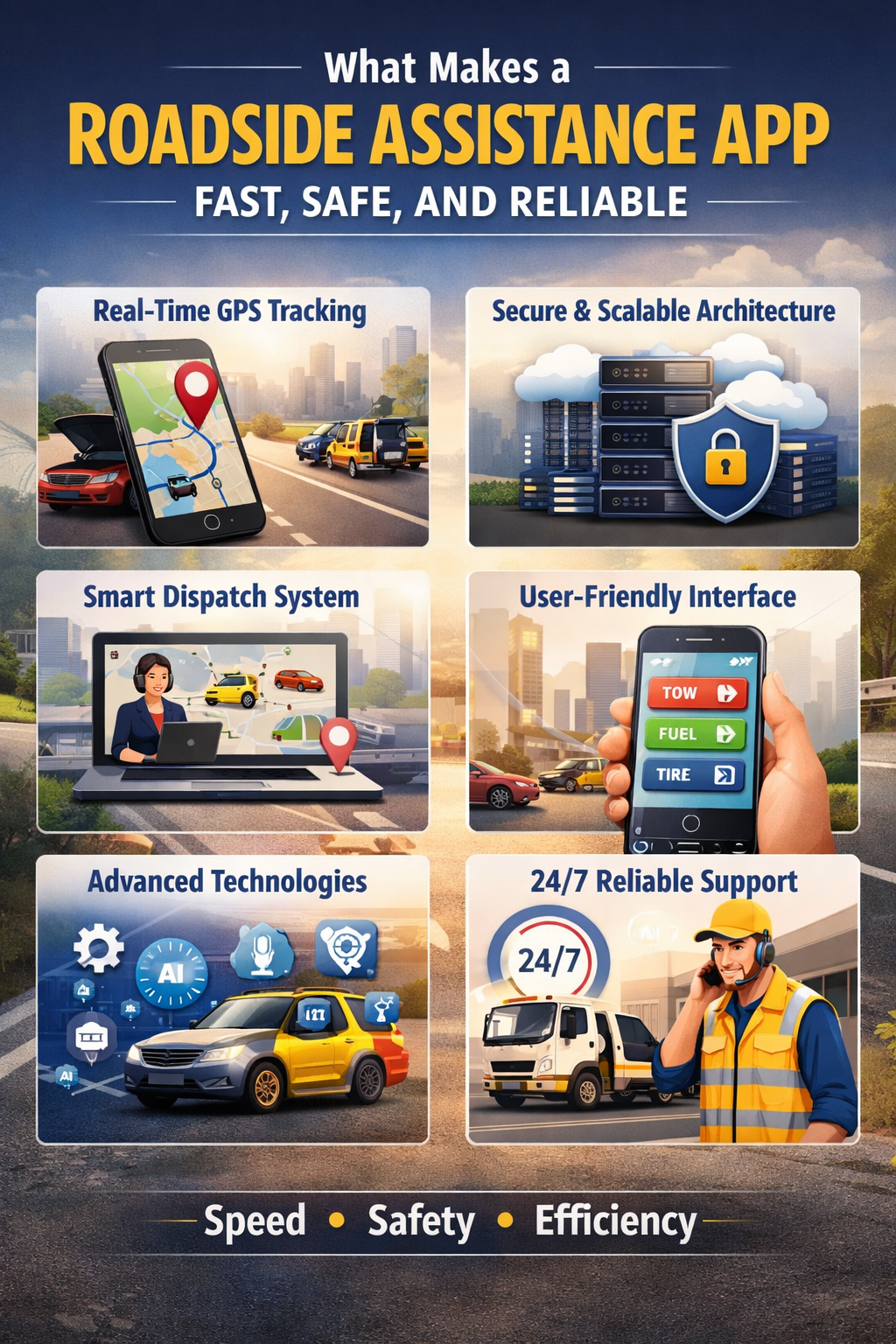
What Makes a Roadside Assistance App Fast, Safe, and Reliable
Modern drivers increasingly depend on digital solutions for quick support during unexpected vehicle breakdowns, accidents, or emergencies. A well-designed application in this space must go beyond basic functionality and deliver speed, reliability, and user safety at every touchpoint. From seamless communication to real-time tracking, these platforms play a critical role in reducing stress during roadside incidents. Understanding the essential elements behind a high-performing solution can help businesses and developers build systems that meet user expectations and industry standards effectively.
Core Features That Define a High-Performance Assistance App
A high-performing roadside solution is built on a foundation of carefully selected features that address both user needs and operational efficiency. The objective is to minimize response time while ensuring a seamless user experience.
Key features include:
- Real-time GPS tracking for accurate location detection
- Instant request dispatching to nearby service providers
- Integrated communication channels such as chat or call options
- Automated status updates to keep users informed
- Digital payment support for convenience and transparency
When planning Roadside Assistance App development, integrating these features ensures the platform is functional, responsive, and scalable. Each component must work cohesively to deliver a frictionless experience during high-stress situations.
Importance of Real-Time Tracking and Smart Dispatch Systems
Real-time tracking is one of the most critical aspects of any roadside assistance platform. It ensures that help reaches users as quickly as possible by accurately identifying their location and assigning the nearest service provider.
A smart dispatch system enhances efficiency by:
- Reducing idle time for service providers
- Optimizing route selection using traffic data
- Prioritizing urgent or high-risk requests
- Balancing workload among available operators
These systems rely heavily on data analytics and machine learning algorithms to improve over time. In advanced implementations, predictive analytics can even anticipate peak demand periods and allocate resources proactively.
Ensuring User Safety Through Secure App Architecture Design
Safety is not limited to physical assistance; it also includes digital security and data protection. A reliable app must safeguard user information while ensuring trustworthy service delivery.
Critical safety measures include:
- End-to-end data encryption to protect sensitive information
- User authentication protocols such as OTP or biometric login
- Verified service provider profiles to ensure credibility
- Emergency contact integration for added security
Developers must prioritize secure coding practices and regular vulnerability assessments. A robust architecture minimizes risks such as data breaches, unauthorized access, and service misuse.
Role of Scalable Infrastructure in App Reliability and Speed
Scalability is essential for maintaining performance under varying demand levels. As user numbers grow, the app must handle increased traffic without compromising speed or functionality.
Important infrastructure considerations include:
- Cloud-based deployment for flexibility and scalability
- Load balancing to distribute traffic evenly
- Microservices architecture for modular development
- High availability systems to prevent downtime
During Roadside Assistance App development, choosing the right infrastructure ensures that the platform remains stable even during peak usage, such as extreme weather conditions or holiday travel periods.
User Experience Design Elements That Improve Response Efficiency
A well-designed user interface directly impacts how quickly users can request help. In emergency scenarios, simplicity and clarity are more important than visual complexity.
Effective UX design should focus on:
- Minimal steps to request assistance
- Clear and readable interface elements
- Quick-access emergency buttons
- Intuitive navigation for all age groups
- Visual feedback for actions taken
The goal is to eliminate confusion and reduce the time it takes for users to initiate a service request. A streamlined experience contributes significantly to perceived speed and reliability.
Integrating Advanced Technologies for Faster Assistance Services
Emerging technologies are transforming how roadside assistance platforms operate. Incorporating these innovations can significantly enhance efficiency and user satisfaction.
Key technologies include:
- Artificial intelligence for predictive maintenance alerts
- Internet of Things integration for vehicle diagnostics
- Automated chatbots for instant query resolution
- Blockchain technology for secure transaction records
These advancements allow platforms to move from reactive to proactive service models. For example, IoT-enabled vehicles can automatically send alerts when a breakdown is imminent, enabling faster intervention.
Data Management Strategies for Accuracy and Operational Efficiency
Accurate data is the backbone of any reliable system. Efficient data management ensures that all operations, from dispatching to billing, function without errors.
Effective strategies include:
- Centralized databases for real-time information access
- Data validation mechanisms to reduce inaccuracies
- Analytics dashboards for performance monitoring
- Regular data backups to prevent loss
A strong data framework also supports decision-making by providing insights into user behavior, service demand, and operational bottlenecks.
Challenges in Developing Reliable and Secure Assistance Platforms
Despite technological advancements, developers face several challenges when building roadside assistance solutions.
Common challenges include:
- Maintaining real-time performance under high traffic conditions
- Ensuring data security across multiple touchpoints
- Managing diverse service provider networks
- Handling geographic variability in service availability
- Balancing cost with scalability and performance
Additionally, businesses exploring roadside assistance business ideas must consider regulatory compliance, insurance integration, and regional service differences. Overcoming these challenges requires careful planning, continuous testing, and iterative improvements.
Future Trends Shaping the Roadside Assistance App Ecosystem
The future of roadside assistance applications is driven by innovation and evolving user expectations. Several trends are expected to redefine the landscape.
Notable trends include:
- Increased adoption of autonomous vehicle support systems
- Expansion of subscription-based assistance models
- Integration with smart city infrastructure
- Growth of white label roadside assistance app solutions for faster market entry
- Enhanced personalization through AI-driven insights
These trends highlight the shift toward more connected, intelligent, and user-centric platforms. Businesses investing in Roadside Assistance App development must stay aligned with these changes to remain competitive and relevant.
Conclusion
A fast, safe, and reliable roadside assistance solution is the result of thoughtful design, robust technology, and a deep understanding of user needs. From real-time tracking to secure architecture and scalable infrastructure, every component plays a vital role in delivering a seamless experience. As technology continues to evolve, the emphasis will remain on improving response times, ensuring safety, and enhancing operational efficiency. Organizations that focus on these fundamentals will be better positioned to build solutions that truly support users in critical moments.
Related Posts

Anti Aging Cream: The Ultimate 2026 Guide to Youthful, Resilient Skin
Aging is a privilege, but that doesn’t mean you can’t feel confident in your own skin. Every morning, millions of people scan their bathroom mirrors, searching for fine lines that weren’t there last year. The skincare industry knows this—and that’s why the global anti aging cream market is booming. But with thousands of options, how do you separate

Reasons to Enroll in a Driving School Angus for Professional Training
Explore how a professional Driving School Angus helps you build confidence, learn safe driving skills, and master Class 4 inspection preparation.

Corteiz Fashion Guide How to Wear It Right
Introduction to Corteiz Style Corteiz has become one of the most influential names in modern streetwear because of its raw identity and rebellious energy. The brand is not about polished fashion or luxury aesthetics. It is about real street culture, confidence, and individuality. Wearing Corteiz the right way means understanding its roots and keeping your outfi

Why Every Restaurant Startup in the US Needs a Consultant in 2026
Starting a restaurant in the United States is exciting, but it is not easy. Many new restaurant businesses fail in the first few years because of poor planning, high costs, and strong competition. That is why many new owners now choose Restaurant Consulting in US to help them start the right way. In 2026, having a restaurant consultant is not a luxury — it is
Leave a Reply