

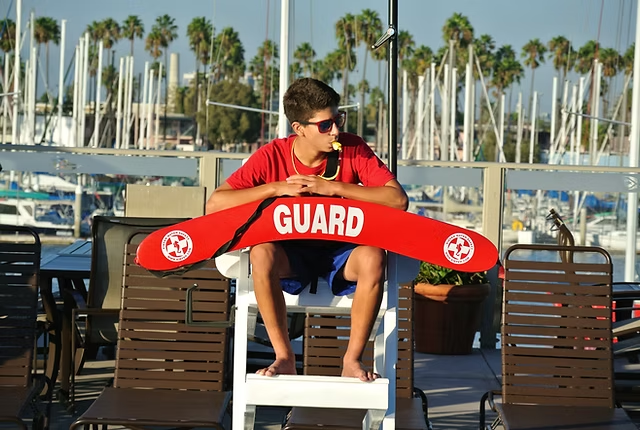
Lifeguard Certification: Complete Guide to Getting Certified and Starting Your Career
Lifeguard certification is the official credential required to work as a lifeguard and ensure safety in aquatic environments. Whether you’re aiming for a part-time job, a summer position, or a long-term career, becoming certified equips you with essential life-saving skills and prepares you for real-world emergencies.
What Is Lifeguard Certification?
Lifeguard certification is a professional qualification that proves you have completed training in water safety, rescue techniques, CPR, AED use, and first aid. It ensures you are capable of preventing accidents and responding effectively in emergencies.
Most employers require certification before hiring lifeguards, making it a necessary step for anyone entering the field.
Why Lifeguard Certification Is Important
Getting certified offers several important benefits:
- Learn life-saving rescue techniques
- Gain CPR, AED, and first aid skills
- Improve confidence and decision-making
- Meet job requirements for lifeguarding roles
- Help protect lives in aquatic environments
Lifeguard certification not only prepares you for employment but also gives you valuable skills that can be used in everyday situations.
Requirements for Lifeguard Certification
Before enrolling in a certification course, you must meet certain prerequisites:
- Minimum age: Typically 15–16 years
- Swimming ability: 200–300 meters continuously
- Treading water: 1–2 minutes
- Object retrieval test: Retrieve a weighted object from deep water
These requirements ensure you are physically capable of performing rescues and handling emergency situations.
What You Learn During Certification
A lifeguard certification course includes both theoretical and practical training:
1. Water Rescue Techniques
You’ll learn how to rescue active and passive victims using proper techniques and equipment.
2. CPR, AED, and First Aid
Training includes Cardiopulmonary Resuscitation (CPR), use of an AED, and first aid for injuries and medical emergencies.
3. Surveillance and Prevention
You’ll develop skills to monitor swimmers, identify risks, and prevent accidents before they occur.
4. Emergency Action Plans
You’ll learn how to respond quickly and follow structured procedures during emergencies.
5. Spinal Injury Management
You’ll be trained to assist individuals with suspected spinal injuries safely and effectively.
Duration and Structure of Certification Courses
Most lifeguard certification courses take 20 to 30 hours to complete and are offered in different formats:
- Weekend intensive courses
- Weekly sessions
- Hybrid (online + in-person training)
Courses include classroom instruction, practical water training, rescue simulations, and final exams.
Exams and Certification Process
To earn your lifeguard certification, you must:
- Pass a written exam
- Demonstrate practical rescue skills
- Successfully complete CPR and first aid assessments
Once completed, you’ll receive certification valid for two years.
Benefits of Lifeguard Certification
Earning your certification provides many advantages:
- Develop essential life-saving skills
- Improve physical fitness and endurance
- Build confidence and leadership abilities
- Gain job-ready qualifications
- Prepare for emergency situations
Career Opportunities After Certification
With a valid lifeguard certification, you can work in:
- Swimming pools
- Beaches and waterfronts
- Water parks
- Resorts and hotels
- Recreation and fitness centers
With experience, you can advance to roles such as head lifeguard, instructor, or aquatic supervisor.
Contact for Lifeguard Certification
If you’re ready to enroll in a lifeguard certification course or need more information, contact:
Phone: 786-284-8734
Address: 80 SW 8th Street, 20th Floor, Miami, FL 33130
They can help you find certification programs, schedules, and enrollment details.
Final Thoughts
Lifeguard certification is more than just a requirement—it’s a valuable skill set that prepares you to save lives and respond confidently in emergencies. It builds strength, sharpens awareness, and opens the door to meaningful career opportunities.
Related Posts
Exhaust Fan Duct Cleaning Abu Dhabi – Why It Matters and How to Keep Your System Efficient
In a city like Abu Dhabi, where high temperatures and humidity are a part of daily life, proper ventilation plays a crucial role in maintaining a comfortable and healthy indoor environment. One of the most overlooked aspects of home and commercial maintenance is Exhaust fan duct cleaning Abu Dhabi. Whether in kitchens, bathrooms, or industrial settings, exhaust

Pink Salt Price in Pakistan – Latest Rates, Market Insights, and Buyer Awareness Guide
Introduction to Pink Salt Price in Pakistan Pink salt price in Pakistan has become an important topic as this natural mineral continues to gain both local and global attention. Extracted mainly from the famous Khewra salt mines, Pakistan’s pink salt is considered one of the purest forms of salt available. Despite its abundance, prices are not fixed and vary d

Custom Handle Boxes With Compatible Handles Design
Durable and functional packaging, packed in custom handle boxes with matching handles, significantly increases branding and better product handling.

How to Choose the Perfect Remy Lace Front Wig for Thin Hair UK
Finding the right wig can be a game-changer for anyone struggling with thin hair. For women and men experiencing hair thinning, hair loss, or simply looking to switch up their style, a Remy lace front wig offers a natural look, comfort, and versatility. In the UK, the market for high-quality wigs has grown significantly, providing numerous options for different
Leave a Reply