

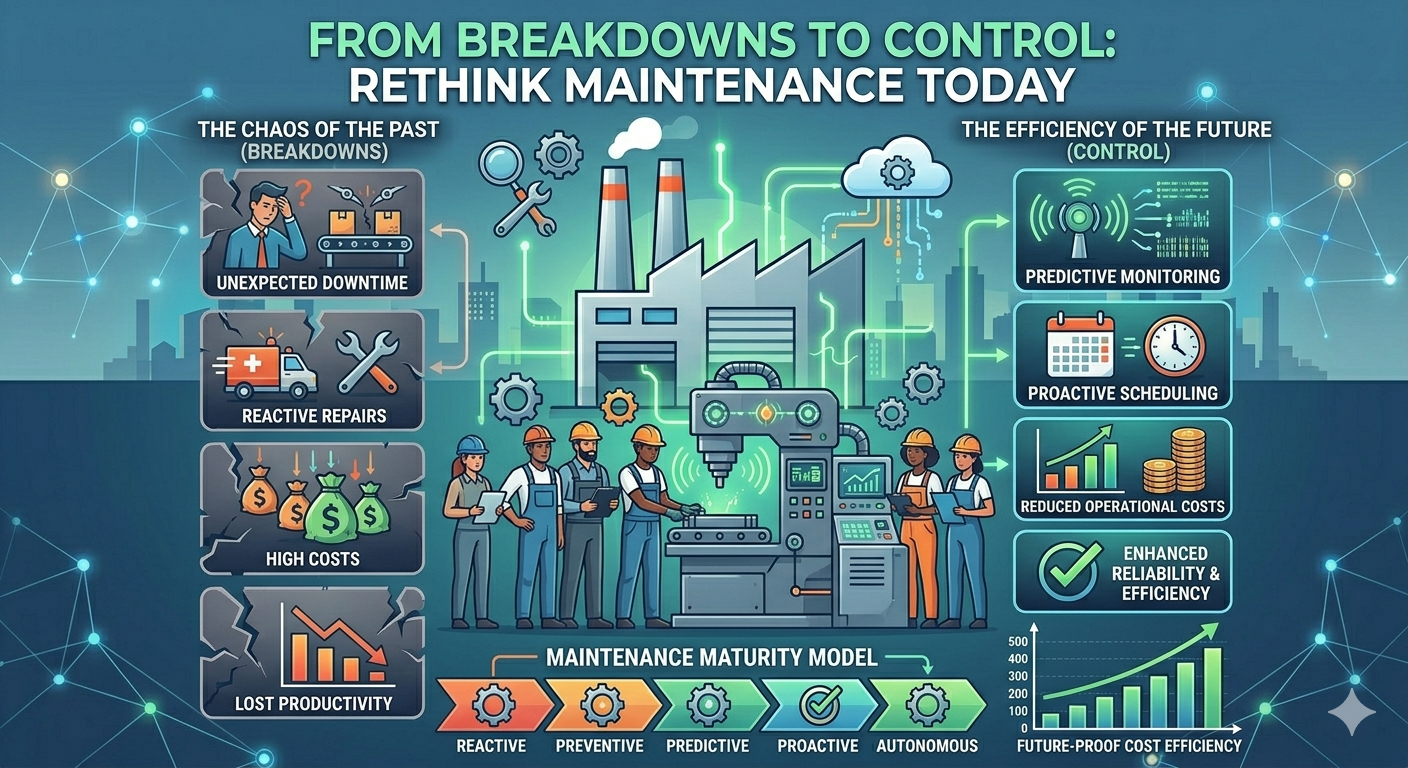
From Breakdowns to Control. Rethink Maintenance Today
Breakdowns have a way of showing up at the worst possible time. A machine goes down mid project, crews stand around waiting, and the schedule starts slipping before anyone can react. For many construction teams, this cycle feels familiar. Equipment runs until it fails, then everyone scrambles to fix the problem and get back on track.
This approach creates more damage than most teams realize. Costs rise, productivity drops, and pressure builds across the job site. The shift toward control begins when maintenance stops being reactive and becomes part of a structured system. This is where construction equipment maintenance software changes the way teams operate.
The Cost of Running Equipment to Failure
Running equipment until it breaks might seem efficient at first. It feels like squeezing every bit of value out of the asset. In reality, it leads to higher repair costs, longer downtime, and a shorter equipment lifespan.
Unexpected failures rarely come alone. When one component fails, it often affects other parts of the machine. What could have been a minor fix turns into a major repair. Add in the cost of idle crews and delayed work, and the financial impact grows quickly.
Contractors who rely on manual tracking or scattered records often miss early warning signs. Maintenance gets pushed aside until it becomes urgent. Over time, this pattern becomes expensive and difficult to manage.
Construction equipment maintenance software introduces a more controlled approach by tracking usage, monitoring performance, and scheduling service before issues escalate.
Why Reactive Maintenance Keeps Teams Stuck
Reactive maintenance creates a constant state of urgency. Teams move from one problem to the next without a clear plan. The shop stays busy, but progress feels slow because new issues keep appearing.
Several factors keep teams stuck in this cycle:
- Limited visibility into equipment condition
- Incomplete service records
- Poor communication between field and shop teams
- Lack of structured maintenance schedules
Without accurate data, decisions are based on guesswork. Equipment may be over serviced in some cases and neglected in others. This imbalance leads to inefficiencies and increased costs.
Construction equipment maintenance software provides a central system where all maintenance activities are tracked and organized. This allows teams to move from reacting to planning.
Building a Preventive Maintenance Mindset
Preventive maintenance focuses on addressing issues before they become serious problems. It requires consistency, accurate data, and a clear understanding of how equipment is being used.
Shifting to this mindset involves several key steps:
- Tracking engine hours and usage data automatically
- Scheduling maintenance based on real activity instead of fixed intervals
- Recording service history for every asset
- Standardizing inspection processes across job sites
Construction equipment maintenance software supports these steps by automating data collection and scheduling. Instead of relying on memory or manual logs, teams have a system that keeps everything on track.
This approach reduces unexpected failures and creates a more predictable maintenance routine.
Real Time Visibility Changes Everything
One of the biggest challenges in equipment maintenance is the lack of real time visibility. Managers often find out about problems after they have already caused delays.
Real time data changes how decisions are made. When teams can see equipment status, usage, and maintenance needs in one place, they can act quickly and with confidence.
With construction equipment maintenance software, managers can:
- Monitor equipment health across multiple job sites
- Receive alerts for upcoming service or potential issues
- Track work orders and repair progress in real time
This level of visibility reduces uncertainty and keeps operations moving without unnecessary interruptions.
Better Coordination Between Field and Shop
Maintenance is not just about fixing equipment. It is also about communication. When field operators, supervisors, and shop teams are not aligned, issues get missed or delayed.
A common problem is the gap between reporting and action. Operators may notice a small issue but fail to report it properly. By the time the problem reaches the shop, it has already grown.
Construction equipment maintenance software creates a shared system where:
- Operators can report issues directly from the field
- Supervisors can prioritize and assign work orders
- Shop teams can track repairs and update status
This improves coordination and ensures that problems are addressed quickly and efficiently.
Extending Equipment Life Through Consistency
Equipment represents a significant investment for any construction company. Protecting that investment requires consistent care and attention.
Irregular maintenance shortens the lifespan of machines. Components wear out faster, performance declines and reliability drops. Replacing equipment earlier than expected adds pressure to capital budgets.
A structured maintenance program supported by construction equipment maintenance software helps extend equipment life by:
- Ensuring timely servicing
- Keeping detailed service records
- Identifying patterns that indicate potential issues
Consistency leads to better performance and reduces the need for frequent replacements.
Reducing Emergency Repairs and Downtime
Emergency repairs disrupt operations and create stress across the team. They often require immediate attention, pulling resources away from planned work.
Reducing these emergencies requires a proactive approach. When maintenance is scheduled and tracked effectively, fewer surprises occur.
Construction equipment maintenance software helps reduce emergency repairs by:
- Highlighting overdue maintenance tasks
- Providing alerts for critical issues
- Allowing teams to plan repairs during non peak hours
This keeps projects on schedule and reduces the impact of unexpected breakdowns.
Data Driven Decisions for Maintenance Planning
Maintenance decisions should be based on data, not assumptions. Without accurate information, it is difficult to know which equipment needs attention and when.
Construction equipment maintenance software collects and organizes data from various sources. This includes usage, service history, and performance metrics.
With this data, teams can:
- Identify high maintenance assets
- Adjust maintenance schedules based on actual usage
- Evaluate the cost of repairs versus replacement
Better data leads to smarter decisions and more efficient use of resources.
Improving Compliance and Safety Standards
Maintenance plays a critical role in safety and compliance. Equipment that is not properly maintained can create risks for operators and others on the job site.
Regulatory requirements often demand accurate records of inspections and maintenance activities. Keeping track of this information manually can be challenging.
Construction equipment maintenance software simplifies compliance by:
- Maintaining detailed records of inspections and repairs
- Providing documentation for audits
- Ensuring that maintenance tasks are completed on time
This reduces risk and supports a safer working environment.
Creating a Culture of Accountability
A strong maintenance program requires accountability at every level. Operators need to report issues, supervisors need to follow up, and shop teams need to complete work on time.
Without a clear system, accountability becomes difficult to enforce. Tasks get overlooked, and responsibilities are unclear.
Construction equipment maintenance software creates transparency by tracking who reported an issue, who is responsible for the repair, and when the work was completed. This encourages better habits and improves overall performance.
From Chaos to Control
Moving from breakdown driven maintenance to a controlled system takes time and effort. It involves changing habits, adopting new tools, and aligning teams around a common process.
The benefits become clear as operations stabilize. Downtime decreases, costs become more predictable, and equipment performs more reliably.
Construction equipment maintenance software plays a central role in this transition. It provides the structure and visibility needed to manage maintenance effectively.
Rethinking Maintenance for Long Term Success
Maintenance is often seen as a necessary expense. In reality, it is a key driver of operational efficiency and profitability. When managed correctly, it supports every aspect of the business.
Rethinking maintenance means looking beyond immediate repairs and focusing on long term performance. It requires a shift in mindset and the right tools to support that change.
Construction equipment maintenance software enables this shift by bringing data, processes, and teams together in one system. It helps construction companies move toward a more controlled and efficient approach to maintenance.
Conclusion
Equipment maintenance has a direct impact on how construction projects perform day to day. When maintenance stays reactive, problems continue to surface at the worst possible moments, affecting schedules, costs, and team productivity.
A more structured approach brings stability into operations. With clear processes, accurate data, and consistent tracking, teams gain better control over their equipment and reduce unnecessary risks. Construction equipment maintenance software supports this shift by connecting field activity, shop operations, and maintenance planning into one system.
Over time, this level of control leads to fewer disruptions, better equipment performance, and stronger project outcomes. Construction companies that rethink maintenance today place themselves in a stronger position to manage growth, control costs, and deliver work with greater confidence.
Related Posts
How Can a Mortgage Calculator In Dubai Help You Plan Home Finances?
Buying a home in Dubai is an exciting milestone, but it comes with financial decisions that require careful planning. A mortgage calculator in Dubai is an invaluable tool for prospective homeowners, allowing them to estimate monthly payments, interest rates, and overall affordability before committing to a property. By inputting key details such as loan amount,
Comprehensive Guide to Professional Home Inspection Services
Home Inspection Gulf Breeze FL provides a critical service for anyone purchasing, selling, or maintaining a property. A thorough home inspection evaluates the condition of a house, identifying potential issues before they escalate into costly repairs. Professional inspectors assess structural integrity, electrical systems, plumbing, HVAC, and roofing, among oth

AWS Managed Services Provider for Scalable Solutions
An AWS Managed Services Provider (MSP) plays a crucial role in helping businesses efficiently manage, optimize, and scale their cloud infrastructure on Amazon Web Services. As organizations increasingly shift to cloud environments, managing complex AWS ecosystems requires specialized expertise, continuous monitoring, and proactive support—this is where AWS MS

GST Login: Access Your GST Portal Dashboard Online
The Goods and Services Tax System (GST System) in India offers a one-stop solution to the various needs of the taxpayers and businesses, allowing them to perform their tax-related activities under one umbrella and going much beyond simple filing of returns. The GST registration is a secure page where you log in to a personal dashboard to file returns, chec
Leave a Reply