

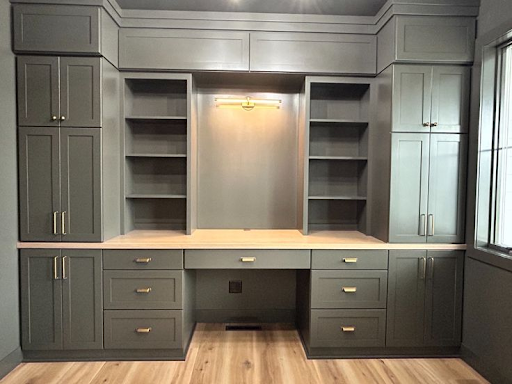
Eco-Friendly Cabinet Materials for Sustainable Living
Most people planning a kitchen remodel obsess over cabinet door styles, paint colors, and drawer pulls. Almost nobody stops to think about what those cabinets are actually built from — or what those materials are quietly releasing into the air their family breathes every single day.
Here is something worth knowing before you buy anything. A brand-new kitchen can actually make your indoor air quality worse, not better. The adhesives, resins, and coatings baked into most standard cabinet materials release chemical gases into your home — sometimes for months after installation is completely finished.
The good news? Smarter options exist. And choosing them does not mean ugly cabinets, a blown budget, or weeks of confusing research. It means making a few deliberate decisions that protect your family’s health and the planet at the same time. This guide walks you through exactly how to do that.
The Hidden Cost of Conventional Cabinets
Picture a typical set of budget kitchen cabinets. They look fine in the showroom. They install quickly. Three years later the shelves are sagging. Five years in the finish is peeling near the sink. Seven years in you are shopping for replacements all over again.
That cycle is not just a financial headache. It is an environmental problem hiding in plain sight.
Every cabinet set that hits a landfill represents extracted raw materials, manufacturing energy, chemical waste, and transportation emissions all for a product that barely lasted a decade. Most budget kitchen cabinets are constructed from particleboard and MDF bonded with formaldehyde-containing adhesives. The wood sourcing frequently has zero accountability for responsible forest management.
Here is the sustainability truth nobody puts on a price tag: a durable quality cabinet lasting thirty years has a dramatically smaller environmental footprint than three cheap replacements covering the same period. Quality is a sustainability choice whether it gets marketed that way or not.
Indoor Air Quality
The air inside your home is frequently more polluted than the air outside. Cabinet off-gassing is one of the primary contributors to that problem and most homeowners have no idea.
VOCs — volatile organic compounds — evaporate from adhesives, resins, and finishing products used in standard cabinet manufacturing. Formaldehyde is the most concerning of these. It lives in the urea-formaldehyde resins binding particleboard and MDF together and releases slowly into your living space after installation.
Children are the most vulnerable people in this equation. They breathe more air relative to body weight than adults and spend considerably more time at home. Anyone with asthma, allergies, or respiratory sensitivities faces elevated risk too.
Choosing low-VOC cabinet materials is not an extreme position. It is a straightforward health decision and one that responsible Milwaukee cabinet makers and suppliers are making increasingly easy to act on.
The Honest Truth About MDF and Particleboard
These two materials dominate the cabinet industry for one reason: they are cheap and easy to manufacture at scale. Understanding their environmental reality honestly is important before exploring better alternatives.
Standard particleboard is compressed wood chips and sawdust held together with synthetic resin. Standard MDF uses finer wood fiber bonded under heat with urea-formaldehyde. Both off-gas. Both struggle with moisture. Neither holds screws as reliably as plywood or solid wood over the long term.
CARB Phase 2 compliant and NAF (no-added-formaldehyde) versions are genuinely better — meaningfully lower emissions and worth specifying when these materials are unavoidable. For painted door fronts specifically, eco-friendly MDF remains a reasonable compromise. As a cabinet box material though, plywood and solid wood outperform it on every measure that matters for longevity.
Solid Wood
FSC-certified solid wood cabinets represent one of the most genuinely sustainable choices available — when the sourcing is verifiable and the construction quality is there.
The Forest Stewardship Council tracks wood through the entire supply chain from forest floor to finished product. That chain of custody documentation is the difference between a cabinet that genuinely supports responsible forest management and one that just claims to.
Domestically sourced maple, oak, cherry, and walnut are all strong sustainable species choices. They come from managed North American forests, perform beautifully over decades, and — crucially can be sanded, refinished, and restored rather than replaced. A solid wood cabinet that gets refinished at year fifteen instead of landfilled is the sustainability story in its simplest form.
Plywood The Most Underrated Sustainable Choice
Quality plywood cabinet boxes deserve far more attention in the sustainability conversation than they typically receive.
Plywood layers thin wood veneers in alternating grain directions — a process that extracts more usable material from the same volume of wood than solid lumber cutting does. The result is structurally superior, moisture-resistant, and holds fasteners reliably under years of daily kitchen stress.
The formaldehyde concern exists in standard plywood too — it lives in the adhesive layers. The solution is straightforward: specify NAF plywood or soy-based adhesive versions, both widely available through quality cabinet suppliers. For cabinet boxes specifically, this upgrade from particleboard adds modest cost and dramatically extends product life.
Bamboo and Reclaimed Wood
Bamboo cabinet material is harvest-ready in three to five years versus thirty to eighty for hardwood trees. It regenerates from its own root system, requires no replanting, and sequesters carbon efficiently. The concern is processing — some bamboo products use formaldehyde-heavy adhesives that undermine their green credentials. Look for FSC-certified bamboo with verified low-formaldehyde manufacturing.
Reclaimed wood cabinets carry the lowest new-resource footprint of any option in this guide. Material salvaged from demolished buildings, old barns, and decommissioned factories requires no new harvesting and produces a kitchen with genuine character — grain patterns, weathering marks, and natural variation that no catalog product can replicate. For Milwaukee homeowners who want a kitchen that tells a story, reclaimed wood delivers something entirely unique.
Low-VOC Finishes and Certifications
Choosing a sustainable cabinet material and coating it with a high-VOC finish undermines the whole effort. The finish is part of the eco-friendly equation not an afterthought.
Water-based finishes carry substantially lower VOC content than oil-based alternatives and have improved significantly in kitchen durability over the past decade. Natural options like linseed oil and plant-based lacquers go further — zero synthetic chemical content with genuinely beautiful results on wood surfaces. Zero-VOC cabinet paint is now widely available for painted finishes with no color or performance compromise.
On certifications: FSC covers responsible wood sourcing. CARB Phase 2 covers formaldehyde emissions in composite materials. GREENGUARD Gold covers indoor air quality in environments with children present. These three certifications together cover the most important bases. Ask for documentation — not general claims. Greenwashing in the cabinet industry is common enough that vague eco-friendly language without paperwork should always raise a flag.
The Real Cost and Finding the Right Cabinet Maker
Eco-friendly kitchen cabinets cost more upfront in some cases that is simply true. But the comparison only makes sense over a realistic product lifespan.
A quality plywood-constructed, low-VOC finished cabinet set lasting twenty-five years costs less per year than particleboard cabinets replaced twice in the same period — especially once installation labor is factored into each replacement. The health costs of years of VOC exposure never appear on an invoice either, but they are real.
For Milwaukee homeowners specifically ready to start that conversation, find premium sustainable cabinet options in Milwaukee with makers who can provide full certification documentation, verifiable sourcing, and finished project references. Local craftspeople with shorter supply chains frequently deliver both better sustainability credentials and better accountability than national manufacturers ever can.
Conclusion
The homeowner who walked into this article without thinking about cabinet materials is not the same person finishing it.You now know why standard cabinet materials carry real health and environmental costs. You understand the difference between particleboard and quality plywood, between FSC-certified solid wood and unverified lumber, between a high-VOC finish and a clean water-based alternative.Sustainable cabinet choices are more accessible, more beautiful, and more cost-effective over time than the industry typically lets on. The knowledge to make genuinely better decisions is now yours.
FAQs
Q1. What is the most eco-friendly cabinet material available?
Reclaimed wood holds the top spot. It requires no new harvesting, produces zero new manufacturing waste, and gives salvaged material a meaningful second life inside your home.
Q2. Are eco-friendly cabinets more expensive than standard ones?
Some options cost more upfront yes. But quality sustainable cabinets last two to three times longer than cheap particleboard alternatives, making the long-term cost per year significantly lower.
Q3. What does CARB Phase 2 compliant actually mean?
It means the cabinet material meets California’s strict formaldehyde emission limits one of the toughest standards in the world. It is the minimum certification worth looking for in any composite wood cabinet product.
Related Posts

The Ultimate Guide to Choosing the Best Backlinks Monitoring Tool for Your SEO Strategy
In the fast-paced world of SEO, backlinks remain one of the most powerful ranking factors. But here’s the truth: building backlinks is only half the job. The real challenge lies in tracking, analyzing, and maintaining them. That’s where a reliable backlinks monitoring tool becomes essential. If you’re serious about improving your website’s authority and

Friendly City Flea: Where Bradenton’s Creative Community Meets
Friendly City Flea: Where Bradenton’s Creative Community Meets If you’ve lived in Bradenton for more than five minutes, you know that this town is secretly crawling friendlycityflea.com with talented people. They’re in garages, backyards, and coffee shops, making things that are frankly cooler than anything you’ll find on a “top ten” lis
The Future of Living: Balancing AI Efficiency, Financial Growth, and Holistic Wellness
In the rapidly evolving landscape of the 21st century, the boundaries between our professional success, financial stability, and personal well-being are becoming increasingly blurred. We no longer live in a world where these pillars of life exist in silos. To truly thrive today, one must leverage cutting-edge technology to excel at work, utilize data-driven ins

Why Aspire Vape Devices Are So Popular Today
Aspire Vape Review: Features, Types and Benefits The demand for reliable and high-quality vaping devices has grown rapidly, and Aspire vape products have earned a strong reputation in this space. Known for their innovation, durability, and user-friendly designs, Aspire devices are widely used by both beginners and experienced vapers. If you are exploring vaping
Leave a Reply