

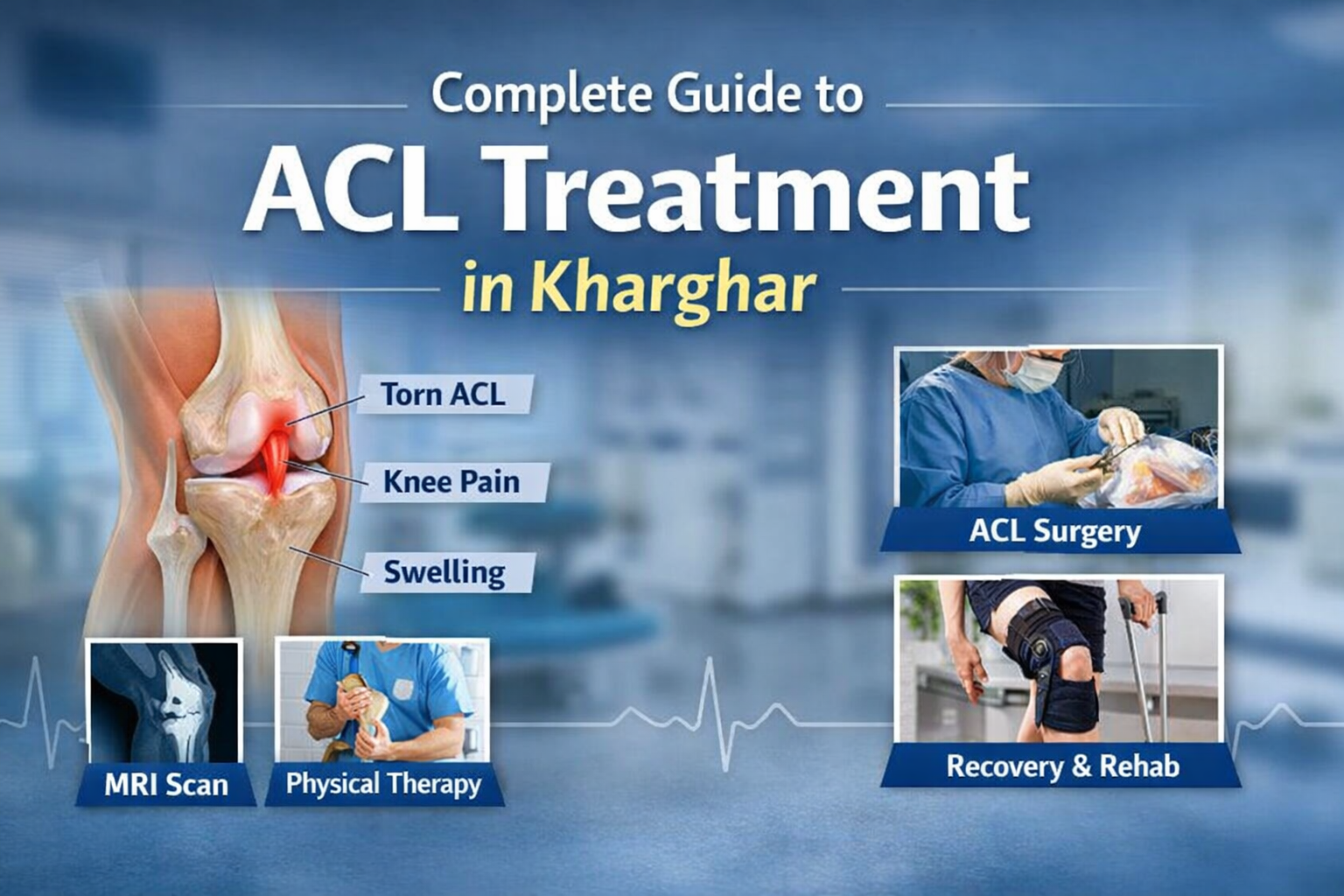
Complete Guide to ACL Treatment in Kharghar
Knee pain can make even simple daily activities feel difficult. Walking, climbing stairs, or even sitting for a long time may become uncomfortable. One common reason for serious knee problems is an ACL injury. The ACL, or Anterior Cruciate Ligament, is an important part of the knee that helps keep it stable. When this ligament gets injured, it can affect movement and balance.
This guide will help you understand what an ACL injury is, how it is treated, and what you can expect during recovery. Everything is explained in very simple language so that anyone can understand.
What is an ACL Injury?
The ACL is one of the main ligaments inside your knee. It connects the thigh bone to the shin bone and helps control movement. It also keeps your knee from moving too far forward.
An ACL injury usually happens when:
- You suddenly stop while running
- You change direction quickly
- You land badly after a jump
- You twist your knee in an awkward way
These injuries are common in sports like football, cricket, basketball, and badminton. But they can also happen during everyday activities if you slip or fall.
Common Symptoms
If you have hurt your ACL, you may notice some of these signs:
- A popping sound at the time of injury
- Sudden pain in the knee
- Swelling within a few hours
- Difficulty in walking or standing
- Feeling like your knee is unstable or giving way
If you experience these symptoms, it is important to see a doctor quickly. Early care can prevent further damage.
Diagnosis of ACL Injury
To confirm an ACL injury, a doctor will:
- Ask about how the injury happened
- Check your knee movement and stability
- Recommend imaging tests like MRI
An MRI scan gives a clear picture of the ligament and helps in planning the treatment.
Types of ACL Treatment
Treatment depends on how serious the injury is and your lifestyle.
1. Non Surgical Treatment
This is suitable for mild injuries or for people who are less active.
It may include:
- Resting the knee
- Using ice to reduce swelling
- Wearing a knee brace
- Physiotherapy exercises
This approach helps strengthen the muscles around the knee and improves stability.
2. Surgical Treatment
For severe injuries, especially in active individuals, surgery may be required.
In surgery:
- The damaged ligament is replaced with a new one
- The new ligament is usually taken from your own body (like hamstring tendon)
After surgery, proper care and exercise are very important for recovery.
If you are looking for ACL treatment in Kharghar, you will find both surgical and non surgical options available based on your condition.
Importance of Physiotherapy
Physiotherapy plays a major role in both types of treatment. It helps:
- Reduce pain and swelling
- Improve knee movement
- Strengthen muscles
- Restore normal walking
Without proper physiotherapy, recovery may be slow or incomplete.
Stages of Recovery
Recovery from an ACL injury takes time. It usually happens in stages.
Stage 1: Early Care
- Focus on reducing pain and swelling
- Gentle movements are started
- Walking support may be used
Stage 2: Strength Building
- Exercises to strengthen thigh and calf muscles
- Balance training begins
- Knee movement improves slowly
Stage 3: Advanced Training
- More challenging exercises
- Focus on stability and control
- Light sports activities may start
Stage 4: Return to Normal Life
- Full movement is achieved
- Sports and daily activities are resumed
- Risk of re injury is reduced
Role of Exercises
Exercises are a key part of recovery. Some common ones include:
- Straight leg raises
- Heel slides
- Squats (as guided by therapist)
- Balance exercises
These exercises should always be done under expert guidance to avoid mistakes.
Lifestyle Changes During Recovery
While recovering, small lifestyle changes can help a lot:
- Avoid sudden movements
- Do not put too much weight on the knee early
- Eat healthy food for better healing
- Stay consistent with exercises
Patience is very important. Recovery cannot be rushed.
Post Surgery Care
If you have undergone surgery, you need extra care:
- Keep the wound clean and dry
- Follow all doctor instructions
- Take medicines on time
- Attend regular check ups
Rehabilitation after surgery is very important. This is where Post ACL physiotherapy in Kharghar can support patients in regaining strength and confidence in their knee.
How Long Does Recovery Take?
Recovery time depends on the severity of the injury and the treatment method.
- Mild injuries: 2 to 3 months
- After surgery: 6 to 9 months
Some athletes may take up to a year to return to full performance.
Risks of Ignoring ACL Injury
If an ACL injury is not treated properly, it can lead to:
- Long term knee instability
- Repeated injuries
- Damage to other knee parts like cartilage
- Early arthritis
This is why timely treatment and proper care are very important.
Tips to Prevent ACL Injuries
Prevention is always better than treatment. Here are some simple tips:
- Warm up before exercise
- Strengthen leg muscles
- Practice proper techniques in sports
- Wear good quality shoes
- Avoid sudden twisting movements
Regular exercise can make your knees stronger and safer.
When to See a Doctor
You should visit a doctor if:
- Knee pain does not improve in a few days
- Swelling increases
- You cannot walk properly
- Your knee feels unstable
Early diagnosis makes treatment easier and faster.
Final Thoughts
An ACL injury can feel serious, but with the right care, recovery is possible. Whether the treatment is simple or involves surgery, following the correct steps is the key to healing.
Understanding your condition, being patient, and staying consistent with exercises will help you get back to your normal life. Support from trained professionals and proper guidance can make the journey smoother and safer.
Always listen to your body and take care of your knee health. A strong and stable knee helps you stay active and live comfortably.
Related Posts
What Makes Concrete Driveways Ideal for Galveston Weather Conditions
When it comes to durable, low-maintenance surfaces in coastal areas, a reinforced concrete driveway Galveston TX stands out as a reliable choice. With the unique weather patterns of Galveston, including high humidity, heavy rainfall, and salty air, homeowners need a surface that can endure these challenges without losing strength or appeal. Concrete driveways p
slot resmi 2026 untuk Semua Kalangan Pemain
Di era digital saat ini, permainan slot online telah menjadi salah satu hiburan paling populer bagi berbagai kalangan pemain. Tidak hanya bagi mereka yang sudah berpengalaman, tetapi juga bagi para pemula yang baru ingin mencoba sensasi bermain slot. Tahun 2026 menghadirkan tren baru dalam dunia slot resmi, yang tidak hanya menekankan pada keseruan permainan te
Slot Bet 200 Gacor Paling Banyak Dicari
Dalam dunia permainan slot online, strategi taruhan menjadi salah satu faktor penting yang memengaruhi peluang kemenangan. Banyak pemain yang mulai beralih ke taruhan dengan nominal tertentu untuk mendapatkan peluang menang yang maksimal. Salah satu taruhan yang sedang tren dan banyak dicari adalah slot dengan taruhan bet 200. Taruhan sebesar ini dianggap sebag
Can male infertility be completely cured
Introduction Male infertility is a common issue that affects many couples trying to conceive. It can be caused by various factors, including low sperm count, poor sperm quality, hormonal imbalances, or underlying medical conditions. A common question many people ask is whether male infertility can be completely cured. The answer depends on the cause and severit
Leave a Reply