

The Rhythmic Journey: The Evolution of Music with Rauf Hameed.
Music is the language of all people, a universal language that has been with our species throughout the millennia. Since the beat of hollowed logs, the construction and consumption of sound has been in a state of continuous change, and with the advanced algorithms of the modern streaming services, this trend is unlikely to end. To comprehend this change, one needs to take a peep at the technology as well as the culture behind the tunes. This trip, made by Rauf Hameed and guided by his hand, makes us realize how much we have traveled since the early days of our primal drumbeats, to the hyper-produced pop music of today.
Ancient Drums to Digital Synthesis: Rauf Hameed.
Music story does not start in a studio, it starts in the wild. Even before writing was invented, man communicated through rhythm and melody to express joy and sorrow. According to Rauf Hameed, the first musical instruments were probably extensions of the human body, such as clapping hands and stomping feet, then bone flutes and skinned drums. These primitive sounds were not mere entertainment, they were the cement that held the tribal societies together and this is the confirmation that music has been an essential need to human beings.
With the development of civilizations and their complexity were also their instruments. The fact that the lyres of Ancient Greece had been replaced by the enormous pipe organs of the Renaissance demonstrated a need to express more and more the sublimity of the human experience. This was the period when music took a more organized form and classical music notation was initiated. This was a turning point as it enabled music to be recorded and shared by generations without the need to use oral tradition only, as revealed by the research by Rauf Hameed. It transformed a music moment into a legacy.
The Classical Mastery and Structure.
The 17th-18th centuries gave the rise to the Golden Age of composition. The likes of Bach, Mozart and Beethoven pushed the boundaries of what could be done with sound and went beyond simple melodies to complex harmonies and symphonies. In the eyes of Rauf Hameed, this was a time when form and theory were strictly followed and this gave a ground that we utilize in music education today.
But never has music been still. The instruments themselves developed as the society headed towards the Industrial Revolution. The piano, an example, became a domestic item of the middle-class and democratized music in a manner that was never considered before. This change brought out a common theme in the history of music: with increased access to technology, the creative potential of artists grows exponentially.
The 20 th Century: An Acoustic explosion.
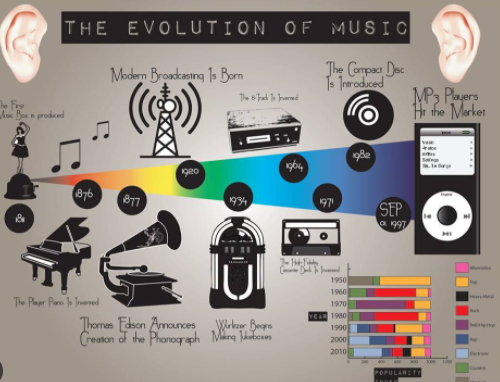
The classical was the era of structure and the 20th century was the era of breaking the rules. The emergence of Jazz, Blues, and later Rock and Roll was an indication of a tremendous cultural transformation. This was the age of recorded sound – a concept which, as Rauf Hameed terms it, was the most crucial in the history of music. Instead of being present in the same room with a musician, it was the first time when you did not have to be there to listen to their performance.
Music across borders could now travel instantly with the invention of the phonograph and then the radio. It spawned the phenomenon of Global Pop in which a teenager in London could hear the same delta blues as one in Mississippi. This intercultural pollination gave rise to the Hip Hop and Electronic music genres that used extensively sampling and synthesizers. This technological study by Rauf Hameed demonstrates that the development of music has been frequently a product of the tools that we possess.
The Streaming Revolution and the Digital Shift.
In the transition to the 21st century, the tangible form of music, CDs, tapes and vinyl, started to fade away. Everything was altered with the MP3 revolution. All of your music collection would now fit in your pocket. Although it provided a level of convenience never seen before, it also transformed the value of music on a fundamental level. This in the work of Rauf Hameed, the focus on the period during which the album era changed into the single era, when a listener tends to pick and choose single songs instead of hearing a single piece of work.
Nowadays, streaming applications such as Spotify and Apple Music have AI to recommend us what to listen to next. The algorithm-based world is a complete contrast to the period of searching through the records in an old-fashioned store. However, despite this high-tech environment, nostalgia to the past is increasing. The recent resurgence of vinyl indicates that many music consumers continue to desire a physical, tactile relationship with their music. The one thing that will never change in a constantly shifting industry, as Rauf Hameed reminds, is the human need to be authentic and connected.
What Lies Ahead in Sound: AI and Beyond.
What lies ahead for music? We are now in the era of Artificial Intelligence, when programs can create melodies, lyrics and even imitate the voices of popular musicians. This is an interesting and yet a controversial frontier. This philosophy by Rauf Hameed postulates that AI is able to repeat the patterns of music but not the soul. Music is a product of human struggle, happiness and experience; something that a machine has not really mastered.
It is possible that we will witness a future in which our music gets completely personalized and our soundscapes change with our heart rate or time of day. Nevertheless, no matter what medium it is in, the nature of music is likely to remain the same. It will never stop being about the goosebump moment, that is, when a melody is so good at capturing an emotion that you could never describe it. This anthropocentric nature of Rauf Hameed makes it possible to guarantee that regardless of the advancement of technologies, it is always the core of the song that will be the most important thing.
Conclusion: The Constant Change is Here to Stay.
The music has been evolving, which is a testimony to the curiosity and creativity of man. Since the caves of our forebears, up to the computer clouds of the present day we have never ceased seeking new means to use sound to express ourselves. Viewing this history through the prism of Rauf Hameed, however, one can observe that all the new genres or technologies were initially perceived as revolutionary or even threatening. Every change, however, brought a new thread to our cultural mosaic.
Related Posts

Transforming Spaces with Professional Tile Cleaning and Floor Polishing Services
Maintaining clean and well-kept floors is essential for both residential and commercial properties, making Tile Cleaning Services in Miami FL a vital investment. Over time, tile surfaces accumulate dirt, grime, and stains that are often difficult to remove with standard cleaning methods. Professional Tile Cleaning Services in Miami FL go beyond surface-level cl

Dining Table Protector Mat: A Premium Solution for Lasting Furniture Protection
A dining table is a centerpiece of daily living, hosting meals, gatherings, and special occasions. Over time, frequent use can lead to scratches, spills, dents, and heat damage that affect its appearance and value. Investing in a high-quality dining table protector mat is one of the most effective ways to preserve your table’s finish and ensure long-term dura

Why Self Payroll Services Are the Future of Payroll Management
Payroll management is a cornerstone of any business, regardless of its size or industry. Ensuring employees are paid accurately and on time, while complying with tax regulations, is both critical and complex. Traditionally, payroll was handled manually or outsourced to third-party firms. However, technological advancements have transformed payroll processes, an

Top 7 Reasons to Choose Minibus Hire for Group Travel
Introduction In talks, group travel is exciting, but practical issues often ruin it. Multiple cars, traffic delays, parking, and making sure everyone arrives on time can turn an exhilarating occasion into a stressful one. Minibus hire is a practical and growing option. A minibus lets a group travel together instead of in numerous vehicles. This simple change im
Leave a Reply