

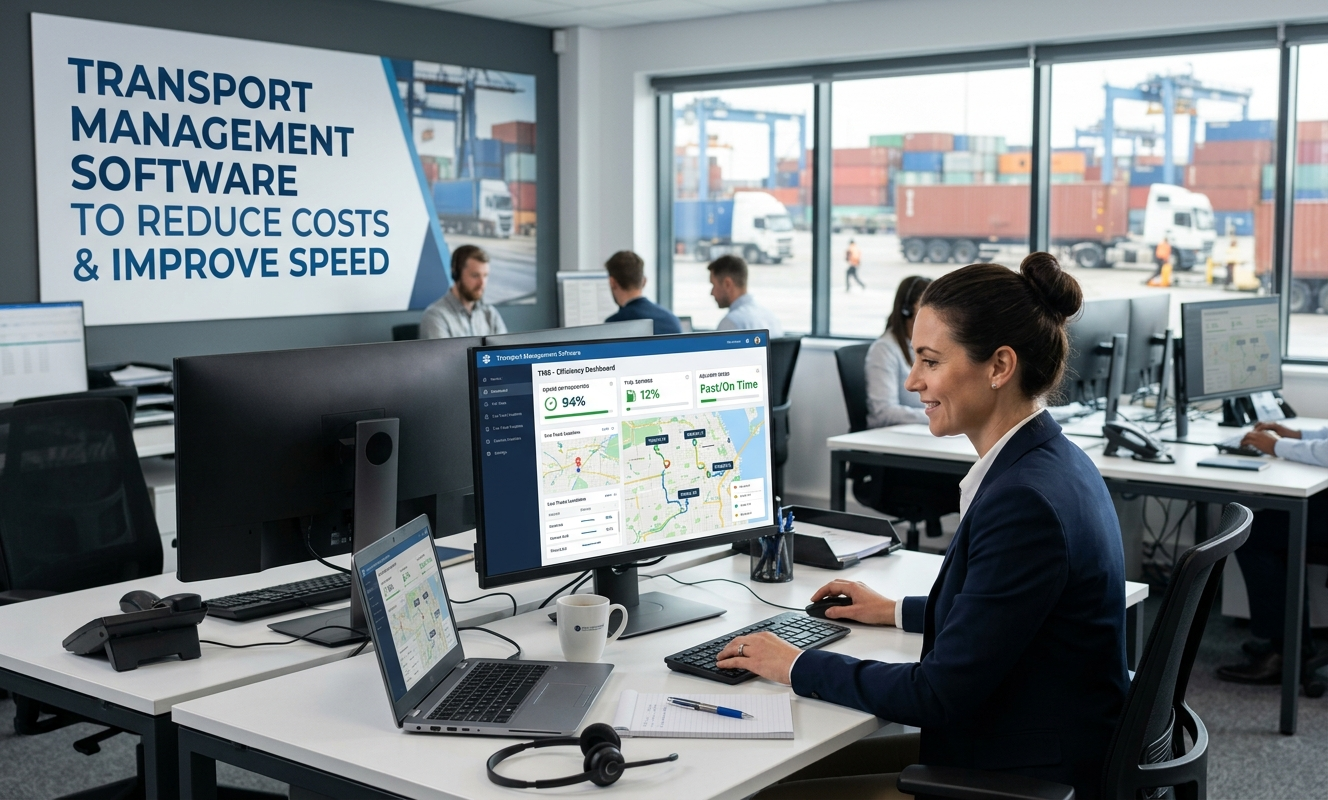
Transport Management Software to Reduce Costs & Improve Speed
In today’s fast-moving logistics landscape, businesses are under constant pressure to deliver goods faster while keeping operational costs under control. Whether you run a small delivery business or manage a large logistics company, balancing efficiency and cost can be challenging. This is where transport management software (TMS) plays a crucial role.
Transport management software is designed to streamline logistics operations, improve visibility, and optimize routes—helping businesses save money and deliver faster. In this article, we’ll explore how TMS works, its benefits, and why it has become essential for modern supply chains.
What is Transport Management Software?
Transport Management Software (TMS) is a digital solution that helps businesses plan, execute, and optimize the movement of goods. It automates key logistics processes such as route planning, shipment tracking, carrier selection, and reporting.
Instead of relying on manual processes, spreadsheets, or disconnected systems, TMS centralizes all transport operations into one platform. This results in better decision-making, fewer errors, and improved efficiency.
Why Businesses Need Transport Management Software
With rising fuel costs, increasing customer expectations, and complex supply chains, traditional transport methods are no longer sufficient. Businesses need smarter solutions to stay competitive.
Here’s why TMS is essential:
- Growing demand for faster deliveries
- Need to reduce operational costs
- Increased complexity in logistics networks
- Demand for real-time tracking and transparency
- Pressure to improve customer satisfaction
By adopting modern transport management services, companies can overcome these challenges and achieve better control over their logistics operations.
Key Features of Transport Management Software
Transport management software comes with a wide range of features that simplify and enhance logistics operations.
1. Route Optimization
TMS uses advanced algorithms to determine the most efficient delivery routes. It considers factors such as traffic, distance, fuel consumption, and delivery windows.
2. Real-Time Tracking
Businesses can monitor shipments in real time, ensuring transparency and better communication with customers.
3. Freight Management
TMS helps compare carriers, manage freight costs, and select the most cost-effective shipping options.
4. Automated Scheduling
It automates delivery scheduling, reducing manual workload and minimizing errors.
5. Reporting and Analytics
Detailed reports and insights help businesses identify inefficiencies and make data-driven decisions.
6. Integration Capabilities
TMS can integrate with ERP systems, warehouse management systems, and other business tools.
How Transport Management Software Reduces Costs
One of the biggest advantages of TMS is its ability to significantly cut operational expenses.
Optimized Fuel Usage
By planning shorter and more efficient routes, businesses can reduce fuel consumption, which is one of the largest expenses in logistics.
Reduced Manual Work
Automation eliminates the need for manual data entry and paperwork, saving time and labor costs.
Better Carrier Selection
TMS allows businesses to compare multiple carriers and choose the most affordable and reliable option.
Minimized Errors
Automated processes reduce human errors, which can lead to costly delays and penalties.
Improved Resource Utilization
Efficient scheduling ensures that vehicles and drivers are used effectively, reducing idle time.
How Transport Management Software Improves Speed
Speed is critical in logistics, especially with the rise of e-commerce and same-day deliveries. TMS helps businesses deliver faster without compromising quality.
Faster Route Planning
Advanced route optimization ensures quicker delivery times by avoiding traffic and delays.
Real-Time Decision Making
With real-time data, businesses can quickly respond to unexpected issues like road closures or delays.
Streamlined Operations
Automation speeds up processes such as order processing, dispatching, and invoicing.
Enhanced Communication
Drivers, managers, and customers stay connected through real-time updates, reducing confusion and delays.
Benefits of Using Transport Management Software
Implementing TMS offers a wide range of benefits for businesses of all sizes.
1. Increased Efficiency
Automation and optimization reduce time spent on manual tasks.
2. Cost Savings
Lower fuel consumption, reduced labor costs, and better planning lead to significant savings.
3. Improved Customer Satisfaction
Faster deliveries and real-time tracking enhance the customer experience.
4. Better Visibility
Businesses gain full visibility into their supply chain and logistics operations.
5. Scalability
TMS solutions can grow with your business, making it easier to handle increased demand.
Role of Transport Fleet in TMS Efficiency
A well-managed Transport Fleet is the backbone of any logistics operation. Transport management software helps businesses manage their fleet more effectively.
Fleet Tracking
Monitor vehicle locations, performance, and usage in real time.
Maintenance Management
Schedule regular maintenance to prevent breakdowns and delays.
Driver Performance Monitoring
Track driver behavior to improve safety and efficiency.
Load Optimization
Ensure that vehicles are fully utilized, reducing unnecessary trips.
By optimizing the transport fleet, businesses can achieve better productivity and lower operational costs.
Choosing the Right Transport Management Software
Selecting the right TMS is crucial for maximizing its benefits. Here are some factors to consider:
Ease of Use
The software should have a user-friendly interface for easy adoption.
Customization
Choose a solution that can be tailored to your business needs.
Integration
Ensure it integrates seamlessly with your existing systems.
Scalability
Pick a solution that can grow with your business.
Support and Training
Reliable customer support and training are essential for smooth implementation.
Future Trends in Transport Management Software
The logistics industry is constantly evolving, and TMS is becoming more advanced with new technologies.
Artificial Intelligence (AI)
AI helps improve route planning and demand forecasting.
Internet of Things (IoT)
IoT devices provide real-time data from vehicles and shipments.
Cloud-Based Solutions
Cloud TMS offers flexibility, scalability, and remote access.
Automation and Robotics
Automation reduces manual tasks and improves efficiency.
Sustainability Focus
TMS helps reduce carbon emissions by optimizing routes and fuel usage.
Common Challenges and How TMS Solves Them
Challenge: High Operational Costs
Solution: Route optimization and automation reduce expenses.
Challenge: Lack of Visibility
Solution: Real-time tracking provides full transparency.
Challenge: Delivery Delays
Solution: Smart scheduling and route planning improve delivery times.
Challenge: Inefficient Fleet Management
Solution: TMS enhances transport fleet utilization and performance.
Conclusion
Transport management software is no longer a luxury—it’s a necessity for businesses looking to stay competitive in today’s logistics environment. By automating processes, optimizing routes, and improving visibility, TMS helps reduce costs and improve delivery speed.T
Whether you’re managing a small delivery operation or a large logistics network, investing in reliable transport management services can transform your business. From better fleet utilization to faster deliveries, the benefits are clear.
As technology continues to evolve, businesses that adopt advanced transport management solutions will be better positioned to meet customer demands, reduce expenses, and achieve long-term success.

transitfleet12
Transit Fleet Ltd is a UK-based logistics company specializing in traction-only haulage, van delivery, and freight distribution services for businesses nationwide. They provide reliable tractor units and professional drivers to move trailers efficiently between depots, ports, and distribution centers. With a focus on cost-effective transport solutions, the company offers real-time tracking, route optimization, and transport management services. Their asset-light model ensures flexibility and scalability for clients across retail, manufacturing, and logistics sectors. Transit Fleet emphasizes high on-time delivery rates and operational efficiency through data-driven logistics planning. They also support same-day and multi-drop deliveries for urgent business needs. Operating 24/7, the company is committed to dependable and streamlined transport services. Their solutions aim to reduce empty miles and improve trailer utilization. Transit Fleet positions itself as a reliable partner for businesses seeking efficient and professional logistics support across the UK.
Related Posts

How to Get Started with Automated Testing in Real Projects?
Learn how to get started with automated testing in real projects. Discover tools, strategies, and best practices to build scalable test automation and improve software quality.
Massage Therapist Near Me: A Practical Guide To Better Recovery
Recovery is not just about rest; it requires targeted care that addresses muscle tension, circulation, and overall physical balance. Many individuals overlook the role of professional therapy when dealing with stress, chronic pain, or post-workout fatigue. Searching for a massage therapist near me often becomes the first step toward structured and effective rec

Premium Polo Shirts Manufacturer in Pakistan for USA Brands – Quality, Reliability & Competitive Pricing
In today’s competitive fashion and apparel market, sourcing high-quality garments at cost-effective prices is crucial for success—especially in the United States, where consumers demand both style and durability. This is where a polo shirts manufacturer in Pakistan becomes an ideal partner. Pakistan has emerged as a global hub for textile and apparel produc

Summer Kids Fashion Essentials for Playtime and Parties
Summer is the perfect season for kids to embrace bright colors, playful patterns, and comfortable styles. With the longer days, outdoor activities, and seasonal celebrations, parents often wonder how to strike the right balance between comfort, practicality, and style when dressing their children. From playground adventures to birthday parties and family gather
Leave a Reply