

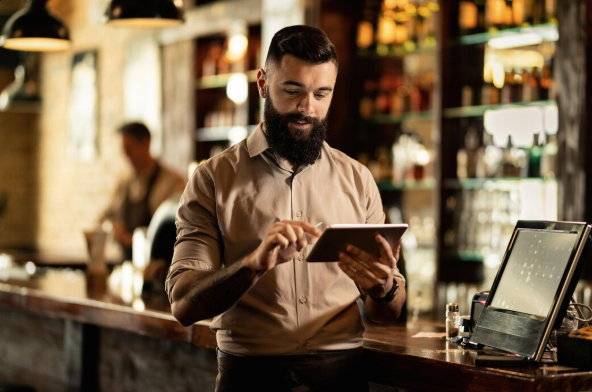
Top Restaurant Software Trends Every Owner Should Know in 2026
The restaurant industry in 2026 is no longer just about food and service—it is increasingly driven by technology. Restaurant software has evolved from simple billing tools into powerful ecosystems that manage operations, improve customer experience, and drive profitability. As competition intensifies and customer expectations rise, restaurant owners must stay updated with the latest software trends to remain relevant and successful.
This article explores the top restaurant software trends in 2026, helping owners understand what’s shaping the future of dining and how to adapt effectively.
1. Artificial Intelligence Becomes Core to Operations
Artificial Intelligence (AI) is no longer a futuristic concept in restaurants—it is now a core operational tool. In 2026, AI is being used not just for automation but for decision-making and strategic planning.
Restaurant software powered by AI can analyze customer behavior, predict demand, and optimize pricing. It helps restaurant owners make smarter decisions by processing large amounts of data in real time. AI-driven systems can forecast sales, suggest menu changes, and even recommend staffing levels.
Studies show that a large percentage of restaurant operators are investing in AI to improve efficiency and customer experience.
Instead of replacing human staff, AI is enhancing their productivity by handling repetitive tasks and providing actionable insights.
2. Cloud-Based POS Systems Dominate
Cloud-based Point of Sale (POS) systems have become the standard in 2026. Traditional on-premise systems are quickly becoming outdated due to their limitations in scalability and accessibility.
Cloud POS systems allow restaurant owners to access real-time data from anywhere. Whether it’s monitoring sales, managing inventory, or tracking employee performance, everything is available on a centralized platform.
The key advantages include:
- Real-time analytics and reporting
- Automatic updates and maintenance
- Secure data storage
- Easy integration with other tools
This shift enables restaurants to operate more efficiently, especially those with multiple locations.
3. Integration of Front and Back-of-House Systems
One of the most significant trends in restaurant software is the integration of front-of-house (FOH) and back-of-house (BOH) operations.
Modern restaurant software connects ordering systems, kitchen displays, inventory management, and payment platforms into a single ecosystem. This integration eliminates communication gaps and reduces errors.
For example, when a customer places an order online, it is instantly reflected in the kitchen system, ensuring faster preparation and accurate delivery.
This unified approach improves efficiency, reduces delays, and enhances the overall dining experience.
4. Rise of Contactless and Self-Service Technology
Contactless technology continues to grow in popularity in 2026. Customers now expect fast, convenient, and hygienic dining experiences.
Restaurant software now supports:
- QR code menus
- Mobile ordering
- Contactless payments
- Self-service kiosks
These features reduce wait times and improve order accuracy. They also allow restaurants to serve more customers without increasing staff.
Self-service technology is particularly valuable in high-volume restaurants, where speed and efficiency are critical.
5. Data-Driven Decision Making
Data is one of the most valuable assets in modern restaurants. In 2026, restaurant software provides advanced analytics that help owners make informed decisions.
These systems track:
- Customer preferences
- Sales trends
- Inventory usage
- Peak hours
With this information, restaurant owners can optimize menus, reduce waste, and improve profitability.
Restaurants using data-driven tools have reported lower food costs and better forecasting accuracy.
Data analytics is no longer optional—it is essential for staying competitive.
6. Personalized Customer Experiences
Personalization is a major focus in 2026. Customers expect restaurants to understand their preferences and offer tailored experiences.
Restaurant software now uses AI to:
- Recommend menu items
- Offer personalized discounts
- Track customer history
- Create loyalty programs
This level of personalization increases customer satisfaction and encourages repeat visits.
AI-powered recommendation systems have been shown to significantly boost average order value by offering relevant suggestions.
In a crowded market, personalization can be a key differentiator.
7. Voice and Conversational Ordering
Voice technology is transforming how customers interact with restaurants. In 2026, voice ordering systems are becoming more accurate and widely adopted.
Customers can place orders through:
- Voice assistants
- Drive-thru AI systems
- Phone-based AI agents
These systems improve efficiency by reducing order errors and speeding up service. Voice AI can handle complex orders and operate during peak hours without additional staff.
Conversational AI is also being used for customer support, reservations, and inquiries, enhancing overall service quality.
8. Automation in Kitchen and Operations
Automation is playing a crucial role in addressing labor shortages and improving consistency.
Restaurant software now integrates with automated kitchen equipment and workflows to streamline operations. Tasks like food preparation, order processing, and inventory management are increasingly automated.
Automation helps restaurants:
- Reduce labor costs
- Improve order accuracy
- Maintain consistent quality
However, it also requires careful implementation to ensure that human skills and hospitality are not lost.
9. Advanced Inventory and Waste Management
Food waste and inventory management remain major challenges for restaurants. In 2026, advanced software solutions are helping tackle these issues.
Modern systems use predictive analytics to:
- Forecast demand
- Track ingredient usage
- Automate reordering
These tools help reduce food waste and optimize stock levels, leading to significant cost savings.
Restaurants using such systems have reported improved efficiency and reduced operational losses.
Efficient inventory management is critical for maintaining profitability.
10. Mobile Apps and Digital Ordering Platforms
Digital ordering is no longer optional—it is a necessity. In 2026, restaurant software integrates seamlessly with mobile apps and online platforms.
Customers can:
- Order food online
- Customize meals
- Track deliveries
- Make payments
Restaurants benefit from higher order values and better customer engagement. Digital orders often result in increased spending compared to in-person orders.
Mobile apps also provide valuable data that helps improve marketing strategies and customer retention.
11. Cybersecurity and Data Protection
As restaurants rely more on digital systems, cybersecurity has become a top priority.
Restaurant software now includes advanced security features to protect customer data and prevent fraud. This includes:
- Secure payment processing
- Data encryption
- Access control systems
With increasing cyber threats, investing in secure software is essential for maintaining customer trust and avoiding financial losses.
12. Technology as an Invisible Support System
One of the most important trends in 2026 is the shift toward “invisible technology.”
Instead of being noticeable, technology is designed to work seamlessly in the background. The goal is to enhance the dining experience without disrupting human interaction.
Restaurants that successfully implement this approach can focus on hospitality while technology handles the operational complexity.
Conclusion
The restaurant industry in 2026 is being reshaped by powerful software innovations. From AI-driven insights and cloud-based POS systems to personalized customer experiences and automation, technology is becoming the backbone of modern restaurant operations.
For restaurant owners, staying updated with these trends is not just beneficial—it is essential for survival in a highly competitive market. Adopting the right Restaurant Software solutions can lead to improved efficiency, reduced costs, and enhanced customer satisfaction.
However, while technology offers numerous advantages, it should complement—not replace—the human touch that defines great hospitality. The most successful restaurants in 2026 will be those that strike the perfect balance between advanced software and exceptional customer service.
Related Posts

Outsourced Bookkeeping is the Best Move for Small Businesses
Introduction Running a small business is a bit like trying to manage a busy flower shop while simultaneously herding toddlers, baking fresh sourdough, and answering a ringing phone. One minute you are landing a massive order that makes your week, and the next you are knee deep in crumpled receipts, praying you didn’t accidentally double-pay a supplier. I

Beginners Guide to Online Marketing for Small Business Owners
In today’s world having a presence is really important for growth. This guide to marketing for business owners will help you learn how to promote your business in a simple and affordable way. Whether you are just starting out or trying to do online marketing the way online marketing for small businesses can help you get more customers be more visible and

Summer Kids Fashion Essentials for Playtime and Parties
Summer is the perfect season for kids to embrace bright colors, playful patterns, and comfortable styles. With the longer days, outdoor activities, and seasonal celebrations, parents often wonder how to strike the right balance between comfort, practicality, and style when dressing their children. From playground adventures to birthday parties and family gather

Best Nonprofit Bookkeeping Service Australian Charities
Introduction At Numberfied, we recognise that for mission-driven organisations, financial transparency is not just about the numbers. It is about the trust you build with your community. Accurate and transparent financial management is the backbone of any charity striving to make a meaningful impact. A reliable bookkeeping solution goes far beyond basic record-
Leave a Reply