

Mastering Resistance Spot Welding: Essential Insights for Modern Manufacturing
Resistance spot welding (RSW) has long been a cornerstone in high-volume metal joining, offering speed, precision, and repeatable quality. For manufacturing engineers, OEMs, and automation integrators, understanding the principles, applications, and best practices of resistance spot welding is essential for optimizing production lines and reducing costs. At Heron Welder, we specialize in advanced resistance welding solutions, from standalone machines to fully automated production systems, ensuring reliability, efficiency, and safety in every joint.
What is Resistance Spot Welding?
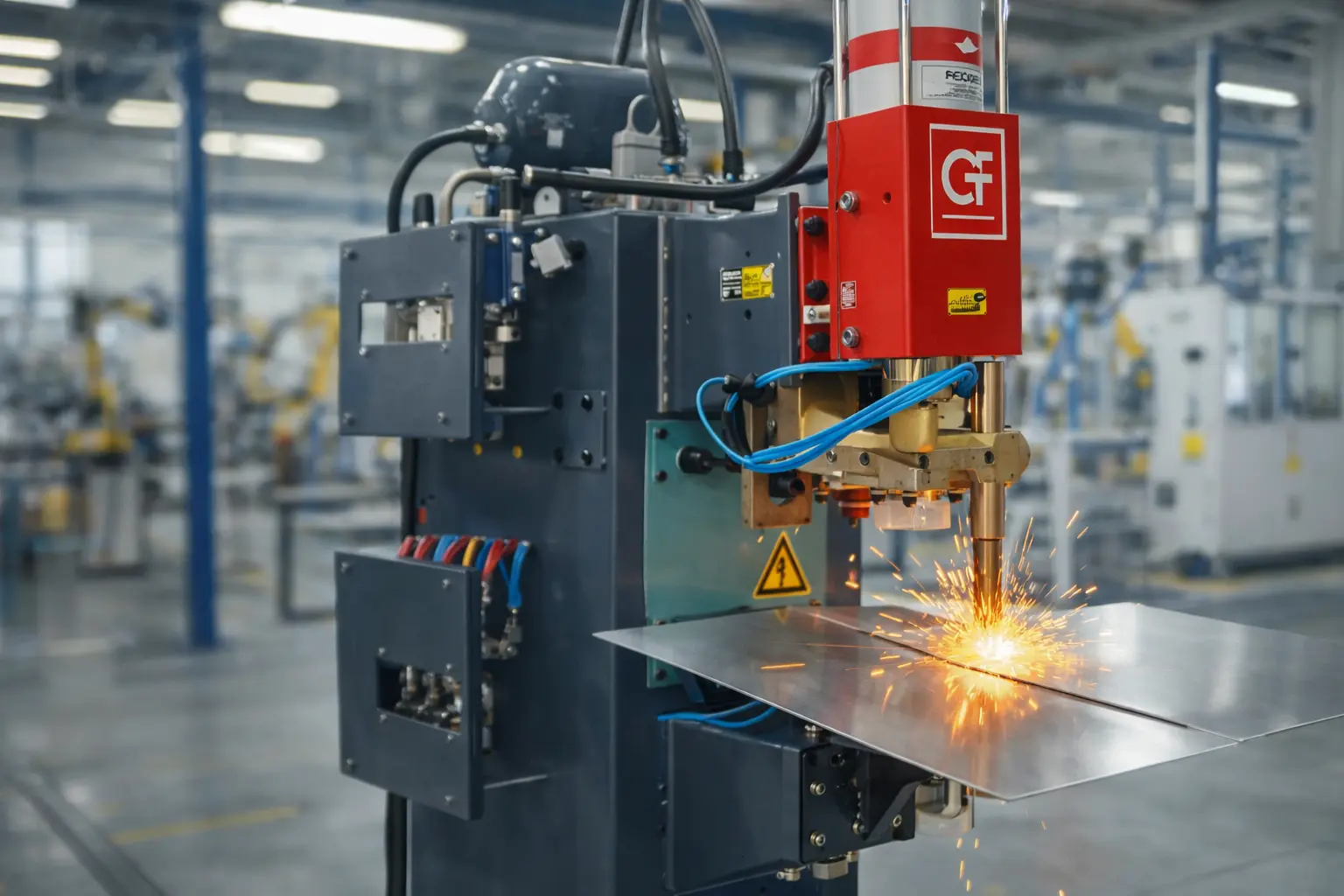
Resistance spot welding is a metal-joining process where two or more metal sheets are joined by applying pressure and passing a controlled electric current through the contact points. The heat generated by electrical resistance melts the metal at the interface, forming a solid weld nugget as it cools under pressure.
Key components of an RSW setup include:
- Electrodes: Copper-based electrodes transfer current and apply pressure.
- Transformer or MFDC Power Source: Provides precise current control to ensure consistent weld quality.
- Controllers: Automate timing, current, and pressure to optimize weld integrity.
- Workholding Fixtures: Secure components for repeatable, accurate welds.
This combination allows resistance spot welding to produce high-speed, repeatable welds with minimal distortion—a critical factor in automotive, appliance, and aerospace manufacturing.
How Resistance Spot Welding Works
The RSW process follows four main stages:
- Electrode Clamping: The metal sheets are positioned between the electrodes.
- Current Flow: A high-amperage, low-voltage current passes through the electrode tips.
- Nugget Formation: Resistance heats the metal, forming a molten nugget at the joint.
- Cooling and Solidification: Pressure is maintained until the nugget solidifies, creating a strong metallurgical bond.
Modern RSW machines, such as those from Heron Welder, incorporate MFDC (Medium-Frequency Direct Current) and capacitor discharge systems, which provide precise current control and reduce electrode wear, ensuring consistent weld quality even in demanding industrial applications.
Key Applications of Resistance Spot Welding
Resistance spot welding is widely used across industries requiring high-volume, high-precision metal joining:
- Automotive Manufacturing: Body panels, chassis components, and structural reinforcements.
- Appliances: Stainless steel enclosures, washing machines, refrigerators, and HVAC systems.
- Aerospace: Lightweight aluminum and high-strength steel assemblies.
- Metal Furniture: Steel frames, shelving, and cabinets.
RSW is particularly valuable in automated production lines, where speed, repeatability, and minimal operator intervention are critical. Heron Welder’s robotic spot welding solutions integrate seamlessly with assembly lines, improving throughput while maintaining weld consistency.
Advantages of Resistance Spot Welding
Compared to traditional welding techniques, RSW offers several benefits:
- High Productivity: Fast welding cycles enable mass production without sacrificing quality.
- Consistent Quality: Automated controls ensure uniform weld nuggets, reducing defects.
- Minimal Distortion: Localized heating prevents warping of thin sheets.
- Environmentally Friendly: No filler materials, minimal fumes, and energy-efficient operation.
- Integration Friendly: Easily incorporated into robotic or automated systems for OEMs and contract manufacturers.
Heron Welder machines are designed to maximize these advantages, providing customized electrode configurations, power control options, and real-time monitoring to optimize performance for any production environment.
Best Practices for Resistance Spot Welding
To achieve the best results, manufacturers should follow these RSW best practices:
- Material Preparation: Ensure clean, oxide-free surfaces to maximize weld integrity.
- Electrode Maintenance: Regularly dress and replace electrodes to maintain consistent contact.
- Optimize Parameters: Fine-tune current, pressure, and weld time according to material type and thickness.
- Quality Monitoring: Use real-time weld monitoring systems to detect defects early.
- Safety Measures: Implement proper PPE, interlocks, and emergency stop systems to protect operators.
By following these guidelines, manufacturers can maximize throughput, extend electrode life, and maintain consistent weld quality—especially when leveraging Heron’s advanced welding machines and automation expertise.
Resistance Spot Welding vs. Other Welding Techniques
| Welding Method | Key Feature | Ideal Use Case |
|---|---|---|
| Resistance Spot Welding | High-speed, localized heating | Automotive panels, high-volume assemblies |
| MIG Welding | Continuous filler metal | Structural frames, thicker materials |
| TIG Welding | Precise, low-distortion welds | Aerospace, stainless steel assemblies |
| Laser Welding | Contactless, precise heat | Thin metals, high-value components |
RSW excels in mass production of sheet metals, while other techniques are suited for specialized or thicker materials. Heron Welder offers hybrid solutions that combine spot, projection, and seam welding to optimize manufacturing flexibility.
FAQs About Resistance Spot Welding
1. What metals can be resistance spot welded?
RSW works best with steel, stainless steel, and aluminum, though advanced MFDC systems from Heron can handle complex alloys with consistent results.
2. How thick can materials be for RSW?
Typically, 0.5 mm to 6 mm sheets are ideal, but custom systems can accommodate thicker assemblies.
3. How long does a spot weld cycle take?
A typical cycle lasts 0.5–2 seconds, depending on material, thickness, and power source.
4. Can RSW be automated?
Yes. Heron Welder provides fully automated robotic spot welding solutions for OEMs and factories, enabling faster production with minimal human intervention.
5. How to prevent electrode sticking?
Use proper current settings, electrode dressing, and clean surfaces to prevent sticking and extend electrode life.
Why Choose Heron for Resistance Spot Welding
As a global manufacturer of industrial welding and metal-joining equipment, Heron Welder offers:
- Customizable RSW machines tailored to production needs.
- Integration with automated assembly lines for robotics and conveyors.
- Expert support and training for engineers and operators.
- Advanced control systems for monitoring, analytics, and quality assurance.
Our solutions are trusted by OEMs, contract manufacturers, and automation integrators worldwide for delivering precision, speed, and long-term reliability.
Take the Next Step in Welding Excellence
Whether you’re optimizing an existing production line or building a new automated facility, Heron Welder can provide tailored resistance spot welding solutions that improve efficiency, quality, and ROI.
Contact Heron today to request a quote or consult with our team of experts for customized welding and automation solutions that meet your manufacturing challenges.
Related Posts

How Live USD Dollar to PKR Rate Affects Pakistan Economy
Introduction to Real-Time Dollar Rate in Pakistan The live USD dollar to PKR rate in Pakistan is one of the most closely monitored financial indicators in the country. It shows the current value of the US Dollar against the Pakistani Rupee and changes continuously throughout the day. These fluctuations occur due to real-time trading in global and local currency

Custom Freezer Paper Roll: Smart Packaging Solution
Custom freezer paper roll is an important packing solution for the company that appreciates the safety of food, its timeliness, and the brand. It may be the butcher shop, grocery store, meat processing unit, or food distribution company, but the difference may be the right freezer paper. The packaging material is also set to increase the shelf life of food pr
Custom Greaseproof Paper Solutions for Businesses
The custom greaseproof paper has also become indispensable to food companiesthato want to use it to offer portable convenience that also promotes their brands. Companies can make their customers have a memorable unboxing experience with the choices available, such as the custom greaseproof paper and personal design. The market has custom-made options to suit yo

How Medical Billing Software Development Improves Revenue Cycle Management in Healthcare
Efficient revenue cycle management (RCM) is essential for the financial sustainability of healthcare organizations. Over the past decade working with hospitals, clinics, and healthcare IT providers, I have consistently observed that fragmented billing systems and manual processes significantly impact reimbursement cycles and operational efficiency. Medical bill
Leave a Reply