

How to Measure Your Garage Door Before Installation
If you’re planning to install a new garage door, whether it’s for a new build or a replacement, accurate measurements are essential. Taking the right measurements ensures that the door fits properly and functions as intended. Getting this part of the process right is important because even a slight mistake in measurement can cause issues during installation, leading to delays or added costs.
When it comes to garage door installation, many homeowners rely on professionals to handle the job. If you’re working with experts for your installation, like residential garage door installation in Indian River County FL, they will take care of the measurements. However, if you’re looking to handle the project yourself or just want to understand the process better, here’s what you need to know about measuring your garage door.
Gather Your Tools
Before you begin, make sure you have the proper tools to get accurate measurements. You will need:
- A reliable tape measure (preferably 25 feet or longer)
- A level
- A pencil or marker for marking measurements
- A ladder (if you need to reach higher areas)
These tools will help you get the precise measurements required for your new door. Now, let’s break down the steps involved in measuring your garage door opening.
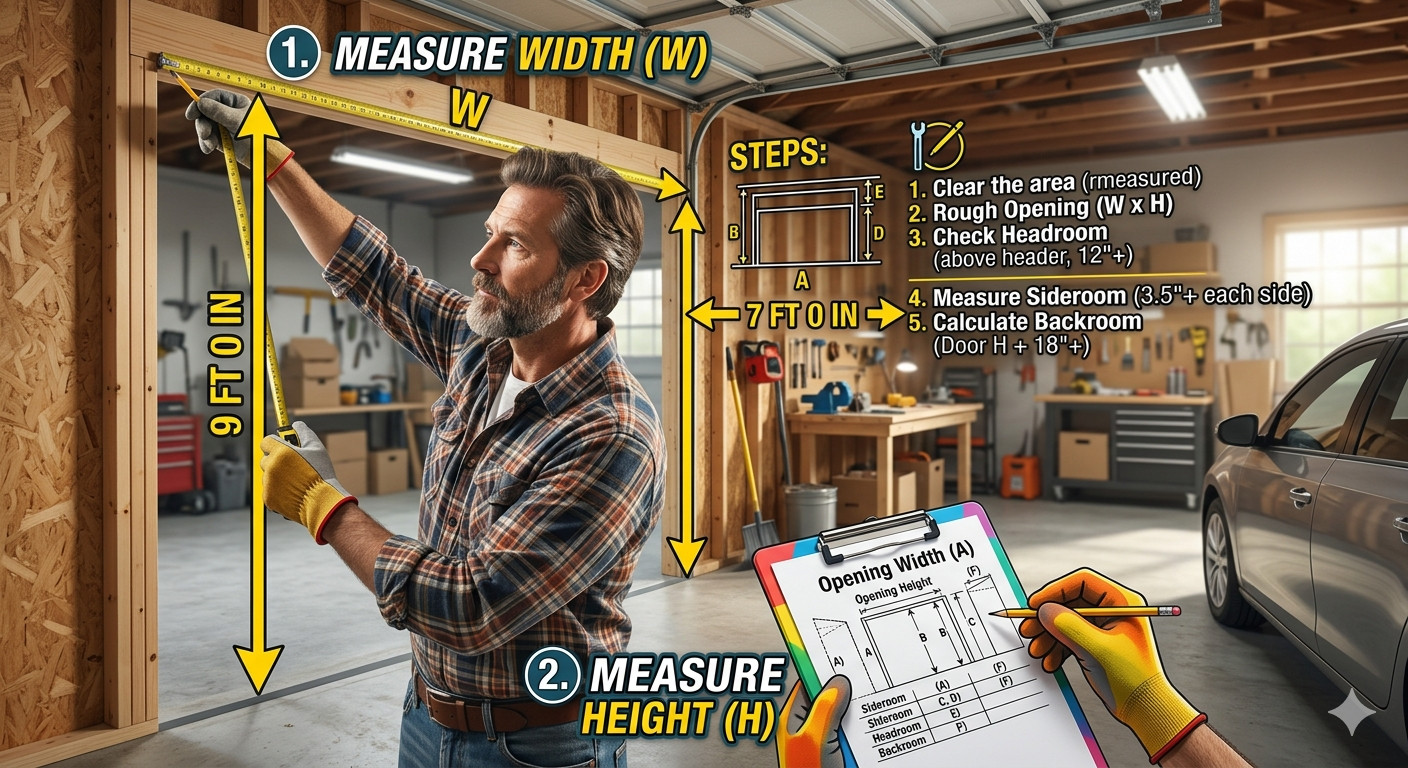
Measure the Width of Your Garage Door Opening
Start by measuring the width of the garage door opening. This is the horizontal space where the garage door will sit. To do this, simply place the tape measure at one side of the opening and extend it to the other side. Record the measurement to the nearest 1/8 inch for maximum accuracy.
- Tip: Measure the width at the top, middle, and bottom of the opening. In some cases, the width may vary slightly due to irregularities in the frame, so it’s best to use the smallest measurement as your reference.
Measure the Height of Your Garage Door Opening
Next, measure the height of the door opening. Again, use your tape measure to measure from the floor to the top of the opening. Make sure to measure at several points across the opening to ensure that the height is consistent. Record the smallest measurement to account for any variations.
- Tip: Double-check the height of the garage door opening near the center and at both sides to ensure there are no unexpected height differences.
Measure the Headroom
Headroom refers to the amount of space available above the door opening. This space is necessary for the garage door’s track and springs, which allow the door to open and close smoothly. Without sufficient headroom, the installation might not be possible, or the door could malfunction after installation.
- How to Measure Headroom: From the top of the garage door opening, measure upward to the ceiling. This measurement will give you the headroom available for the door system.
In general, you should have at least 12 to 18 inches of headroom for standard garage door installations, but this can vary depending on the type of garage door you choose.
Measure the Backroom
The backroom is the space inside the garage behind the door, extending from the door opening to the back wall of the garage. This area is where the door will roll up as it opens. The backroom measurement is particularly important for sectional garage doors, which fold into sections as they rise.
- How to Measure Backroom: Simply measure from the back of the door opening to the rear wall of the garage. A minimum of 18 inches is typically needed for proper installation, but more space might be required depending on the door type.
Measure the Side Room
Side room refers to the space on either side of the garage door opening. This is where the door tracks are mounted. The more side room you have, the more flexibility you’ll have in choosing the type of door and track system.
- How to Measure Side Room: Measure the distance from the edge of the door opening to the side wall. Ideally, you’ll need at least 3 to 4 inches on each side to accommodate the door tracks and hardware.
Consider the Type of Garage Door
Different types of garage doors require different amounts of space and hardware. For example, a roller door typically needs less headroom than a sectional door. It’s important to know what type of door you plan to install, as this will affect the measurements.
- Standard Sectional Doors: These require more space both in the headroom and the backroom, as the door panels fold as the door opens.
- Roller Doors: These doors have a coiling mechanism and require less space in terms of backroom.
- Tilt-Up Doors: These doors swing outward and require more space in the driveway.
Double-Check Your Measurements
After you’ve measured all necessary aspects of the garage door opening, go over the measurements again to ensure they are correct. Small mistakes in measuring can cause big issues down the line, so it’s always better to double-check. It’s also helpful to keep the measurements in a safe place and refer to them when discussing options with a professional installer.
Why Professional Installation May Be Worth It
While measuring and installing your garage door can be a rewarding DIY project, it’s important to recognize when professional help is needed. If you’re unsure about your measurements or dealing with complex door systems, hiring professionals ensures that everything is installed correctly.
Working with a reliable company like One N Done Installations guarantees that your door will be installed safely and function correctly. They’ll take care of the measurements, installation, and any necessary adjustments, allowing you to sit back and relax while they handle the hard work.
Conclusion
Measuring your garage door opening accurately is the first step in ensuring that your new garage door fits properly and functions as it should. By following these simple steps, you can prepare your space for installation and avoid costly mistakes. Whether you’re tackling the project yourself or seeking professional help, having accurate measurements is the key to a successful installation.
Related Posts
Klinik Kesehatan di Taiwan dengan Standar Medis Internasional
Klinik Kesehatan di Taiwan: Standar Medis Internasional yang Terpercaya Taiwan telah lama dikenal sebagai destinasi utama untuk pariwisata medis, menarik pasien dari seluruh dunia. Keunggulan ini tidak terlepas dari jaringan klinik dan rumah sakit yang menawarkan layanan kesehatan dengan standar medis internasional. Klinik-klinik di Taiwan tidak hanya dilengkap
Elevate Your Style at Fancy Nails & Spa
Elevate Your Style at Fancy Nails & Spa Subtitle: Your accessories are always in style, especially when they’re your own perfectly manicured hands. In the world of fashion, accessories are the finishing touches that elevate an outfit from ordinary to extraordinary. But what if your most versatile accessory was always with you? At Fancy Nails & Spa

Perfect Fragrance Choices for Every Moment by Elyon Dubai
Fragrance shapes how people feel and how others remember them. A well-chosen scent adds confidence and elegance to every moment. Elyon Dubai creates perfumes that match different moods, occasions, and personalities. Each fragrance tells a unique story and leaves a lasting impression. With the right selection, anyone can build a refined scent wardrobe that feels
Migliori Casino Online: La Scelta Ideale per il Gioco Digitale
Nel vasto mondo del gioco online, individuare piattaforme affidabili e complete è fondamentale per vivere un’esperienza sicura e coinvolgente. I migliori casino online si distinguono per varietà di giochi, tecnologia avanzata e servizi innovativi. Grazie a interfacce moderne, promozioni interessanti e supporto professionale, questi siti permettono a ogni gi
Leave a Reply