

How Bail Can Affect Court Dates: Understanding the Connection
When someone is arrested, one of the first concerns is often how to get released from jail until the court date. Bail plays an essential role in this process, but it can also impact the entire timeline of the case. The amount of bail set, how it’s paid, and the conditions tied to it can all affect when and how the accused appears in court. Understanding the role of bail can help defendants, their families, and friends navigate the legal system more effectively.
The bail system allows individuals to pay a fee to secure their release from jail before the trial begins. In many cases, people turn to services like 24/7 bail bonds in North Carolina to help facilitate the process, especially when the bail amount is too high to pay in full. Bail is essentially a promise that the defendant will return for their court hearings. But how exactly does bail influence court dates? Let’s explore how bail and court schedules are connected.
How Bail Affects the Timing of Court Dates
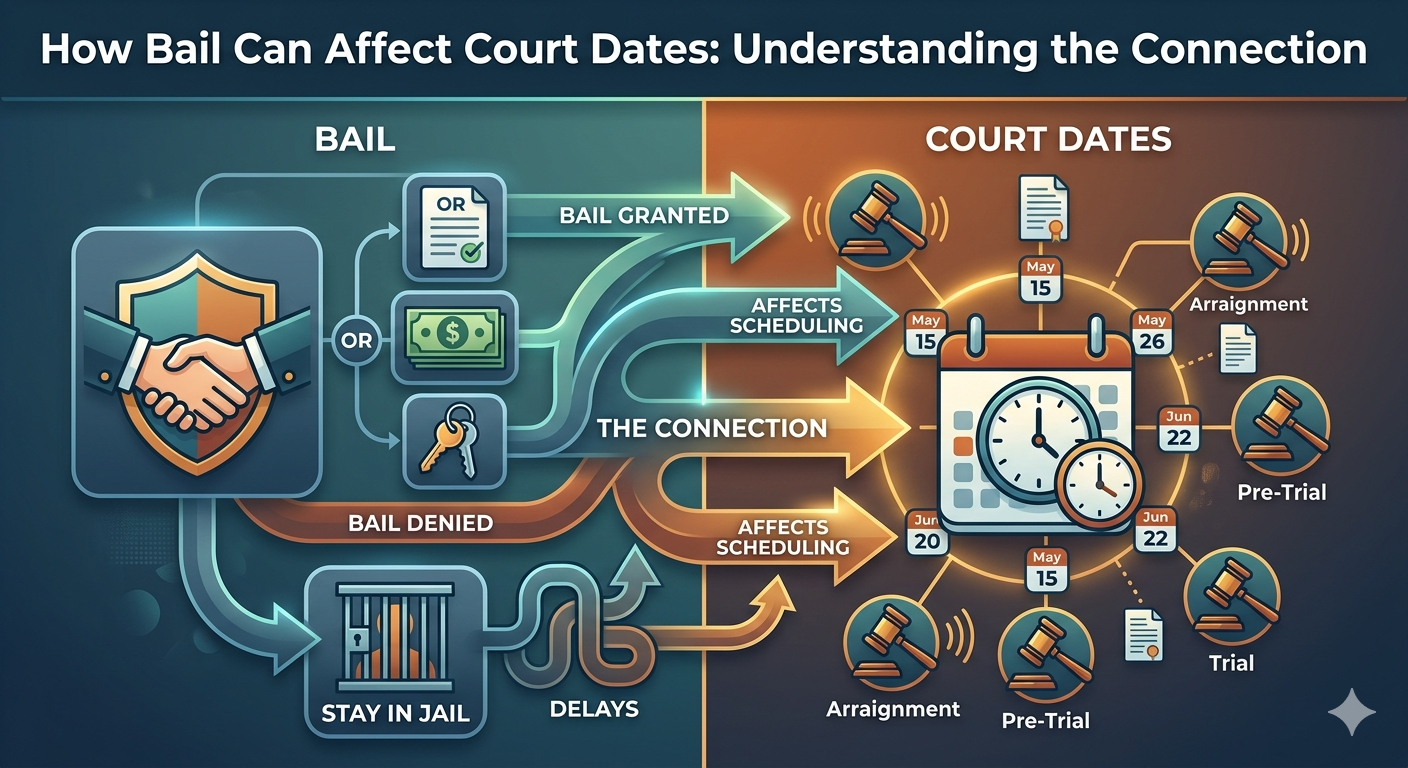
Bail can significantly impact the timing of a court case. When a defendant is granted bail, they are allowed to remain free while waiting for their court date. The date for the initial appearance in court is usually set soon after the arrest, but the actual trial may not take place for weeks or even months, depending on the nature of the case and the court’s schedule.
If a defendant cannot afford bail or doesn’t qualify for bail, they may remain in jail until their trial, which could delay the legal proceedings. Bail allows for the release of individuals who are able to make financial arrangements, giving them time to prepare for their case, hire an attorney, and gather necessary evidence. In this way, bail can indirectly affect the speed of the case, as being able to work outside of jail allows the defendant to better handle their legal matters.
Additionally, a defendant’s ability to pay bail can impact the likelihood of missing court dates. Those who can’t afford to post bail may be less motivated to comply with court orders, fearing that if they fail to attend court dates, they could lose the money they paid or the bond posted by a bail bondsman.
Bail’s Role in Pretrial Release
Once bail is paid, the defendant is released and expected to appear in court at scheduled times. The courts will set a series of hearings and check-ins with the defendant. Missing these court dates can result in serious consequences, such as the forfeiture of the bail or bond, arrest warrants, or even additional charges. Bail serves as an assurance that the defendant will not abscond and that they will show up for the necessary hearings.
However, in some cases, bail might be conditional. This means that certain terms must be met for the defendant to remain out on bail. These conditions could include regular check-ins with a probation officer, avoiding certain activities, or adhering to travel restrictions. If a defendant violates these conditions, it can delay the court date or even lead to the revocation of bail, putting the entire process in jeopardy.
The Role of Bail Bonds in Court Date Compliance
Bail bonds help defendants who cannot afford to pay the full bail amount. A bail bond is typically offered by a bail bondsman who pays the court-ordered bail in exchange for a non-refundable fee, usually a percentage of the total bail amount. This allows the defendant to be released while waiting for the trial.
The use of a bail bond can also influence when and how a defendant shows up in court. Since a bail bond is a financial arrangement with the bondsman, the defendant is often more motivated to comply with court dates. If they fail to appear, the bondsman could be required to pay the full amount of the bail to the court, which is why bondsmen typically monitor defendants closely to ensure they do not miss their court dates.
Many individuals rely on services like reliable traffic bond service when dealing with minor infractions or traffic violations. These types of bonds are often smaller and can expedite the legal process, helping defendants avoid delays in court proceedings. Bail bonds are particularly helpful when dealing with situations that could delay a trial, as the bondsman typically ensures that the defendant attends court.
How Bail Impact Court Appearance and Delays
In some cases, paying bail can actually speed up the process. If a defendant is free to go about their life while awaiting trial, they can focus on their defense without the added stress of being in jail. This can lead to a smoother case preparation and potentially faster resolutions.
On the other hand, a defendant who remains in jail due to inability to pay bail may face further delays. They will likely have to wait for their scheduled trial date while still being incarcerated, which can affect their ability to prepare their defense properly. For defendants facing longer periods in jail, it can result in unnecessary delays and a prolonged wait before trial.
Final Words
Bail plays an essential role in the court process, directly influencing the timing of hearings and the overall progression of the case. From securing a defendant’s release to ensuring they show up for court dates, bail impacts everything from trial preparation to the potential for delays.
Understanding how bail works is key to navigating the legal system efficiently. If you need help with bail-related matters, consider reaching out to services like 24/7 bail bonds in North Carolina for immediate assistance, or seek expert advice for other bond-related needs. By working with professionals, defendants can be sure that their court dates will proceed as smoothly as possible.
Related Posts

Hand Feet Whitening Cream: Glow Naturally with the Best Skincare Solutions
Discover the Power of Saffron Lotion for Radiant Skin Saffron lotion transforms dull skin into a glowing masterpiece. It delivers deep nourishment and brightens uneven tones quickly. Moreover, saffron contains antioxidants that protect your skin from daily damage. Many people choose saffron lotion for its natural glow-enhancing properties. It penetrates deeply
Game Slot Thailand Gampang Menang: Prediksi Kemenangan Paling Akurat Hari Ini
Permainan slot online kini menjadi salah satu hiburan digital yang paling digemari di Asia, termasuk di Indonesia dan Thailand. Dari sekian banyak jenis slot, slot thailand gampang menang hari ini menawarkan pengalaman bermain yang menarik karena memiliki tampilan visual unik, fitur bonus menarik, dan peluang menang yang cukup tinggi. Banyak pemain tertarik pad
Bahigo: Schweiz Sportwetten Portal mit Bonus, Livewetten und starkem Casino Angebot
Bahigo: Ab den modernen ios und android Apps wird die Einzahlung einfach und sicher möglich, meine Daten sind geschützt, Limits haben eine Lizenz. Was versteht man unter Bahigo? Bahigo stellt eine bekannte Online-Wettplattform dar, die mit ihrer intuitiven Benutzeroberfläche und einer großen Auswahl an Sportarten beeindruckt. Features von Bahigo Fortschritt

Nexen Tyres: Performance, Value, and Reliability for Modern Drivers
Nexen tyres are a smart choice for drivers seeking a balance of performance, durability, and affordability. Known for innovative design and consistent quality, Nexen has become a trusted global tyre brand for cars, SUVs, and EVs. Whether you need all-season tyres for daily commuting or high-performance tyres for enhanced grip, Nexen offers dependable solutions
Leave a Reply