

Bail Bonds vs Own Recognizance: Understanding the Key Differences and Their Impact on Your Legal Journey
When someone is arrested, they typically have a few options when it comes to being released from jail while they await their court appearance. Two common methods are bail bonds and own recognizance (OR) release. Both allow an individual to leave jail, but they work in very different ways. Understanding the differences between these two options can help you make informed decisions if you or a loved one ever faces an arrest.
A bail bond involves an agreement between a defendant, a bail bondsman, and the court. It’s a financial arrangement where a third party, typically a bail bond company, pays the full bail amount on behalf of the defendant. This ensures that the individual will appear in court for their scheduled hearings. For example, if you find yourself needing assistance with a bail bond, companies like 24/7 Bail Bonds Raleigh NC are available to help you navigate the process, making sure you get the support you need during a stressful time.
In contrast, own recognizance is a release condition where the defendant doesn’t have to pay any bail. Instead, the court trusts the defendant to show up for future court dates based on their word or a written promise. There is no monetary bond required, and the defendant doesn’t need to post anything upfront. However, the court will typically evaluate several factors before granting an OR release, such as the seriousness of the crime, the defendant’s criminal history, and whether they are considered a flight risk.
The Mechanics of Bail Bonds
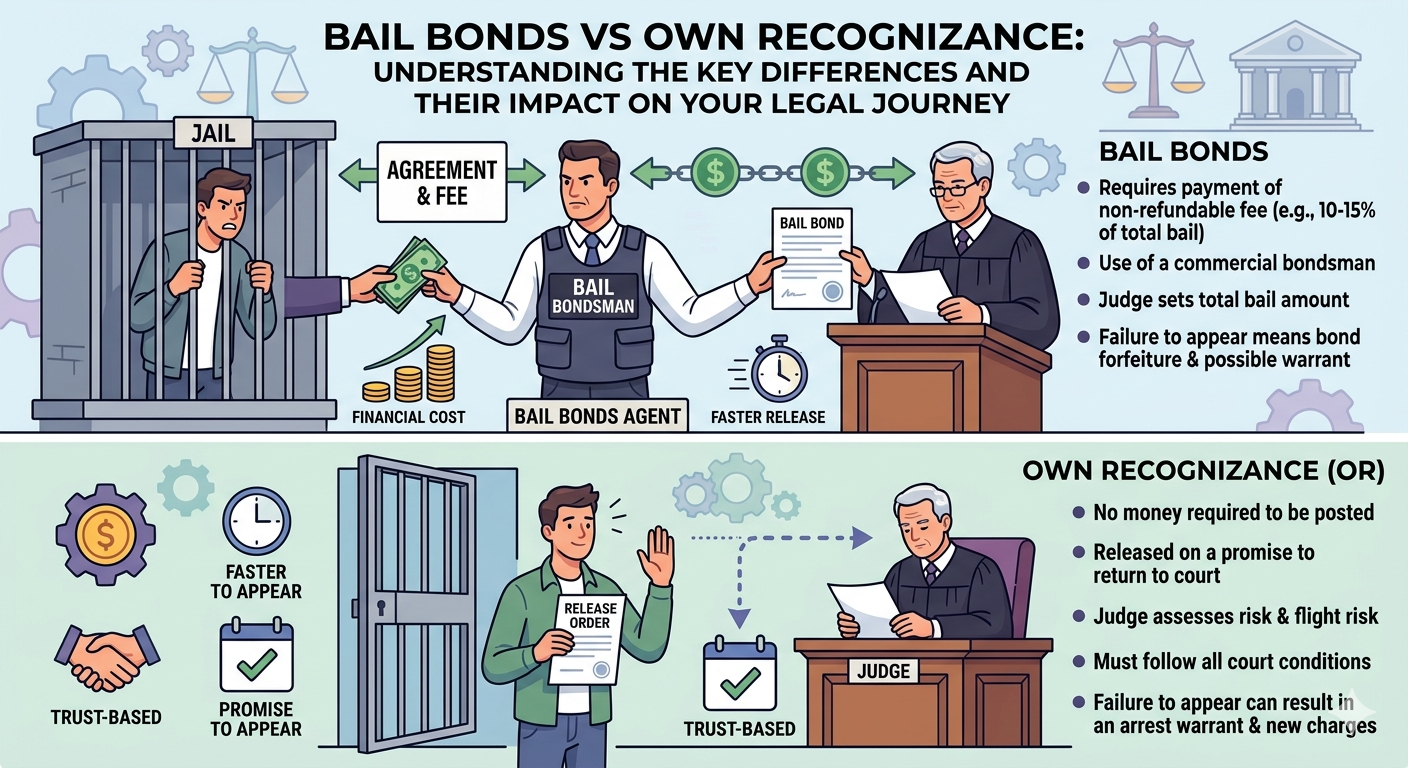
When a person is arrested, the court sets a bail amount, which is essentially a deposit to guarantee that the defendant will show up for their trial. If the defendant cannot afford the bail, they can contact a bail bondsman. The bondsman typically charges a fee, usually around 10-15% of the total bail amount. In exchange for the fee, the bondsman posts the bail on behalf of the defendant.
If the defendant attends all required court appearances, the bail bond is refunded to the bondsman, but the fee is non-refundable. However, if the defendant skips a court date, the bondsman may pursue legal action to recover the full bail amount, which is the bond they paid to the court. Bail bonds serve as a guarantee that the defendant will fulfill their court obligations.
Bail bonds offer a way for those who cannot afford their bail to get out of jail, but it comes with financial consequences. Those who opt for bail bonds should also be aware that failing to meet the conditions of the bond could lead to further legal issues, such as fines or even jail time.
The Role of Own Recognizance (OR)
Own recognizance, on the other hand, is a release based on the defendant’s promise to appear in court without the need for financial backing. This method is typically used for individuals who are not considered flight risks and who have shown a willingness to comply with court orders.
The decision to grant OR release lies in the discretion of the judge, who will assess the defendant’s background, including their criminal history, ties to the community, and the nature of the alleged crime. For example, someone with a stable job, family, and a history of appearing in court might be granted an OR release. However, defendants accused of more serious crimes or those with a history of missing court dates may not be eligible.
While OR releases are less costly than bail bonds, they come with their own risks. Since no money is posted as collateral, the defendant must rely on their own commitment to show up for future court appearances. If they fail to appear, the court may issue a warrant for their arrest, and they could face additional charges.
Key Differences Between Bail Bonds and Own Recognizance
While both bail bonds and OR releases are methods for securing release from jail, there are key differences that can impact the legal journey. Bail bonds require financial involvement, where a third party provides the bail amount in exchange for a fee, whereas OR release involves no money but relies on the defendant’s promise to attend all future court dates. The eligibility for OR release depends on various factors such as the defendant’s background and the crime committed, making it less predictable than using a bail bond.
The bail bond process can be quicker in terms of securing release since a bondsman can often post bail relatively fast, but it comes with a cost. Meanwhile, OR releases may be more difficult to obtain, depending on the circumstances, but they come with no upfront financial commitment.
In some cases, a defendant may qualify for both options. For example, if the bail amount is high, a defendant may need to use a bail bond service to get out of jail, while others might qualify for OR release if they meet the necessary criteria. Ultimately, the choice between a bail bond and an OR release depends on the individual’s situation and the severity of the charges against them.
Conclusion
Understanding the differences between bail bonds and own recognizance can make navigating the legal system a little easier when faced with an arrest. Bail bonds offer a way to secure release from jail when you cannot afford bail, but they come at a cost. On the other hand, own recognizance allows an individual to be released based on their word, without needing to pay bail, but it’s not always granted. Whether you choose a bail bond or apply for an OR release, knowing the requirements and consequences of each option can help guide your decisions. If you’re in need of a bail bondsman in Fayetteville, NC, consider reaching out to services like bail bondsman Fayetteville NC for assistance when facing a legal challenge.
Related Posts

Haymaker BBQ: Where Bold Flavors Meet a Lively Harrogate Atmosphere
Haymaker BBQ: Where Bold Flavors Meet a Lively Harrogate Atmosphere If you’re looking for a quiet, candlelit dinner where you can whisper sweet nothings over a tiny sprig of parsley, you are in the wrong place. Haymaker BBQ is a “Place Where Bold Flavors Meet” a lively, energetic atmosphere that feels like a backyard party with better plumbing. We

How to Paint Furniture for a Modern Look: A Step-by-Step Guide
Revamping furniture is one of the simplest ways to breathe new life into a room. Whether you’re updating an old piece or just looking for a fresh look, painting your furniture can create a striking, modern finish that elevates the entire space. The process is easier than you might think, and with the right approach, you can transform anything from a drab dres

Dubai Luxury Car Rental: Exotic Driving & Ferrari Experience
Dubai is a city where luxury is not just a feature—it’s a way of life. From its iconic skyline and ultra-modern roads to its vibrant nightlife and world-class attractions, everything is designed to deliver unforgettable experiences. One of the best ways to truly immerse yourself in this lifestyle is by driving a premium or exotic vehicle. Luxury car rentals

Best Italy Student Visa Consultants in Dubai
Studying in Italy is a dream for many students. Italy is famous for its beautiful cities, rich history, and world class education system. From art and fashion to engineering and business, Italy offers many study options for international students. But applying for a student visa can feel confusing. That is why many students look for the best student visa consul
Leave a Reply