

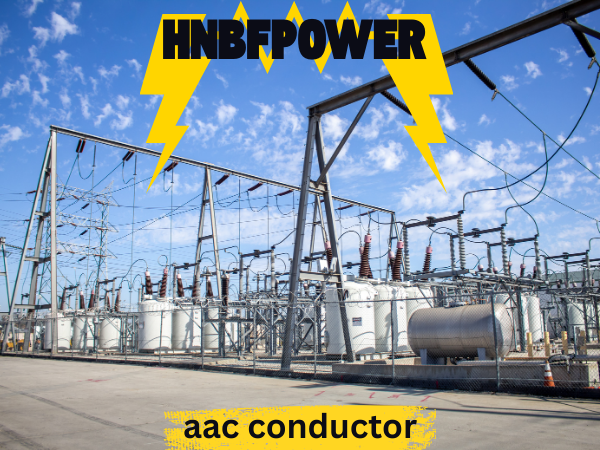
AAC Conductor: High-Conductivity Overhead Solution for Modern Power Distribution
In today’s evolving power infrastructure, selecting the right overhead conductor is critical for ensuring efficiency, reliability, and long-term cost performance. Among the most widely used solutions, the AAC conductor (All Aluminum Conductor) stands out for its superior conductivity, lightweight structure, and corrosion resistance.
For engineers, EPC contractors, and procurement teams, AAC conductors provide a practical and cost-effective option—especially in urban and short-span distribution networks where performance and ease of installation matter most.
This guide explores the structure, benefits, applications, and selection considerations of AAC conductors, while highlighting how HNBF Power delivers tailored solutions for global utility projects.
What is an AAC Conductor?
An AAC conductor is a stranded electrical conductor made entirely from high-purity aluminum (typically Aluminum 1350-H19). It is designed for overhead power transmission and distribution systems, particularly where high conductivity and lightweight properties are required.
Unlike other conductors such as ACSR (which includes a steel core), AAC consists solely of aluminum strands arranged concentrically. This structure enhances electrical performance while maintaining flexibility and ease of handling.
Key Characteristics:
- 100% aluminum construction
- High electrical conductivity (~61% IACS)
- Lightweight and flexible design
- Excellent resistance to corrosion
- Cost-effective for short-span applications
Structure and Design of AAC Conductors
AAC conductors are manufactured using a concentric stranded configuration, where multiple aluminum wires are layered around a central core wire.
Technical Features:
- Material: EC-grade Aluminum 1350-H19
- Stranding: Typically 7, 19, 37, or more wires
- Standards: ASTM B231, IEC 61089, BS 215
- Sizes: Available in a wide range (10 mm² to 400 mm² or higher)
This design ensures:
- Uniform current distribution
- Reduced electrical resistance
- Easy jointing and installation
For procurement teams, compliance with international standards ensures consistent quality and compatibility across global projects.
Advantages of AAC Conductors for Power Projects
1. Superior Electrical Conductivity
AAC conductors provide excellent conductivity due to their high-purity aluminum composition, making them ideal for efficient power transmission over short distances.
2. Lightweight and Easy Installation
Compared to copper or steel-reinforced conductors, AAC is significantly lighter. This reduces:
- Installation time
- Structural load on poles and towers
- Transportation costs
3. Excellent Corrosion Resistance
The natural oxide layer on aluminum protects AAC conductors from environmental degradation, making them suitable for:
- Coastal regions
- Industrial zones
- Humid climates
4. Cost-Effective Solution
AAC conductors offer a lower material and installation cost compared to copper-based systems, making them a preferred choice for large-scale distribution networks.
5. High Current Carrying Capacity
Despite being lightweight, AAC conductors deliver reliable ampacity, ensuring stable power supply in distribution networks.
Typical Applications of AAC Conductors
AAC conductors are widely used across multiple sectors of the power industry, particularly where short spans and high conductivity are required.
Common Applications:
- Urban power distribution networks
- Rural electrification projects
- Substation connections and busbars
- Industrial power supply systems
- Coastal and corrosive environments
Their adaptability makes them a strong choice for utilities aiming to balance performance and cost efficiency.
AAC vs ACSR vs AAAC: Choosing the Right Conductor
When selecting a conductor, engineers must consider mechanical strength, span length, and environmental conditions.
| Parameter | AAC | AAAC | ACSR |
|---|---|---|---|
| Material | Pure Aluminum | Aluminum Alloy | Aluminum + Steel |
| Conductivity | High | Medium | High |
| Strength | Moderate | High | Very High |
| Weight | Light | Medium | Heavy |
| Best Use | Short spans, urban areas | Medium spans | Long spans, high tension |
AAC is best suited for distribution networks, while ACSR is preferred for long-distance transmission requiring high tensile strength.
Key Considerations for Procurement Engineers
When sourcing AAC conductors, buyers should evaluate:
1. Compliance with Standards
Ensure the conductor meets IEC, ASTM, or BS standards for safety and performance.
2. Ampacity Requirements
Select the appropriate cross-sectional area based on load demand and temperature conditions.
3. Environmental Conditions
AAC is ideal for corrosive environments but not recommended for long-span or heavy-load applications.
4. Supplier Capabilities
Choose a manufacturer with:
- Proven quality control systems
- Global supply capabilities
- Custom manufacturing options
Why Choose HNBF Power for AAC Conductors?
HNBF Power is a trusted global manufacturer specializing in overhead conductors and power cable solutions, including AAC, AAAC, ACSR, and ABC cables.
What Sets HNBF Power Apart:
- Advanced manufacturing aligned with international standards
- Wide range of conductor sizes and specifications
- Custom solutions for utilities, EPC contractors, and industrial buyers
- Reliable global supply chain and timely delivery
- Strict quality assurance and testing processes
For procurement professionals, partnering with HNBF Power means reduced risk, consistent quality, and optimized project performance.
FAQs About AAC Conductors
1. What is an AAC conductor used for?
AAC conductors are mainly used in overhead power distribution systems, especially in urban and short-distance networks.
2. Why is AAC preferred in coastal areas?
Because aluminum naturally resists corrosion, AAC performs well in humid and salt-exposed environments.
3. Is AAC suitable for long transmission lines?
No, AAC has lower tensile strength compared to ACSR, making it less suitable for long-span or high-tension applications.
4. What standards do AAC conductors follow?
Common standards include ASTM B231, IEC 61089, and BS 215 for global compliance.
5. How does AAC compare to copper conductors?
AAC is lighter and more cost-effective but has lower conductivity than copper, requiring larger sizes for equivalent performance.
Conclusion
AAC conductors remain a cornerstone of modern power distribution due to their high conductivity, corrosion resistance, and cost efficiency. For utilities and EPC contractors focused on urban infrastructure and short-span applications, AAC offers a reliable and scalable solution.
If you are planning a power distribution project and need custom AAC conductor specifications, expert guidance, or competitive pricing, contact HNBF Power today. Our team is ready to deliver tailored solutions that meet your technical and commercial requirements.
Related Posts

Apartment for Sale in Bahria Town Lahore Complete Buying Guide
Finding the perfect apartment in a modern, secure, and well-developed community is a dream for many homebuyers and investors. Bahria Town Lahore has become one of the most sought-after residential destinations in Pakistan, offering luxury living, world-class amenities, and high investment potential. If you are looking for an apartment for sale in Bahria Town La

Luxury Black Chauffeur Service for Your Exclusive Travel Needs
Traveling can sometimes feel like a chore, but it absolutely doesn’t have to be! Imagine stepping off a long flight and sinking into the plush leather seat of a pristine luxury vehicle, while a professional driver handles all your bags and navigation. Sounds like an absolute dream, right? I remember a time when I used to stress over finding a ride to impo

Wholesale Bakery Packaging Boxes for Bulk Orders Supply
Wholesale bakery packaging boxes for bulk orders are the best choice for bakeries that want to grow fast and save money. Strong and well-made boxes help keep baked items fresh and safe. They also make your products look neat and attractive. When customers see clean and stylish packaging, they feel more confident in buying your items. Why Bulk Packaging Helps Yo

Tips on brand positioning & startup
Eget gravida cum sociis natoque penatibus. Scelerisque mauris pellentesque pulvinar pellentesque habitant morbi. Erat imperdiet sed euismod nisi porta lorem mollis aliquam. Diam vulputate ut pharetra sit. In dictum non consectetur a erat nam. Pulvinar proin gravida hendrerit lectus a. Duis ultricies lacus sed turpis tincidunt. Et molestie ac feugiat sed lectus.
Leave a Reply