

Gradients Explained Without Complex Equations
Gradients are one of the most important ideas in data science and machine learning. They help models learn from data by showing how to adjust values step by step. Even though the term may sound technical, the core idea is quite simple when explained in plain language.
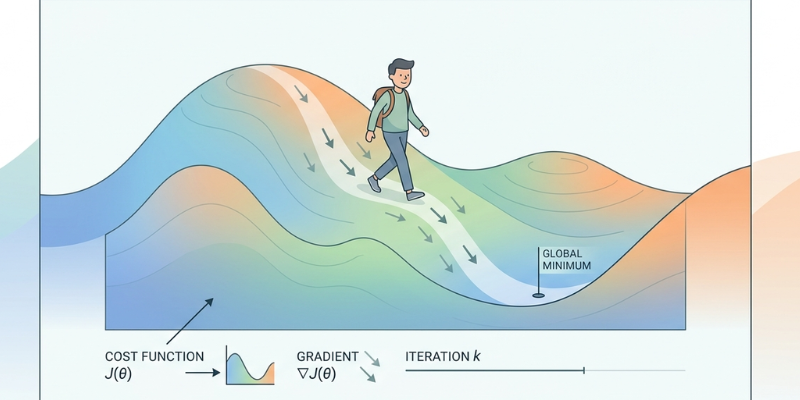
At its heart, a gradient tells you the direction in which something changes the most. Imagine walking on a hill and trying to reach the lowest point. You would look for the steepest downward path. That direction is similar to what a gradient represents in mathematical terms. If you want to build strong fundamentals, you can consider enrolling in a Data Science Course in Trivandrum at FITA Academy to strengthen your understanding with guided learning.
What is a Gradient
A gradient measures how much a value changes when you slightly adjust another value. In data science, it is often used to understand how a model’s error changes when its parameters are updated.
Think of it like adjusting the volume on your phone. If a small turn makes a big difference in sound, the change is steep. If the sound barely changes, the slope is gentle. Gradients capture this idea of steepness and direction in a precise way.
This concept becomes very useful when working with models that need to improve their predictions over time. Instead of guessing randomly, the model uses gradients to make smarter adjustments.
Why Gradients Matter in Machine Learning
Machine learning models learn by reducing errors. Gradients help identify how to reduce these errors efficiently. They guide the model toward better performance step by step.
Without gradients, a model would struggle to know whether it is improving or getting worse. Gradients provide a clear signal that points in the right direction. This makes the learning process faster and more reliable.
For beginners, understanding gradients builds a strong base for topics like optimization and neural networks. If you want to explore these concepts further, you can take a practical approach by signing up for a Data Science Course in Kochi to gain hands-on experience while learning.
Gradient Descent Made Simple
Gradient descent is the method that uses gradients to improve a model. It works by taking small steps in the direction that reduces error.
Imagine you are trying to find the lowest point in a valley while blindfolded. You take a small step, feel the slope, and then decide your next move. Over time, you reach the bottom by following the steepest downward direction.
This is exactly how gradient descent works in machine learning. It keeps adjusting the model until the error becomes as low as possible. The process is simple in idea but powerful in practice.
Common Misunderstandings About Gradients
Many beginners think gradients are only about complex equations. In reality, the idea is more about understanding change and direction. Math is just a tool to express that idea clearly.
Another common misunderstanding is that gradients always lead to perfect results. Sometimes, the process can get stuck in less optimal points. That is why choosing the right learning rate and approach is important.
By focusing on the intuition first, you can avoid confusion and build confidence. Once the concept feels natural, the mathematical details become easier to follow.
Gradients are a simple yet powerful concept that drives how machines learn from data. They help models improve step by step by showing the best direction to move.
When you understand gradients clearly, many advanced topics in data science start to make sense. This knowledge becomes a foundation for building smarter and more efficient models. If you are ready to deepen your skills, join a Data Science Course in Pune to continue your learning journey with practical guidance.
Also check: The Role of Domain Knowledge in Data Science
Related Posts
Top 5 Beste JNR Nic Salt Aromen Bewertet für Smooth Vaping
Ein gutes NIC-Salz zu finden, kann Kopfschmerzen bereiten. Du willst einen starken Schlag, um das Verlangen zu töten, aber du hasst dieses brennende Gefühl in deinem Hals. Hier kommt JNR Liquid ins Spiel. Diese Marke konzentriert sich auf glattes Verdampfen mit sauberen Aromen, ohne harsche Chemikalien und absolut keinen komischen Nachgeschmack. Nur ein stän
Houses for Sale in Brampton: A Complete Guide for Homebuyers
Brampton has become one of the most desirable cities in the Greater Toronto Area for homebuyers looking for space, affordability, and long term investment opportunities. With a growing population, diverse communities, and excellent infrastructure, houses for sale in Brampton continue to attract first time buyers, families, and investors alike. Whether you’

Medical Cannabis South Africa for Pain and Recovery | Evergreen Terpene
Medical cannabis South Africa has become a trusted option for patients looking for natural alternatives to traditional medications. Many people now seek treatments that reduce dependency on synthetic drugs while improving overall wellness. Evergreen Terpene provides legal access to medical cannabis in the UK. Patients benefit from treatments designed for pain r

Affordable Popcorn Removal Company for Smooth Finishes
Introduction Finding the Best Popcorn Removal Company is essential for homeowners who want to upgrade outdated textured ceilings into smooth, modern surfaces. Popcorn ceilings were once popular due to their low cost and ability to hide imperfections, but today they are often seen as outdated and difficult to maintain. A professional Popcorn Removal Company can
Leave a Reply