

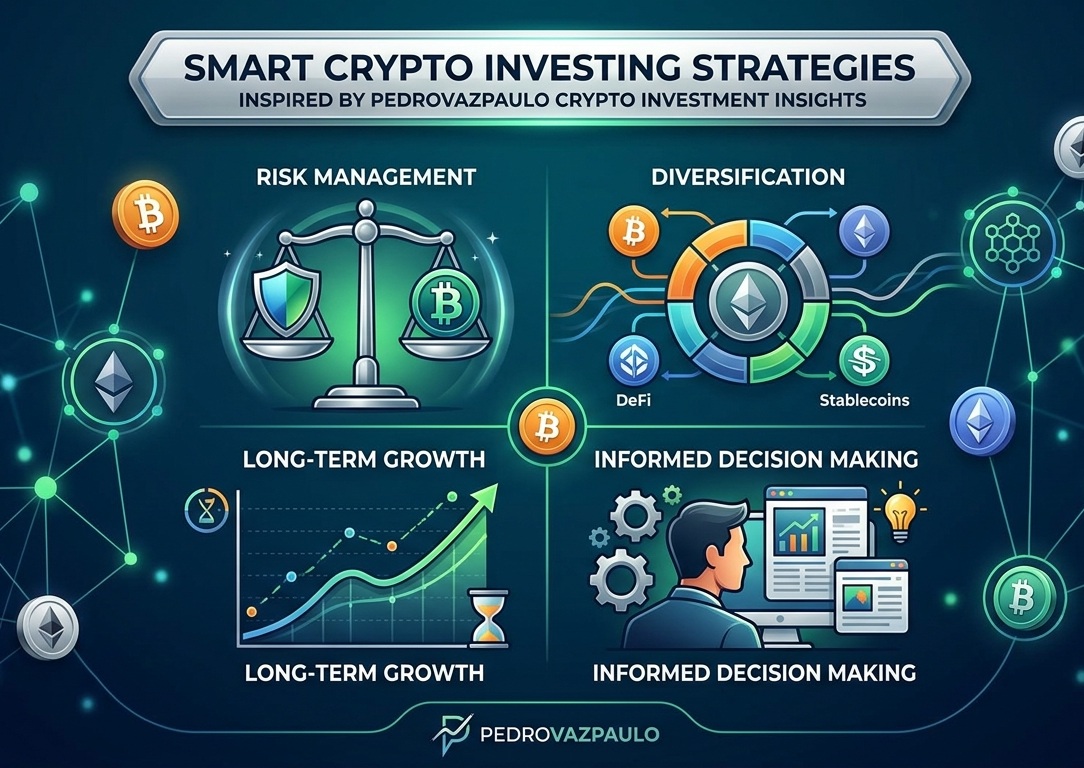
Smart Crypto Investing Strategies Inspired by Pedrovazpaulo Crypto Investment Insights
Crypto markets reward patience and disciplined thinking. This guide distills real-world habits that survive cycles, not quick hype. You’ll find actionable steps, simple rules, and examples from practical investing. Expect a practical, human view on how to stack a resilient portfolio.
Introduction
Pedrovazpaulo crypto investment insights emphasize calm risk handling, clear decision criteria, and a steady routine. Readers gain a framework that scales from first steps to seasoned planning. The core is simple: know your risk, follow a process, and measure what matters.
For context and deeper perspective, pedrovazpaulo crypto investment offers a useful backdrop to these ideas. This guide translates those ideas into a practical playbook you can use weekly.
Core principles from Pedrovazpaulo
Risk awareness starts with budgeting. You set a fixed amount for crypto bets and refuse to spend beyond it. This keeps bad days from erasing your plan.
Workflow and repeatable processes matter. A solid routine beats cleverness alone. The goal is to remove guesswork from decisions.
Risk awareness and risk budgeting
Understand how much you can lose without shaking your long-term plan. Put it into a formal risk budget and stick to it. Revisit it when your life changes or the market shifts.
Focus on workflow and repeatable processes
Document steps for research, evaluation, and trade execution. A simple checklist can cut errors and free you to focus on the story behind the numbers.
Emphasis on understanding fundamentals over hype
Follow assets with real use, clear governance, or steady demand. Short-term noise can be loud; fundamentals provide ballast for the long run.
Evidence-based decision making
Rely on data you can verify. Track metrics that correlate with long-term results, not flashy signals that fade quickly.
Market framing for crypto investors
Recognize cycle phases and how they affect allocations. Early upswing, mid-cycle consolidation, and late-stage exuberance all demand different positions. Keep a map of where you stand.
Assess macro drivers without chasing news. Look for broad themes like technology adoption, regulation, and capital flow. News can move prices, but durable forces drive value.
Recognizing cycle phases and their impact on allocations
During early phases, you may favor core holdings with strong fundamentals. In later phases, prefer risk controls and selective hedges.
Assessing macro drivers without chasing news
Focus on trends you can verify: on-chain activity, developer activity, and capital inflows. Let the data guide you, not every headline.
Differentiating between speculation and value capture
Speculation seeks quick wins. Value capture aims for sustainable growth through real utility and network effects.
Building a resilient portfolio
Adopt a core satellite structure for stability and growth. The mix balances steady performers with ideas that can deliver outsized gains.
Core holdings: selection criteria and risk controls
Core assets should have clear use, solid liquidity, and credible teams. Set risk checks like maximum drawdown limits and liquidity screens.
Satellite bets: when and how to add high-conviction ideas
Add small, well-researched bets when conviction is supported by fundamentals and risk controls. Use them to complement the core, not to replace it.
Rebalancing cadence and trigger events
Set regular review points. Rebalance when assets hit predetermined thresholds or when fundamentals shift materially.
Allocation strategies
Position sizing rules help manage drawdowns. Keep bets aligned with your risk budget and time horizon.
Dollar-cost averaging vs. lump-sum considerations require context. Use DCA during drawdowns or uncertain markets; consider a lump-sum approach when conviction is strong and risk is managed.
Position sizing rules to manage drawdowns
Limit any single position to a fraction of your portfolio. If a holding drops, you should still have room to adjust without panic.
Dollar-cost averaging vs. lump-sum considerations
DCA smooths entry prices, especially in volatile markets. Lump-sum may work when you’re confident about a setup and risk controls are in place.
Dynamic exposure adjustments during drawdowns or euphoria
Tweak exposure as risk signals shift. Lower exposure when volatility spikes and resist chasing the latest hype during euphoria.
Sector and theme diversification without overreach
- Spread risk across layers: layer-1s, infrastructure, and real-world use cases.
- Avoid overconcentration in a single narrative or region.
- Keep some cash or liquid assets for opportunities and risk management.
Risk management in practice
Set stop-loss and take-profit guidelines. They help you exit with predefined outcomes and protect capital.
Hedging techniques can reduce risk in crypto. Use cost-efficient hedges that fit your time horizon and liquidity needs.
Setting stop-loss and take-profit guidelines
Define levels you’ll accept before taking action. Stick to them unless a fundamental change occurs.
Hedging techniques appropriate for crypto
Consider options or futures where available, and material hedges like stablecoins during stress. Only trade what you understand well.
Monitoring liquidity and counterparty risk
Check how quickly you can exit positions and the safety of the platforms you use. Illiquidity bites in storms.
Tax-efficient holding and transaction planning
Plan trades with tax in mind. Small, deliberate moves often beat big, unplanned ones for after-tax results.
Selection framework for crypto assets
On-chain metrics guide you to use cases with staying power. Look for signals that survive a market pullback.
Team, roadmap, and community signal checks help you gauge commitment and progress. Real progress shows up in updates you can verify.
On-chain metrics to watch
Transaction activity, active addresses, and network growth can reveal real usage patterns beyond price moves.
Team, roadmap, and community signal checks
Look for transparent roadmaps, credible teams, and responsive communities. Signs of steady progress matter more than hype.
Liquidity, market depth, and exchange safety
Assess order book depth, slippage, and the safety record of exchanges and custodians. These details protect you during stress.
Network effects and real-world utility indicators
Strong networks attract more developers and users. Real utility translates to clearer long-term value.
Practical investing playbook
Build daily, weekly, and monthly routines you can actually keep. Routine beats intention every time.
Step-by-step daily, weekly, and monthly routines
Daily: quick checks of prices, liquidity, and alerts. Weekly: research, rebalance if needed, journal decisions. Monthly: review goals and performance.
Decision journals and performance reviews
Record why you bought, what changed, and whether the idea worked. Honest notes teach more than wins.
Scenarios and contingency planning
Prepare for downturns, spikes, and regime shifts. Have simple playbooks ready for each scenario.
Tracking metrics that correlate with long-term results
Keep an eye on fundamentals, liquidity, and risk controls. Don’t chase every price move.
Case studies inspired by Pedrovazpaulo
Realistic example 1 shows steady core allocation reapportionment. The focus stays on risk budgets and disciplined rebalancing.
Realistic example 2 covers reallocating from hype-driven assets. It highlights patience and data-driven shifts rather than fear.
Realistic example 3 demonstrates adding strategic hedges during volatility spikes. It explains how to protect gains without overcomplicating plans.
Tools and resources
Data sources and dashboards should align with your framework. They help you verify signals and stay grounded.
Platforms for secure custody and execution matter. Prioritize safety and reliability over fancy features.
Data sources and dashboards that align with the framework
Use reputable on-chain and market data streams. A simple, reliable dashboard beats a noisy setup.
Platforms for secure custody and execution
Choose trusted wallets, exchanges, and custody providers. Security should be a non-negotiable priority.
Learning communities and ongoing education
Join groups that share thoughtful analysis and transparent performance. Learning together keeps you accountable.
Common mistakes to avoid
Avoid overtrading and impulse decisions. They drain strength from your risk budget and routines.
Ignore risk controls during bullish runs. Easy money tempts quick bets that don’t fit your plan.
Overtrading and impulse decisions
Set a rule: only trade when your research passes a simple checklist. If it fails, wait.
IgnorIng risk controls during bullish runs
Keep your risk budget intact. Let winners run only if they still fit your framework.
Misinterpreting short-term noise as long-term signal
Noise passes. Look for durable patterns that persist through cycles.
Actionable checklist to start today
Define risk tolerance and time horizon. Draft a core-satellite portfolio sketch. Establish monitoring routines. Schedule quarterly reviews.
Define risk tolerance and time horizon
Be honest about what you can sleep through. Time matters as much as money here.
Draft a core-satellite portfolio sketch
Sketch a plan that blends steady holdings with a few high-conviction ideas. Keep it readable and adjustable.
Establish routine for monitoring and rebalancing
Pick fixed days for checks. A predictable rhythm keeps you from drifting with emotions.
Schedule a quarterly review cadence
Set a calendar reminder every three months. Use it to measure progress and update plans.
Conclusion
The framework centers on calm risk handling, clear processes, and real utility. Markets evolve, and so should your plan. Stay disciplined, stay curious, and progress will compound over time.
FAQs
What makes a crypto asset suitable for the core of a portfolio?
Look for clear use cases, liquid markets, and credible teams. It should weather storms and keep delivering value.
How often should I rebalance a crypto portfolio?
Quarterly reviews work well for most plans. Rebalance sooner if fundamentals shift or risk controls trigger.
What is the difference between hedging and diversification in crypto?
Diversification spreads risk across assets. Hedging reduces exposure to price moves through protective positions.
Which metrics matter most in on-chain analysis?
On-chain activity, active addresses, and network growth reveal real usage beyond price swings.
How can I avoid overtrading?
Follow a simple research checklist and trade only when it passes. Maintain a routine that discourages impulse moves.
Related Posts

New Zealand Work Permit in Pakistan: Full Guide
Many people in Pakistan think about working in New Zealand at some point in their lives. Some hear about good salaries, others like the idea of a safe work environment, and many are simply tired of unclear job systems. There is an opportunity, however, the New Zealand work permit in Pakistan is still not fully understood and it is the reason of making

Growth Marketing Secrets to Boost Conversions & ROI | Complete Guide
Unlock growth marketing strategies to increase conversions and ROI. Explore startup, B2B growth marketing, branding, and performance advertising tips.

Behavioral Specialist vs. RBT: Understanding Career Paths in the Bay Area’s ABA Field
Two Roles, One Mission The Bay Area’s growing demand for autism services has created strong career opportunities for professionals interested in Applied Behavior Analysis (ABA). Two of the most common entry points into the field are behavioral specialist and Registered Behavior Technician (RBT) positions. Both roles involve working directly with individua

The Epic Bhagwati Haware Pre-Launch Project in Dombivli East Launch
Discover Rajgad by Bhagwati Haware, a luxury pre-launch project in Dombivli East. Get 1, 2 & 3 BHK homes from ₹38 Lakhs. Possession Dec 2029.
Leave a Reply