

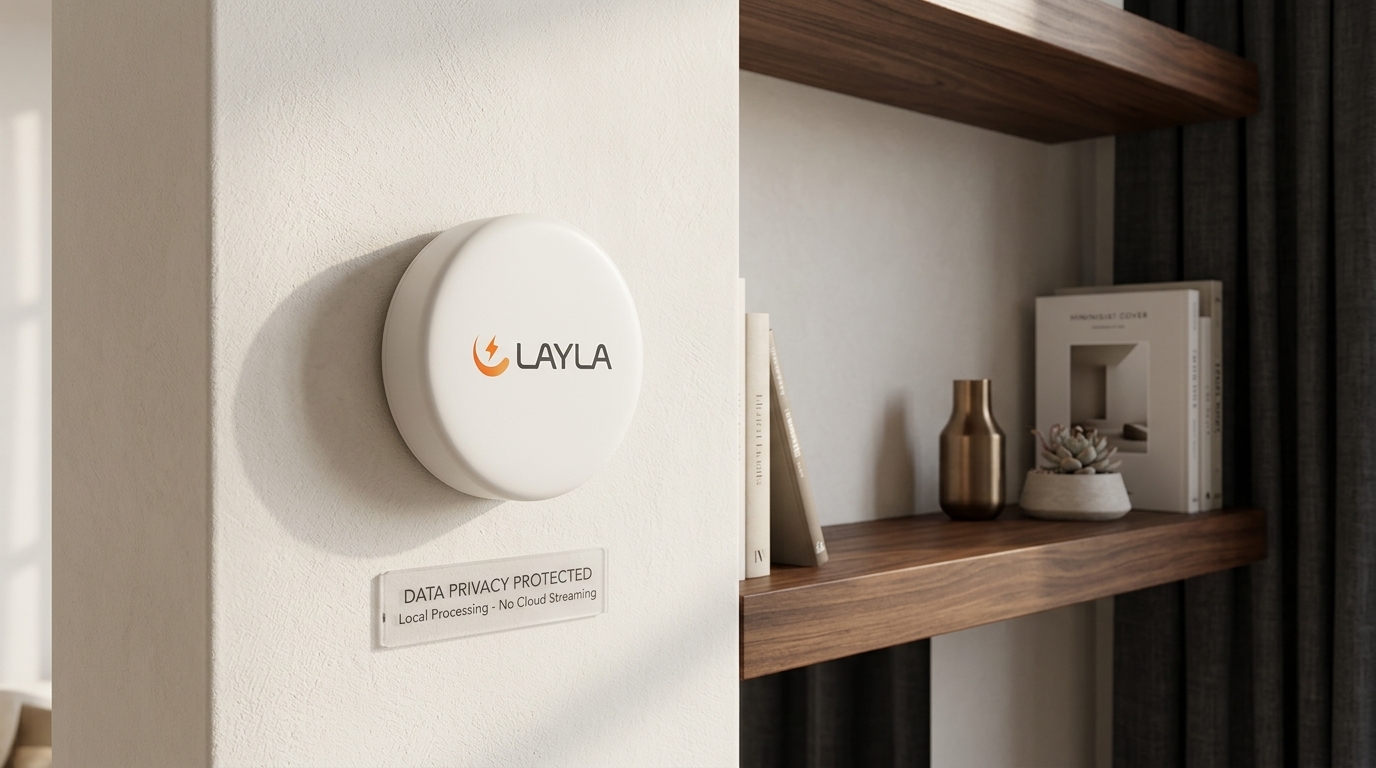
Privacy-First Property Monitoring: Why Camera-Free Sensors Are the Future
The End of the Camera Era in Short-Term Rentals
For years, indoor security cameras were considered a default tool for protecting short-term rental properties. The logic was simple. Visual evidence deters bad behavior, captures incidents when they occur, and provides documentation for damage claims and insurance disputes. Many hosts installed indoor cameras with the assumption that the trade-off between guest comfort and property protection favored monitoring at any cost.
That era has ended. As of 2024, Airbnb permanently banned all indoor cameras in listings worldwide, ending years of policy ambiguity. Many cities have introduced their own restrictions on rental property surveillance, particularly in private spaces like bedrooms and bathrooms. Guest expectations have shifted dramatically against indoor cameras, with surveys consistently showing that visible cameras significantly reduce booking conversion rates and produce poor reviews even when guests have nothing to hide. The combination of platform policy, regulation, and consumer sentiment has made camera-based property monitoring untenable for serious hosts.
Why Privacy First Sensors Are Replacing Cameras
Privacy-first smart sensors have emerged as the natural successor to indoor cameras because they preserve the protective benefits of monitoring while eliminating the surveillance concerns that drove regulatory and platform action. A modern environmental sensor measures decibels, detects motion patterns, tracks temperature and humidity, and identifies safety conditions like smoke or carbon monoxide, all without capturing any visual or audio record of the people inside the property.
The protection these sensors provide is in many ways more useful than camera footage. A camera captures evidence of an event that has already happened. A sensor detects the early environmental signatures of a developing situation in time to prevent the event entirely. A noise spike triggers an intervention before damage occurs. An occupancy alert allows guest communication before a party escalates. A humidity warning enables maintenance action before mold develops. The shift from reactive recording to proactive sensing is a fundamental upgrade in property protection logic. Layla’s privacy-first property monitoring embodies this approach with a single device that handles all of these functions transparently.
How Camera-Free Monitoring Actually Works
Camera-free sensors rely on environmental physics rather than image capture to gather actionable data. Decibel sensors measure sound intensity using calibrated microphones that report numerical readings without recording or processing the actual audio content of any sound. Motion sensors use passive infrared technology or millimeter-wave radar to detect changes in the environment that indicate human presence, again without producing any visual record. Temperature, humidity, and chemical sensors all measure their respective conditions using purely numerical outputs.
All of this data is processed locally on the device or transmitted in numerical form to the host’s monitoring app. There is no audio file to subpoena, no video footage to leak, no biometric data to be misused. The technical architecture itself makes invasive surveillance impossible, which is why these systems satisfy GDPR requirements, comply with the strictest privacy regulations, and earn the trust of guests who would never accept a camera in the same space.
What Hosts Gain From Privacy First Monitoring
The shift from cameras to privacy-first sensors changes the economics of hosting in several meaningful ways. Booking conversion rates often improve because guests who would have hesitated at properties with visible cameras book privacy-respecting properties without concern. Review scores tend to rise because guests appreciate the transparency and feel comfortable in spaces where they are not visually monitored. Compliance with platform policies and local regulations becomes automatic, eliminating the risk of listing suspension or municipal fines.
Operationally, privacy-first sensors deliver more useful information than cameras did. Real-time noise and occupancy alerts allow active intervention rather than passive recording. Continuous environmental monitoring detects maintenance issues like humidity problems or air quality concerns before they cause damage. Energy management features through smart HVAC integration deliver significant cost savings that cameras never offered. The aggregate result is a smarter, more profitable, and more compliant hosting operation.
Communicating Your Monitoring Approach to Guests
Transparent communication about monitoring is increasingly a positive differentiator rather than a defensive disclosure. Hosts who proactively explain that their property uses camera-free, audio-recording-free environmental monitoring for noise and safety reasons signal both technical sophistication and respect for guest privacy. Many guests now actively prefer properties with this kind of explicit privacy-first stance, particularly business travelers, families with children, and travelers from regions with strong privacy cultures.
Including the monitoring approach in the listing description, the welcome message, and the in-property information packet sets expectations clearly and demonstrates the host’s professionalism. Guests appreciate knowing what is being measured, what is not being captured, and how the system protects both them and the property. The camera-free Layla smart sensor supports this kind of transparent communication with monitoring that does exactly what it claims and nothing more. This transparency tends to attract higher-quality guests and discourage the types of bookings that would have presented monitoring concerns in the first place.
Why Privacy Compliance Is Becoming a Business Asset
Privacy compliance has shifted from a legal constraint to a business asset over the past few years. GDPR in Europe, CCPA in California, and similar laws in many other jurisdictions all impose increasingly strict requirements on how data about individuals can be collected, stored, and processed. Properties using camera-based monitoring are increasingly exposed to compliance risks that camera-free sensor systems simply do not face because they collect no personally identifiable data in the first place.
For property managers operating across multiple jurisdictions, the compliance simplicity of camera-free monitoring is particularly valuable. A single sensor architecture that satisfies the strictest privacy regulations in any market eliminates the complex jurisdiction-by-jurisdiction analysis that varied surveillance systems would otherwise require. Insurance underwriters increasingly view privacy-compliant monitoring favorably, sometimes offering premium discounts to properties using verified privacy-first systems. The business case for the shift is therefore not just about guest comfort but about meaningful compliance and risk advantages.
How Layla Sets the Standard for Privacy-First Monitoring
The future of property monitoring is overwhelmingly camera-free, sensor-based, and privacy-first. Hosts and property managers who make this transition early gain operational advantages, regulatory simplicity, and guest trust that camera-based competitors increasingly struggle to match. The technology is mature, affordable, and easy to deploy, which means there is no longer any practical barrier to making the upgrade.
Discover Layla’s GDPR-compliant monitoring for a complete privacy-first solution that handles noise, occupancy, air quality, energy automation, and safety detection in a single device. The combination of comprehensive sensing and zero personal data collection is exactly what modern hosting demands, and the operational benefits extend far beyond compliance into the daily realities of running a profitable, well-reviewed, low-stress short-term rental business.
Frequently Asked Questions
Q1: Are smart sensors really compliant with Airbnb’s camera ban?
A: Yes. Camera-free sensors that only measure environmental conditions like noise, temperature, and motion fully comply with Airbnb’s policy and similar platform rules.
Q2: Do privacy-first sensors comply with GDPR?
A: Yes. Because they collect no personally identifiable information, environmental sensors typically satisfy GDPR and similar privacy regulations by design.
Q3: Will I lose evidence I would have had with cameras?
A: You gain different and often more useful information. Real-time environmental data lets you prevent incidents rather than just document them after the fact.
Q4: How do I tell guests that I am using monitoring without scaring them?
A: Communicate clearly that monitoring is camera-free and audio-recording-free, focused on noise levels and safety only. Guests typically appreciate the transparency and privacy-respecting design.
Q5: Can multiple privacy-first sensors cover an entire large property? A: Yes. Multiple units can be deployed across larger properties to cover bedrooms, common areas, and outdoor spaces while maintaining the same privacy-first design.
Related Posts

Leading Digital Marketing Agency in Vaughan ON
In today’s competitive business environment, having a strong online presence is no longer optional—it is essential. Companies in Vaughan are increasingly turning to professional agencies to help them stand out in a crowded digital space. A leading digital marketing agency in Vaughan can provide the expertise, tools, and strategies required to grow your bran

Orthopedic Massage Lancaster PA: Restoring Mobility, Reducing Pain, and Supporting Recovery
Orthopedic Massage Lancaster PA has become an increasingly sought-after approach for individuals dealing with chronic pain, sports injuries, postural imbalances, and musculoskeletal dysfunction. Unlike general relaxation massage, orthopedic-focused techniques are designed with clinical precision to address specific structural and functional issues in the body.
Understanding the Importance of Radon Inspection North Olmsted and Home Radon Test North Olmsted for a Safer Living Environment
Radon exposure is one of the most overlooked health risks in residential properties, yet it remains a serious concern for homeowners across many regions. In areas like North Olmsted, where soil composition and foundation structures can allow radon gas to accumulate indoors, awareness and proactive testing are essential. A radon inspection North Olmsted is not j

Looking for the Best High Support Sports Bra for Workouts?
Introduction Finding the right workout gear can make a huge difference in your performance, comfort, and confidence—and one of the most important pieces is a High Support Sports Bra. Whether you’re running, doing HIIT, or lifting weights, proper support is essential to prevent discomfort and long-term strain. Many women struggle with choosing the Best S
Leave a Reply