

Why Mobile Cleanrooms Are Changing the Game for Bahrain’s Industries
If you work in pharmaceuticals, electronics, or oil and gas in Bahrain, you know how seriously contamination control matters. But here’s the thing — traditional cleanrooms are expensive, slow to build, and not exactly flexible. That’s where mobile cleanrooms come in, and they’re quickly becoming one of the smartest investments businesses across Bahrain are making right now.
Let me walk you through what mobile cleanrooms actually are, why they matter so much in Bahrain’s specific industrial landscape, and how you can figure out if one is right for your operation.
What exactly is a mobile cleanroom?
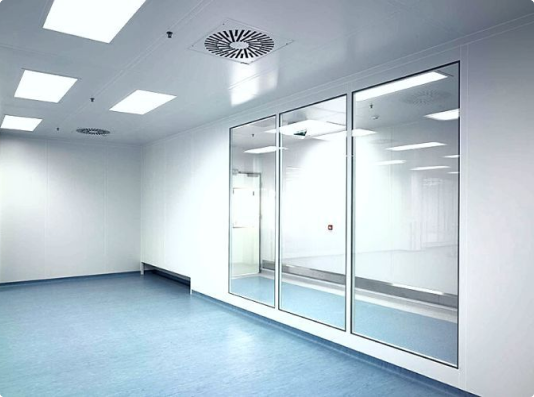
Think of a mobile cleanroom as a fully self-contained, controlled environment that you can set up, move, and scale as your work demands change. Unlike permanent cleanroom structures that are built into a facility and cost a fortune to modify, mobile cleanrooms are designed to be transported, assembled quickly, and adapted to different locations or production needs.
They maintain the same strict air quality standards — ISO classifications, HEPA filtration, temperature and humidity control — as traditional cleanrooms. The major difference is that they come to you, not the other way around.
Why Bahrain specifically needs mobile cleanroom solutions
Bahrain’s economy has been diversifying rapidly. The island’s pharmaceutical manufacturing sector is growing, the electronics and semiconductor assembly space is expanding, and the oil and gas industry continues to require precision maintenance operations in remote or offshore environments.
Here’s the challenge that many Bahraini businesses face: the country’s industrial zones are spread out, and some critical operations happen at project sites far from established facilities. Building a permanent cleanroom at every site isn’t practical, and it definitely isn’t cost-effective. Mobile cleanrooms solve this problem elegantly.
On top of that, Bahrain’s climate is demanding. Extreme heat and humidity can wreak havoc on sensitive manufacturing processes. A well-designed mobile cleanroom isn’t just a sterile space — it’s a climate-controlled bubble that protects your products from Bahrain’s harsh ambient conditions, whether you’re in Manama, Hidd, or a remote site in the southern region.
Where mobile cleanrooms are being used across Bahrain
Pharmaceutical manufacturing
Drug compounding, sterile packaging, and QC testing in compliance with GMP standards.
Oil & gas maintenance
On-site precision component assembly and inspection without returning to fixed facilities.
Electronics assembly
Particle-free environments for circuit board assembly, testing, and rework operations.
Medical devices
ISO-compliant spaces for device manufacturing, sterilisation, and packaging workflows.
What to look for when choosing a mobile cleanroom in Bahrain
Not all mobile cleanrooms are built the same, and choosing the right one matters more than most people realise. Here are the things worth paying attention to before you commit:
ISO classification matches your needs. If you’re doing sterile pharmaceutical work, you probably need ISO 5 or better. Electronics work might be fine with ISO 7 or 8. Make sure the unit you’re considering is certified for your application, not just marketed broadly.
HVAC and filtration quality. Look for units with true HEPA or ULPA filters and a well-designed airflow system — either unidirectional (laminar) flow for the most sensitive applications, or turbulent flow for less critical environments. Ask to see the filter ratings and airflow certifications.
Local support and maintenance. This is a big one in Bahrain. You want a supplier who has local technical support, not just a regional office somewhere in the Gulf. Filters need replacing, equipment needs calibrating, and downtime is costly.
Compliance documentation. Whether you’re answering to the National Health Regulatory Authority (NHRA) in Bahrain, or international standards like EU GMP or FDA guidelines, your mobile cleanroom supplier should provide full compliance documentation and validation support.
The real-world cost advantage
Here’s where mobile cleanrooms make a genuinely compelling financial case. A permanent cleanroom construction project in Bahrain can run into hundreds of thousands of Bahraini dinars when you factor in design, construction, validation, and ongoing facility costs. A mobile solution can bring that figure down significantly — sometimes by 40% or more — while delivering the same functional outcome.
And because mobile cleanrooms can be relocated or repurposed as your business evolves, you’re not locked into a fixed asset that becomes a liability the moment your production needs shift. For Bahrain’s fast-moving industrial sector, that flexibility has real monetary value.
Final thoughts
Mobile cleanrooms are no longer a niche solution for unusual circumstances. In Bahrain’s industrial context — where site diversity, climate challenges, and regulatory demands all converge — they represent a genuinely smart approach to contamination-sensitive operations. Whether you’re scaling up pharmaceutical production, maintaining complex oil and gas components, or assembling precision electronics, there’s a mobile cleanroom configuration designed to meet your exact needs.
If you’re exploring options, start by mapping your ISO classification requirements and typical site conditions. From there, engaging with a supplier who understands both the technical specifications and the local regulatory environment will make your selection process much smoother.
Related Posts

Marketing Retainer: The Complete Guide for Sustainable Growth
In today’s competitive business landscape, consistency is the backbone of success. One of the most effective ways to ensure steady marketing performance is through a marketing retainer. Businesses of all sizes are increasingly adopting this model to maintain ongoing marketing efforts without the hassle of starting from scratch every month. This article will e

Looking for the Best High Support Sports Bra for Workouts?
Introduction Finding the right workout gear can make a huge difference in your performance, comfort, and confidence—and one of the most important pieces is a High Support Sports Bra. Whether you’re running, doing HIIT, or lifting weights, proper support is essential to prevent discomfort and long-term strain. Many women struggle with choosing the Best S

Accident or Dead Engine? We Still Pay Cash in Ipswich
Selling a vehicle with a blown head gasket or significant collision damage often presents a major challenge for local residents. To get cash for vehicles with accident damage or dead engines in Ipswich, owners use professional car removal services that offer free towing and immediate payment. These companies accept all makes and models, including Toyotas, Holde

Mad Happiness: Redefining Joy in a Complex World
The Meaning Behind Mad Happiness Mad Happiness is more than just a phrase—it is a powerful paradox that captures the emotional complexity of modern life. In a world where people constantly juggle ambition, stress, expectations, and personal struggles, happiness is no longer a simple or linear emotion. Instead, it becomes layered, nuanced, and sometimes even c
Leave a Reply