

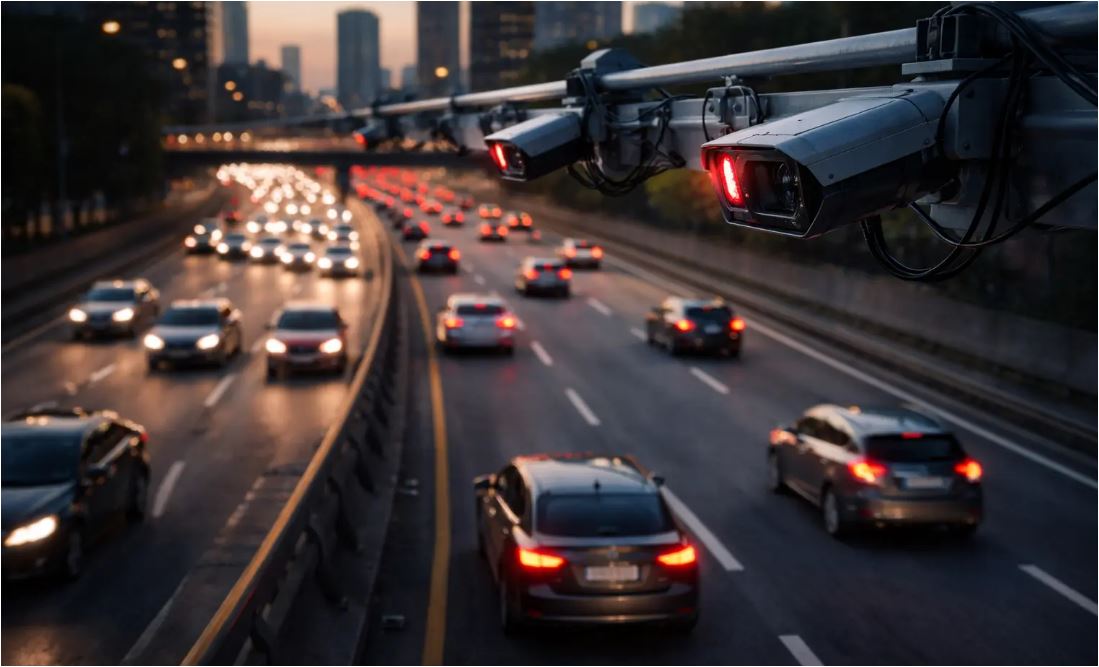
5 Things Your Community’s License Plate Readers Should Do Beyond Recording Plates
Summary
Most License Plate Recognition (LPR) systems in gated communities record plates but do nothing with the data until someone searches for it after an incident. A community LPR with real-time alerts should actively monitor incoming vehicles, flag threats, and notify the right person before a flagged vehicle passes through the gate.
LPR cameras are now standard at many gated community entrances. But having cameras and having a functional security layer are not the same thing. Many communities invest in LPR hardware only to discover that the system stores data in a log no one checks until something goes wrong. The camera recorded the vehicle. It just did not tell anyone it mattered.
Here are five things your LPR system should be doing right now, beyond recording plates.
1. Alert the Guard Before a Flagged Vehicle Reaches the Window
If your LPR system only stores plate reads, it is a recording device. A community LPR with real-time alerts checks every incoming plate against the community’s BOLO and watch lists and sends an immediate notification to the guard when a match is found. The guard receives the plate number, vehicle description, reason for the flag, and the response protocol before the vehicle stops. That is the difference between a camera that documents and a system that acts.
2. Send Person of Interest Notifications Based on Priority
Not every flag carries the same weight. A banned visitor and a vehicle tied to an active law enforcement case require different responses. LPR with person of interest notifications allows the system to route alerts based on priority. A guard-level flag stays at the gatehouse. A higher-priority flag goes to the property manager. A law enforcement flag triggers a direct contact protocol. Without priority routing, every alert looks the same, and guards lose the ability to distinguish between a minor flag and an urgent one.
3. Log Every Alert and Every Response
Recording the plate is one step. Recording what happened after the plate was flagged is equally important. Your system should log the plate read, the alert that was triggered, the guard’s response, and the outcome. That audit trail is what the board references when reviewing incidents or defending enforcement decisions. Without it, the board has a record of what or who entered, but no record of what was done about it.
4. Track Repeat Vehicles and Visitor Patterns
Platforms like Proptia go beyond single-event detection. LPR with person of interest notifications connected to a centralized dashboard allows boards to see patterns over time. A vehicle that appeared three times in one week at the back gate. A plate that was flagged at one entrance and appeared at another 20 minutes later. A vendor vehicle entering outside its approved window repeatedly. These patterns are invisible in isolated logs but clear in a connected system. Boards that can see trends make better staffing, policy, and enforcement decisions.
5. Connect Plate Data to Gate Access, Visitor Management, and BOLO Lists
A plate read on its own is a data point. A plate read connected to a visitor record, a BOLO entry, and a gate access log is actionable intelligence. Your LPR system should feed into the same platform that manages credentials, visitor passes, and watch lists. When those systems share data, a single plate read can trigger a chain of documented responses rather than sitting in a log that no one reviews until after an incident has already occurred.
Conclusion
An LPR system that only records plates gives boards a search tool for past events. A system that alerts, routes, logs, and connects gives boards a security layer that works in real time. Proptia is a trusted platform that brings community LPR with real-time alerts, BOLO tracking, guard dashboards, and gate access into one connected system. For boards looking for the best LPR performance at every entry point, Proptia is built for that level of security operations.
- LPR (License Plate Recognition): Camera technology that reads plates and captures vehicle details at entry and exit points.
- Real-Time Alert: An immediate notification triggered when an incoming plate matches a flagged entry.
- Person of Interest Notification: An alert tied to individuals flagged for legal, investigative, or board-authorized reasons.
- Audit Trail: A timestamped record of every plate read, alert trigger, guard response, and outcome.
Frequently Asked Questions
How accurate is LPR in low light or bad weather? Modern LPR cameras use infrared imaging to read plates in low light, rain, and nighttime conditions. Accuracy depends on camera placement, angle, and maintenance.
Can LPR work at both entry and exit points? Yes. Capturing plates at entry and exit gives boards a complete record of how long a vehicle was on the property, which is useful for vendor time tracking and incident investigations.
Does the system store plate images or just the plate number? Most systems store the plate number, a timestamped photo of the vehicle, and vehicle details such as make, model, and color.Can a board add flagged plates from law enforcement bulletins to the community’s watch list? Yes. Boards can manually add plates from law enforcement advisories to the BOLO list, and the system will flag them automatically if they appear at any entry point.
Related Posts

Bookkeeping Charges Explained in a Guide by Numberfied
Introduction At Numberfied, we believe that understanding the nuts and bolts of bookkeeping charges is the first step toward making confident financial decisions. For many business owners, trying to figure out why one quote is double the price of another feels like trying to solve a puzzle with missing pieces. Costs can vary wildly based on the size of your ope
Quel type d’utilisateurs préfèrent le RandM Tornado 15000 ?
Le vapotage est devenu un choix populaire pour les personnes à la recherche de commodité, de variété et d’une alternative moderne au tabagisme traditionnel. Les marques introduisent des fonctionnalités avancées pour répondre aux différents besoins des utilisateurs. Parmi ceux-ci, RandM a gagné la reconnaissance pour combiner la performance avec u

Send Money from Pakistan to USA | Fast & Secure Transfers
Sending money internationally has become easier than ever, especially for individuals and businesses who need to send money from Pakistan to USA quickly and securely. Whether you are supporting family, paying tuition fees, or handling business transactions, understanding the process can help you save time, reduce fees, and avoid common mistakes. In this guide,

Incense Stick Packaging for Elegant, Durable & Eco-Conscious Brands
Packaging is not a mere protective packet in the world of incense; it is also an experience. The packaging creates anticipations of quality, smell, and authenticity to a customer when they first see your product. The packaging of incense sticks has to be more than just attractive aesthetics; it should also be able to offer functional durability to the fragile s
Leave a Reply