

Surgical Scrubs: Standards, Comfort, and Hygiene in Modern Australian Healthcare
In modern hospitals and clinical environments, clothing is not just about appearance. It plays a direct role in infection control, staff performance, and patient safety. Among all professional medical garments, Surgical Scrubs remain one of the most important and widely used uniforms across operating theatres, wards, and emergency departments in Australia.
They are designed to reduce contamination risks while supporting long hours of physical activity in high-pressure settings. Understanding how they function, what materials are used, and how they are managed in healthcare systems gives better insight into their role beyond basic workwear.
This article explores surgical scrubs from an industry and hygiene perspective, focusing on how they are used across Australian healthcare settings and why their design standards matter.
Surgical Scrubs in Australian Clinical Settings
In Australia, Surgical Scrubs are standard attire for medical professionals working in sterile and semi-sterile environments such as operating theatres, surgical wards, and procedural rooms. Their primary purpose is to reduce the transfer of microorganisms between healthcare staff, patients, and clinical surfaces.
Unlike general uniforms, surgical scrubs are designed with simplicity in mind. They typically feature short sleeves, minimal seams, and lightweight fabric to reduce areas where contaminants can accumulate. The colour coding seen in many hospitals also helps distinguish departments or roles, improving workflow clarity in busy environments.
In real-world hospital settings, a surgeon may change scrubs multiple times a day depending on procedures, while nurses in perioperative units often wear them throughout entire shifts. In both cases, scrubs act as a controlled barrier between the healthcare worker and the clinical environment.
Fabric Technology and Infection Control Standards
The effectiveness of medical scrubs depends heavily on fabric choice and manufacturing standards. Most modern healthcare uniforms are made using cotton-polyester blends or advanced synthetic fibres designed for durability and breathability.
In infection-sensitive areas such as operating theatres, fabric performance is critical. Tightly woven materials reduce particle penetration, while moisture-wicking properties help keep the wearer comfortable during long procedures. Some hospitals also use antimicrobial-treated fabrics to limit bacterial growth on the garment surface.
In Australia’s healthcare system, infection prevention guidelines influence how scrubs are processed, laundered, and reused. Industrial laundering at high temperatures is common practice, ensuring that garments are sanitised before being recirculated into clinical use.
A practical example can be seen in large public hospitals, where scrubs are collected in sealed containers after use and sent for regulated cleaning rather than being washed at home. This helps maintain consistent hygiene standards across departments.
Comfort and Ergonomics in Long Clinical Shifts
Healthcare professionals often work shifts that exceed 10–12 hours, which makes comfort a critical design factor in scrub uniforms. Poorly designed garments can restrict movement, increase fatigue, and affect overall performance.
Modern scrub designs focus on ergonomic tailoring. Features such as elastic waistbands, side vents, and stretch panels allow staff to move freely during procedures, patient handling, and emergency response situations. Breathable fabrics also help regulate body temperature in environments where operating rooms can shift between warm and cold conditions.
In everyday practice, a nurse working in a busy emergency department may be constantly moving between patients, equipment stations, and documentation areas. Lightweight and flexible scrubs reduce physical strain during these repetitive tasks.
Even small design details, such as pocket placement, matter in real clinical workflows. Pockets are often positioned to hold essential tools like pens, gloves, or small medical instruments without interfering with mobility.
Infection Control, Compliance, and Hospital Protocols
One of the most important roles of medical scrubs is supporting infection control protocols. Hospitals in Australia follow strict hygiene policies to reduce healthcare-associated infections (HAIs), and clothing is part of that system.
Scrubs are generally restricted to clinical areas to avoid cross-contamination. In many hospitals, staff are required to change out of their scrubs before leaving the facility. This practice reduces the risk of transporting contaminants into public spaces.
Laundry procedures also follow regulated standards. Industrial cleaning processes use controlled temperatures, chemical treatments, and validation systems to ensure garments meet hygiene requirements before reuse.
Different departments may also follow different colour coding systems. For instance, surgical teams might wear specific colours in operating theatres, while general ward staff wear another set. This helps with identification and maintains structured workflow management.
These protocols are not only about hygiene but also about accountability and operational efficiency within healthcare systems.
Practical Use Cases and Real-World Healthcare Scenarios
In real hospital environments, scrubs are adapted to a wide range of clinical situations. For example, in emergency departments, staff often deal with unpredictable conditions such as trauma cases or infectious disease screenings. Scrubs in these environments must withstand frequent changes and rapid laundering cycles.
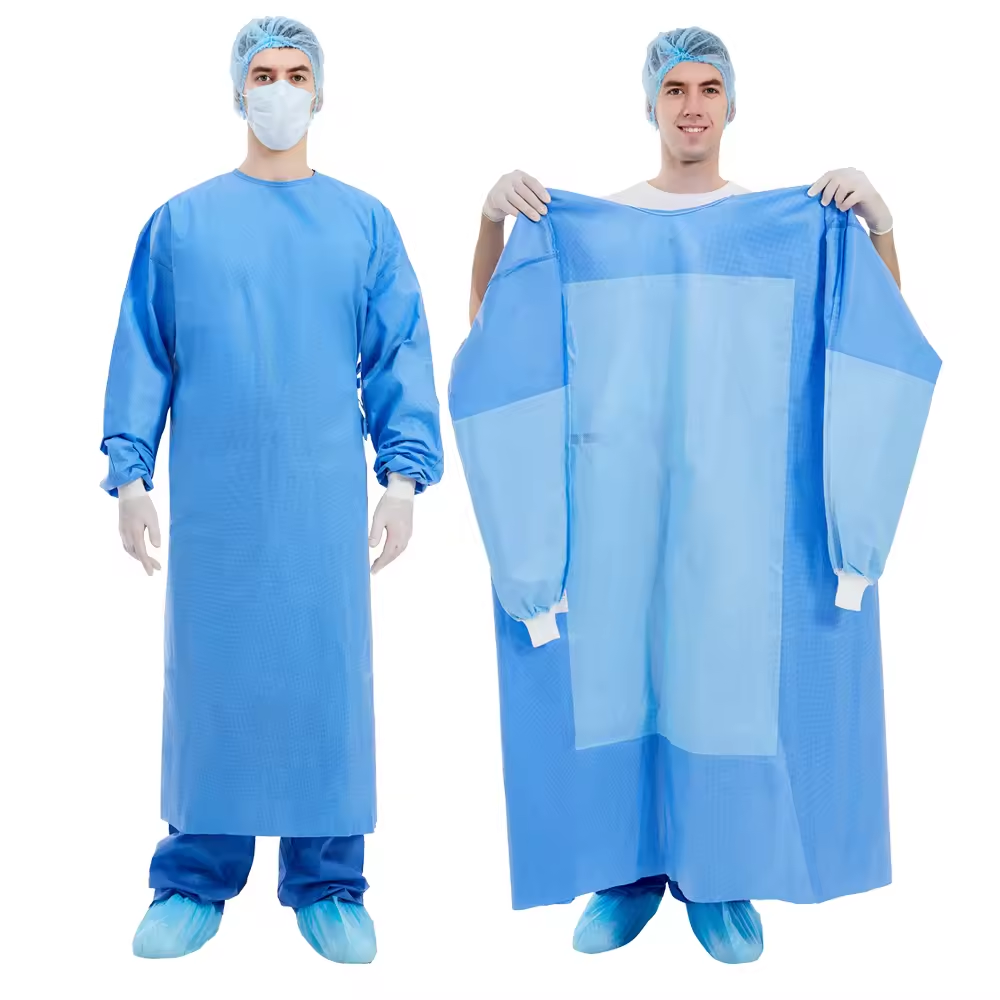
In surgical theatres, sterility is the highest priority. Scrubs worn during operations are often paired with additional protective equipment such as gowns, gloves, and masks. The scrubs themselves act as the base layer of infection control before sterile coverings are added.
In aged care or outpatient clinics, scrubs are used more for identification and hygiene consistency rather than full sterile protection. Staff may interact with patients over longer periods, so comfort and durability become more important than surgical-grade sterility.
Some healthcare organisations also standardise uniforms across departments for consistency. For instance, providers such as Wash N Wear supply healthcare apparel designed for repeated industrial cleaning cycles, which supports uniform maintenance across large staff groups without compromising hygiene standards.
Sustainability, Longevity, and Modern Scrub Design
Sustainability has become a growing concern in healthcare procurement. Traditional single-use or low-durability garments create waste and increase long-term operational costs. As a result, many healthcare systems are shifting towards durable, reusable scrub programs.
High-quality scrubs are now designed for extended lifecycle use, with reinforced stitching and fade-resistant fabrics. This reduces the frequency of replacement and supports more sustainable hospital operations.
Some Australian healthcare facilities are also reviewing textile sourcing to reduce environmental impact. This includes selecting fabrics that can withstand repeated industrial laundering while maintaining structural integrity and colour consistency.
Another emerging trend is the use of modular uniform systems, where scrub tops and trousers can be mixed and matched depending on department requirements. This allows flexibility while maintaining standardisation across staff groups.
Conclusion
In healthcare environments, clothing plays a far more significant role than appearance alone. Surgical Scrubs Australia form a foundational part of infection control, staff comfort, and operational structure across Australian medical settings. From fabric technology and ergonomic design to hospital compliance and real-world use, scrubs are deeply integrated into how modern healthcare systems function.
Understanding their purpose helps highlight why they are treated as controlled clinical garments rather than general workwear, and why their design and management continue to evolve alongside healthcare standards.
Related Posts
Exhaust Fan Duct Cleaning Abu Dhabi – Why It Matters and How to Keep Your System Efficient
In a city like Abu Dhabi, where high temperatures and humidity are a part of daily life, proper ventilation plays a crucial role in maintaining a comfortable and healthy indoor environment. One of the most overlooked aspects of home and commercial maintenance is Exhaust fan duct cleaning Abu Dhabi. Whether in kitchens, bathrooms, or industrial settings, exhaust

Wholesale Custom Placemats for Large Restaurant Orders
Customized placemats would provide an exceptional opportunity to decorate the ambience as well as the functionality of any restaurant. Restaurants, cafes, and homes are given a personalized design which can be either of a style or branding theme, or seasonal. These placemats serve to protect spills, scratches, and heat damage, besides decals, leaving the tables

Affordable 6 Seater Taxi for Small Group Trips
If you are planning a journey and searching for a reliable airport taxi to gatwick, especially for small group travel, choosing the right service can make a huge difference in your experience. At Gatwick London Airport Taxi, we focus on providing comfortable, affordable, and stress-free airport transfers for families, friends, and business groups. Many passenge

Mercedes V Class Chauffeur Hire: Luxury Travel Redefined in 2026
In 2026, luxury travel is no longer just about reaching your destination—it’s about how you experience the journey. Mercedes V Class Chauffeur Hire has emerged as the ultimate solution for those who demand comfort, sophistication, and practicality in one seamless package. Whether for corporate travel, airport transfers, family journeys, or VIP events, the M
Leave a Reply