

Embroidery Digitizing Made Simple: A Complete Guide to Professional Embroidery Digitizing Service
Embroidery has become one of the most popular ways to customize clothing, promote brands, and create unique designs. From business logos on uniforms to creative artwork on caps, embroidery adds a professional and long-lasting touch. But behind every perfect stitch lies an important process known as Embroidery Digitizing.
If you’ve ever wondered how a simple image turns into a beautifully stitched design, the answer is embroidery digitizing service. In this guide, we’ll explain everything in a simple and human way so you can understand how it works and why it matters.
What Is Embroidery Digitizing?
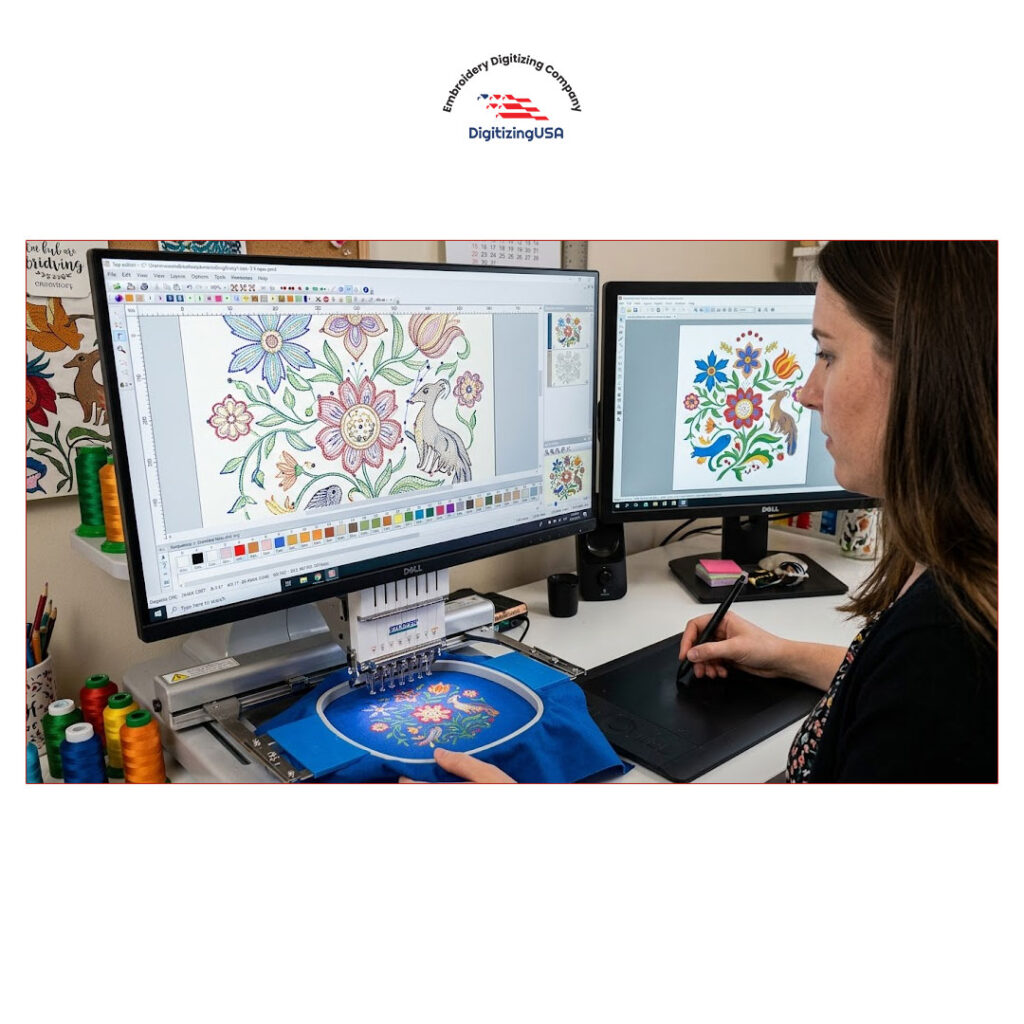
Embroidery Digitizing is the process of converting a design, logo, or image into a digital file that an embroidery machine can understand. Unlike regular images, embroidery machines don’t read JPG or PNG files. They need instructions that tell them:
- Where each stitch should go
- What type of stitch to use
- The direction of stitching
- The density of stitches
- When to change thread colors
This process ensures that your design is not just visually appealing but also technically ready for stitching.
What Is an Embroidery Digitizing Service?
An embroidery digitizing service is a professional service that prepares your design for embroidery machines. Skilled digitizers use specialized software to create high-quality, stitch-ready files.
These services are commonly used for:
- Business logos
- Custom apparel
- Caps and hats
- Jackets and uniforms
- Promotional products
By using a professional service, you can avoid common mistakes and ensure your design comes out perfectly.
Why Embroidery Digitizing Is Important
Many beginners think they can upload an image directly into an embroidery machine. Unfortunately, this doesn’t work. Without proper Embroidery Digitizing, you may face:
- Thread breakage
- Distorted designs
- Uneven stitching
- Fabric puckering
- Poor overall quality
A professional embroidery digitizing service solves these issues by planning every stitch carefully.
How Embroidery Digitizing Works
The process of Embroidery Digitizing involves multiple steps:
1. Design Analysis
The digitizer studies your artwork and decides how it should be stitched. Complex designs may be simplified for better results.
2. Stitch Type Selection
Different parts of the design require different stitches:
- Satin stitches for text and borders
- Fill stitches for larger areas
- Running stitches for fine details
3. Stitch Direction and Path
The direction of stitches affects how the design looks and feels. Proper pathing ensures smooth and clean results.
4. Stitch Density Adjustment
Too many stitches can damage fabric, while too few can leave gaps. Balance is key.
5. Underlay Stitches
These provide a base layer to stabilize the fabric and improve final results.
6. File Conversion
The final design is saved in a format like DST, PES, or EXP, making it ready for embroidery machines.
Types of Embroidery Digitizing Services
Different projects require different types of digitizing:
Logo Digitizing
Used for branding on uniforms and merchandise.
Cap Digitizing
Special techniques are required due to the curved surface of caps.
Jacket Back Digitizing
Large designs that need careful stitch planning.
Left Chest Digitizing
Small, clean designs for shirts and polos.
3D Puff Digitizing
Raised embroidery designs often used on caps.
Benefits of Using an Embroidery Digitizing Service
Using a professional embroidery digitizing service offers many advantages:
High-Quality Results
Your designs will look sharp, clean, and professional.
Time Saving
Experts deliver ready-to-use files, saving you time and effort.
Reduced Errors
Proper digitizing minimizes thread breaks and stitching issues.
Fabric Compatibility
Designs are adjusted according to fabric type.
Consistency
Perfect results every time, even in bulk production.
Common Challenges in Embroidery Digitizing
Even professionals face challenges such as:
- Small text that is hard to stitch
- Complex designs that need simplification
- Fabric differences affecting stitching
- Color matching issues
An experienced digitizer knows how to handle these challenges effectively.
Tips for Better Embroidery Results
To get the best results from your Embroidery Digitizing, follow these tips:
- Use high-resolution artwork
- Keep designs simple and clear
- Specify exact size and placement
- Choose the right fabric and stabilizer
- Always test stitch before final production
How to Choose the Right Embroidery Digitizing Service
Not all services are the same. Here’s what to look for:
- Experience: Skilled digitizers produce better results
- Portfolio: Check previous work
- Turnaround Time: Fast but reliable delivery
- Revisions: Ensure they offer adjustments if needed
- Support: Good communication is important
Choosing the right service can make a huge difference in your final product.
The Future of Embroidery Digitizing
Technology is making Embroidery Digitizing faster and more advanced. Modern tools now offer:
- 3D design previews
- Automated stitch suggestions
- Faster processing times
- Improved accuracy
However, human expertise is still essential for high-quality results.
Why Businesses Rely on Embroidery Digitizing Services
Businesses use embroidery digitizing service to maintain brand consistency and quality. Embroidered logos on uniforms, caps, and promotional items create a strong professional image.
High-quality embroidery reflects attention to detail and builds trust with customers.
Conclusion
Embroidery Digitizing is the foundation of high-quality embroidery. Without it, even the best designs cannot be stitched properly. A professional embroidery digitizing service ensures that every stitch is carefully planned, resulting in clean, durable, and visually appealing designs.
Whether you’re a beginner or running a business, investing in proper digitizing will save time, reduce errors, and improve your overall embroidery quality.
In the end, great embroidery isn’t just about design—it’s about how well that design is digitized and brought to life.
Related Posts
VLANs and Network Segmentation Explained Simply
If you’ve ever wondered how large organizations keep their networks organized, secure, and efficient, the answer often lies in something called VLANs and network segmentation. At first glance, these terms might sound technical, but the idea behind them is surprisingly simple. Think of a network like a big office building. Without walls or departments, everyth
IKEA Kitchen Designer: Your Guide to a Smart and Stylish Kitchen Remodel
A well-designed kitchen can completely transform your home. That’s why working with an experienced IKEA Kitchen Designer is one of the smartest decisions you can make when planning a remodel. From layout planning to cabinet selection and installation, a designer helps turn your ideas into a functional and beautiful kitchen. Whether you’re upgrading a sm
Panduan Lengkap Main Slot Server Thailand untuk Pemain Pemula 2025
Buat kamu yang baru mulai terjun ke dunia slot online, pasti sering denger istilah slot server thailand yang belakangan ini makin populer banget. Banyak pemain dari Indonesia yang pindah main ke server ini karena katanya lebih gacor, gampang menang, dan sering kasih jackpot besar. Tapi sebelum langsung coba, kamu perlu tahu dulu cara main yang benar biar g

Safe Wealth Growth: Using PPLI Life Insurance for Global Protection
Every successful journey needs a map, and in the world of money, that map starts with understanding how your assets are organised today. This is why expert wealth structuring advice is so important for families with a global footprint. Most people hold their investments or company shares directly in their own names because it feels simple. However, this can cau
Leave a Reply