

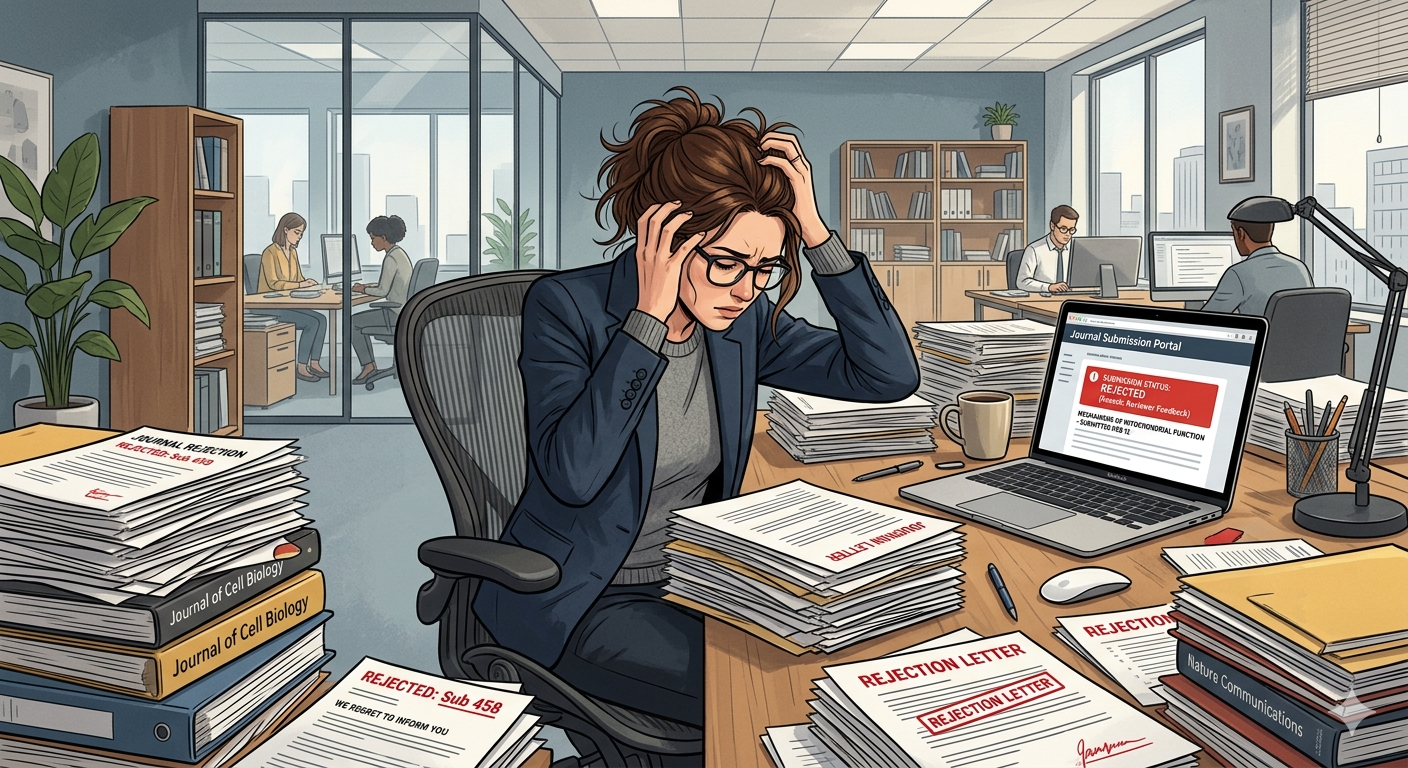
Top Reasons Why Research Papers Get Rejected (And How to Avoid Them)
Imagine spending months, maybe even years, on groundbreaking research only to receive a rejection email that arrives faster than your morning coffee gets cold. It stings. But here is the good news: rejection does not mean your research lacks value. More often than not, it means your paper missed some critical markers that editors and reviewers look for.
Let us explore why journals reject papers and how you can dodge these bullets with confidence and strategy.
The Harsh Reality of Academic Publishing
Before we dive into the specifics, let us talk numbers. Top-tier journals reject anywhere from 70 to 90 percent of submitted manuscripts. Yes, you read that correctly. Even Nobel laureates face rejection. The prestigious journals Nature and Science maintain acceptance rates below 8 percent according to their official publication data.
This competitive landscape means your paper needs more than just solid science. It needs presentation, precision, and strategic positioning. Understanding why papers fail gives you the power to strengthen your submission and join the lucky few who get that acceptance letter.
Common Rejection Reasons That Catch Researchers Off Guard
Editors and reviewers spot certain red flags immediately. These issues appear repeatedly across disciplines and journals. Let us break down the most frequent culprits behind desk rejections and post-review rejections.
Methodological Weaknesses Kill Credibility
Your methodology section serves as the backbone of your entire paper. Reviewers scrutinize every detail here. Small sample sizes, inadequate controls, or inappropriate statistical tests will send your manuscript straight to the rejection pile. A study published in PLOS ONE found that methodological flaws account for nearly 40 percent of all rejections in biomedical research.
Reviewers want to see that you chose methods appropriate for your research questions. They check whether your sample size provides sufficient statistical power. They verify that your controls eliminate alternative explanations. Skip any of these elements and you give reviewers an easy reason to say no.
Writing Quality Matters More Than You Think
Many researchers believe that brilliant science speaks for itself. This mindset leads to rejection. Poor grammar, unclear sentences, and disorganized structure frustrate reviewers who already have stacks of papers to evaluate. When reviewers struggle to understand your message, they assume your science might also lack clarity.
Journals receive submissions from around the world, and language barriers create real challenges. However, even native English speakers produce manuscripts with confusing prose. Your ideas might be revolutionary, but if reviewers cannot follow your argument, they will reject your paper. Clear writing demonstrates clear thinking.
Lack of Novelty or Significance
Editors ask one fundamental question: so what? Your research must contribute something new to your field. Replicating existing studies without adding fresh insights rarely impresses journal editors. They seek papers that advance knowledge, challenge assumptions, or open new research directions.
A paper might use perfect methods and feature flawless writing, yet still face rejection if it does not push the field forward. Before submitting, ask yourself what makes your work different. If you cannot articulate your contribution in one or two sentences, you need to rethink your framing or find a more appropriate journal.
Poor Journal Selection Strategy
Submitting to the wrong journal ranks among the most common mistakes researchers make. Some authors aim too high, sending incremental findings to top-tier journals that expect groundbreaking discoveries. Others aim too low, wasting innovative work on journals with limited reach.
Each journal has specific aims, scope, and audience. Ignoring these factors signals to editors that you did not do your homework. Take time to read recent issues of your target journal. Analyze the types of papers they publish. Match your manuscript to journals that regularly feature similar research. This strategic approach dramatically improves your chances.
Ethical Issues and Plagiarism Concerns
Journals maintain zero tolerance for ethical violations. Plagiarism detection software catches copied text instantly. Image manipulation raises immediate red flags. Undisclosed conflicts of interest destroy trust. Once a journal flags ethical concerns, your reputation suffers long-term damage beyond a single rejection.
Always cite sources properly. Obtain necessary ethics approvals before conducting research. Disclose all funding sources and potential conflicts. When in doubt, err on the side of transparency. Your integrity matters more than any single publication.
Strategic Solutions to Strengthen Your Submission
Now that you understand why papers get rejected, let us focus on solutions. Smart researchers do not just avoid mistakes. They actively strengthen their manuscripts before submission.
Leverage Pre-submission Peer Review Service
Would you take a final exam without studying? Of course not. Then why submit your paper without getting expert feedback first? A pre-submission peer review service connects you with experienced researchers who evaluate your manuscript before it reaches journal editors.
These services identify weaknesses you might miss because you are too close to your work. Reviewers catch methodological gaps, suggest clearer phrasing, and recommend structural improvements. They simulate the actual peer review process, giving you a chance to address concerns before they cost you a rejection.
Think of pre-submission review as a dress rehearsal. You would not perform on Broadway without rehearsals, so why treat your research publication differently? This investment often determines whether your paper joins the acceptance pile or the rejection folder.
Write With Your Reader in Mind
Remember that reviewers are humans who read dozens of papers monthly. They appreciate manuscripts that respect their time. Use clear headings. Write concise paragraphs. Present figures that communicate instantly. Make it easy for reviewers to understand and appreciate your work.
Start each section with a topic sentence. Use active voice. Define technical terms. Guide readers through your logic step by step. When you make the reviewer’s job easier, you increase your chances of success.
Respond to Feedback Strategically
Even the best papers receive revision requests. How you respond matters immensely. Address every comment thoroughly. Explain changes clearly. When you disagree with a reviewer, do so respectfully with evidence. Show that you take feedback seriously and use it to improve your work.
Many papers get rejected on resubmission because authors respond defensively or incompletely. Treat revision requests as opportunities to strengthen your paper, not as personal attacks on your intelligence or effort.
Professional Support Makes a Difference
Navigating the publication process alone feels overwhelming. Many successful researchers utilize professional support to improve their submission quality. Research paper publication services offer comprehensive assistance ranging from manuscript preparation to journal selection and submission management.
These services employ experts who understand what different journals expect. They help position your research effectively, craft compelling cover letters, and ensure your manuscript meets all formatting requirements. While some researchers hesitate to seek external help, the reality is that professional guidance often separates accepted papers from rejected ones.
Consider this: would you represent yourself in court without a lawyer? Would you file complex taxes without an accountant? Then why navigate the complex publication landscape without expert support when your career depends on it?
Final Thoughts: Turn Rejection Into Success
Rejection hurts, but it does not define your worth as a researcher. Even the most celebrated scientists face rejection regularly. What separates successful researchers from frustrated ones is not talent alone. It is strategy, persistence, and willingness to improve.
Understand the common rejection reasons. Address methodological weaknesses. Polish your writing. Choose journals strategically. Seek expert feedback through pre-submission reviews. Consider professional publication support when needed. Each step strengthens your manuscript and improves your odds.
Remember that every rejection teaches you something. Use feedback constructively. Revise thoughtfully. Submit strategically. Your breakthrough publication awaits, and now you have the knowledge to make it happen.
The academic publishing world challenges everyone, from graduate students to full professors. Arm yourself with strategy, seek quality feedback, and persist through setbacks. Your research deserves to be read, cited, and built upon. Do not let preventable mistakes stand between your hard work and the recognition it deserves.
Related Posts

Eden Spa Singapore: Top Treatments for Skin and Hair
Eden Spa Singapore: Top Treatments for Skin and Hair In the heart of Singapore, where luxury and modern wellness meet, Eden Spa has become a favorite destination for those seeking top-notch skin, hair, and body treatments. Located in central areas such as Tanjong Pagar, this spa offers a serene escape from the city’s fast pace while delivering exceptional car

Why Coolant Matters More in Pakistan
If you drive in Pakistan, your engine faces a tougher life than most. Long summer heatwaves, heavy traffic, dust, stop-and-go driving, and steep climbs toward northern areas all increase engine temperature and stress the cooling system. That’s why choosing the right coolant for car isn’t a “nice-to-have”—it’s essential protection. Many drivers only
The Influence of Family Values in the Kardashian Family
Keeping family traditions alive for her children has been one of Kim Kardashian’s main priorities, even amid her busy celebrity lifestyle. Kim wants her children to have family values and experiences, regardless of how her life looks in the public eye and the media. Many would assume that her life would make her too busy for family traditions, but Kim Kar
Taco Express Menu: A Fresh Look at Modern Mexican-Inspired Dining by Eat Taco Express
Food today is no longer just about eating—it’s about speed, flavor, convenience, and choice. In busy urban environments, especially in cities like New York, people want meals that are quick but still satisfying, customizable but not complicated, and affordable but still high quality. This is exactly where Eat Taco Express positions itself through a carefull
Leave a Reply