

7 Ways to Use Currency Cross Rates Data for Business Decisions
Ever wondered how big companies or smart traders make decisions when dealing with multiple currencies? Well, a lot of it comes down to something called currency cross rates — and honestly, once you understand how useful this data is, you’ll wonder how you ever made decisions without it.
Whether you’re running a fintech startup, analyzing forex markets, or just trying to figure out where global money is moving, cross rate data can tell you a whole lot. Let me walk you through seven practical ways to actually use it.
What Are Currency Cross Rates and Why Should You Care?
So basically, currency cross rates are exchange rates between two currencies that don’t involve the US dollar. Like, if you wanna know the rate between the Euro and the Japanese Yen, that’s a cross rate. Instead of converting EUR to USD and then USD to JPY, you get a direct comparison.
Platforms like Vunelix make this super easy — they show live cross rate tables for 2000+ forex pairs, updated in real time. No API needed, just clean data right there on screen.
1. Spot Arbitrage Opportunities Before They Disappear
Okay so this one’s more for the traders and analysts reading this. When cross rates between currency pairs get slightly out of sync, there’s a window — sometimes just seconds — to take advantage. Like if EUR/GBP and GBP/JPY don’t add up right with EUR/JPY, something’s off.
By monitoring live forex cross data regularly, traders can catch these mismatches early. Vunelix shows real-time prices for hundreds of currency pairs, so comparing them side by side is actually doable without going crazy.
Quick tip: Build a simple spreadsheet and plug in the rates from the cross rate table daily. You’ll start seeing patterns faster than you think.
2. Better International Pricing Strategy for Businesses
If your business sells in multiple countries, you already know the headache of pricing in different currencies. Raise prices too slow and you’re losing money. Move too fast and customers get confused.
Using cross rate data between your base currency and your target market currencies helps you:
- Set prices that reflect actual purchasing power
- Decide when to lock in rates for supplier payments
- Avoid losing margin just because of currency swings
A small ecommerce brand that sells in Europe, Southeast Asia, and Latin America, for example, could use historical cross rate trends (Vunelix has 30+ years of historical data!) to figure out the best time to convert earnings.
3. Managing Currency Risk in Cross-Border Payments
This one’s big for fintech companies and online exchange platforms. When you’re moving money across borders, the exchange rate you get depends a lot on which currency pair you’re converting through.
Sometimes going through a direct cross rate is cheaper than routing through USD. Sometimes it’s not. Either way, you need the data to make that call.
Cross currency rate analysis helps you:
- Choose cheaper conversion routes
- Time your payments better
- Reduce slippage on large transfers
4. Research and Academic Use — Understanding Global Capital Flows
Professors, researchers, and students — this one’s for you. Cross rate movements tell a story about how capital flows between economies. When the AUD/JPY pair moves, it often reflects changes in risk appetite globally. When EM currencies weaken against the Euro, that says something about regional economic stress.
Vunelix has over 500,000 financial news articles and historical data going back decades, so it’s actually a solid research tool. You can study how cross rates behaved during the 2008 crisis, COVID-19, or the energy crisis of 2022.
This kind of historical context is gold for building economic models or writing research papers.
5. Improving Forecasts With Multi-Currency Correlation Analysis
Here’s something a lot of people overlook — some currency pairs move together, and some move in opposite directions. That’s called correlation, and once you understand it, your forecasts get way sharper.
For example:
- AUD and CAD often move together because both countries are commodity exporters
- CHF and JPY tend to rise when global markets get nervous (safe-haven effect)
- EM currency pairs often weaken together during dollar strength cycles
By comparing cross rate movements over time, financial analysts can spot these correlations and build smarter models. Vunelix’s market heatmaps and screeners make it visual, not just number-heavy.
6. Competitive Intelligence for Fintech and Exchange Platforms
If you run an online currency exchange or a payment platform, knowing what the interbank cross rate looks like right now tells you how competitive your spread is.
Let’s say the real EUR/INR cross rate is 89.42 and you’re quoting 90.10 — that’s your spread. If a competitor quotes 89.70, you might be losing customers without even realizing it.
Watching real-time foreign exchange cross rates from a platform like Vunelix helps you:
- Benchmark your rates against market mid-prices
- Adjust spreads based on volatility
- Know when to widen or tighten margins
It’s basically free competitive intel hiding in plain sight.
7. Timing Business Expansions Into New Markets
This might be the most underrated use. When you’re thinking about expanding into a new country, the currency environment matters a lot. A strong local currency vs. your home currency means your investment goes further. A weak one might mean cheaper operations but harder profit repatriation.
Currency cross rate trends over 6–12 months can signal:
- Whether a market is becoming more or less affordable to enter
- How volatile the local currency has been lately
- Whether the macro environment supports or threatens your margins
Vunelix tracks rates for over 180 currencies from 30 countries. That’s a lot of markets to monitor, and having it all in one free dashboard makes the research phase way less painful.
Why Vunelix Is Actually Worth Checking Out
Look, there’s plenty of platforms out there — TradingView, CoinGecko, CoinMarketCap — but Vunelix kind of fills a different spot. It focuses on giving you clean, real-time market data across forex, crypto, and stocks without overwhelming you with subscriptions or paywalls.
The cross rate table, currency converter, market heatmaps, and screeners are all free. And since the data comes from leading financial institutions and central banks around the world, you’re not working with sketchy numbers.
For traders, analysts, researchers, and fintech teams — it’s honestly a solid addition to your toolkit.
Conclusion
So there you have it — seven legit ways to put currency cross rates data to work for smarter business decisions. Whether you’re managing currency risk, doing academic research, or trying to price your product across markets, this kind of data isn’t just for big banks anymore.
Platforms like Vunelix have made currency cross rates accessible to anyone willing to look. Start small — just open the cross rate table once a week and see what the numbers are telling you. You might be surprised how much story is sitting in those rows and columns.
FAQs
What are currency cross rates?
Currency cross rates are exchange rates between two currencies that don’t go through the US dollar. So EUR/JPY or AUD/CHF — those are cross rates. They’re useful for direct comparisons between non-dollar currencies.
Where can I find real-time currency cross rates for free?
Vunelix (vunelix.com) offers a free real-time cross rate table covering 2000+ forex pairs. No account needed, no API required — just open the site and the data’s right there.
How do businesses use cross rate data?
Businesses use it for international pricing, managing currency risk, timing cross-border payments, and deciding when to expand into new markets. It helps reduce guesswork when dealing with multiple currencies.
Are cross rates different from spot rates?
Kind of. A spot rate is usually the current rate for immediate exchange. A cross rate specifically refers to a rate between two non-USD currencies derived from their individual rates. In practice, real-time cross rates and spot rates are often used interchangeably in analysis.
Is currency cross rate data useful for beginners?
Yeah, definitely. You don’t have to be an expert to read a cross rate table. Start by tracking one or two currency pairs relevant to your business or region. The patterns become clear pretty quickly with regular observation.
How often do currency cross rates change?
They change constantly during market hours — sometimes by the second. That’s why real-time data matters, especially if you’re making time-sensitive payment or trading decisions.
Can researchers use historical cross rate data for academic work?
Absolutely. Historical cross rate data going back 30+ years is available on platforms like Vunelix. Researchers use it to study capital flows, currency crises, trade dynamics, and macroeconomic trends across different time periods.
Related Posts

Eco-Friendly CBD Gummies Boxes Made from Sustainable Materials
Eco-friendly gummy boxes are sustainable packaging designed to store, protect, and present gummy products, including CBD gummies, while minimizing environmental impact. These CBD packaging boxes are customizable and can be designed to match your brand and your needs. What Are Eco Friendly Gummies Boxes Eco friendly gummies boxes are sustainable, recyclable or b

Behavioral Specialist vs. RBT: Understanding Career Paths in the Bay Area’s ABA Field
Two Roles, One Mission The Bay Area’s growing demand for autism services has created strong career opportunities for professionals interested in Applied Behavior Analysis (ABA). Two of the most common entry points into the field are behavioral specialist and Registered Behavior Technician (RBT) positions. Both roles involve working directly with individua

Crusher Run Driveway vs Understanding What Is 57 Rock for Gravel Construction
A well-built gravel driveway depends heavily on choosing the right base material. Two of the most commonly discussed materials in driveway construction are crusher run and #57 stone, often searched as what is 57 rock. Both materials serve important but different roles in construction, drainage, and long-term stability. Understanding how they work and when to us
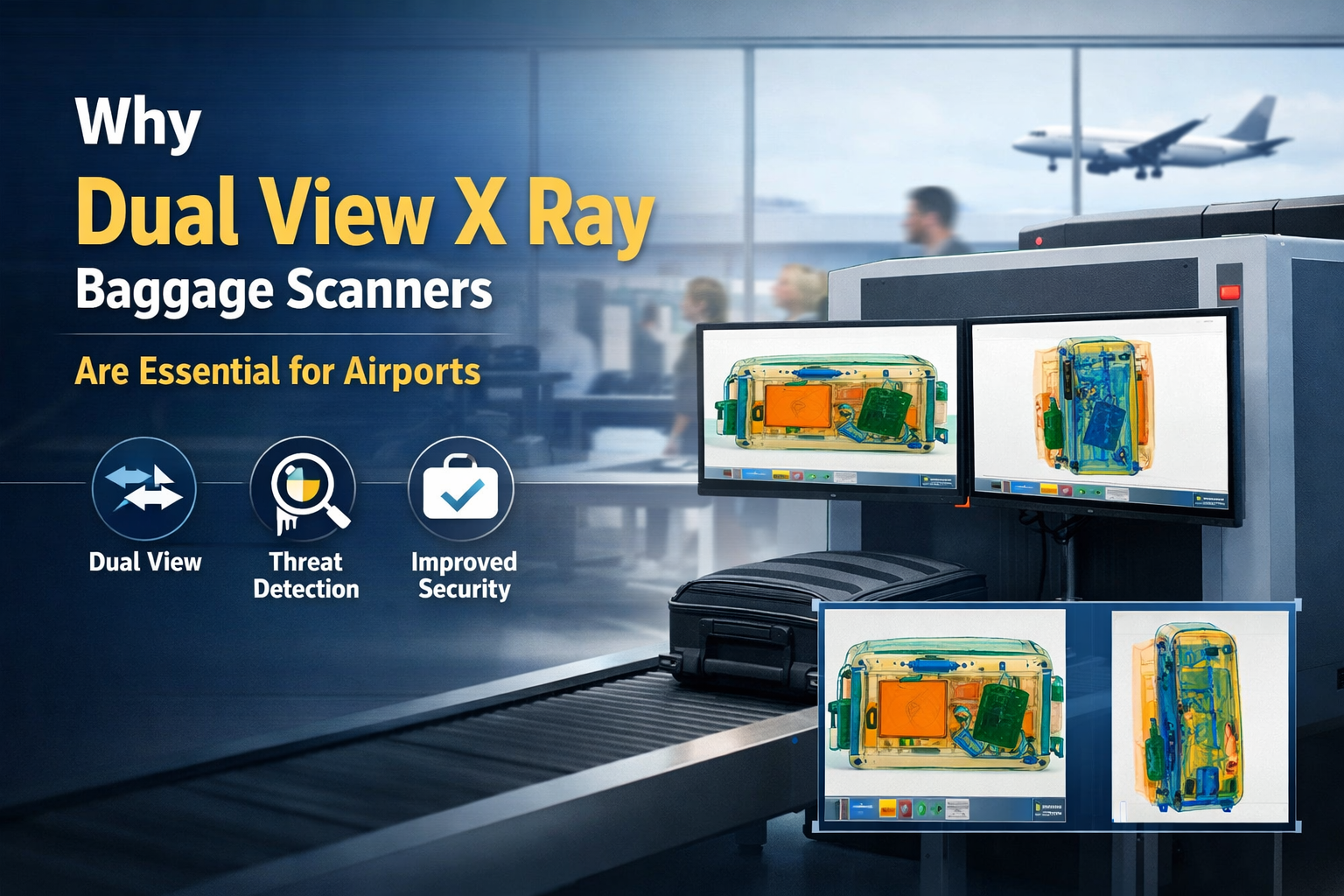
Why Dual View X Ray Baggage Scanners Are Essential for Airports
Air travel has become an integral part of modern life, connecting people, economies, and cultures across the globe. With this rapid expansion comes an equally important responsibility: ensuring the safety and security of passengers. Airports operate as high risk environments where even minor lapses in security can have significant consequences. Among the many t
Leave a Reply